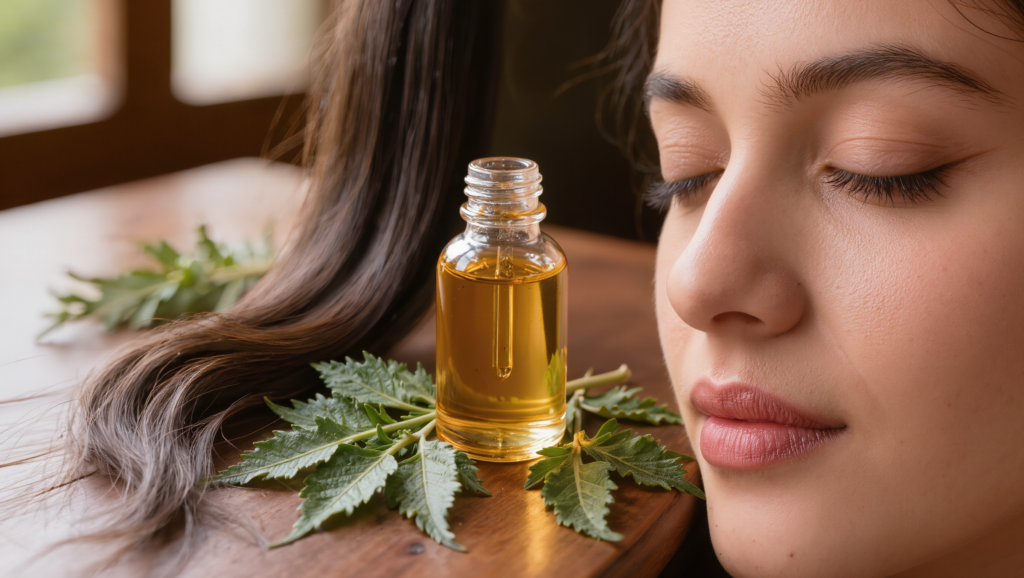












If you have been scrolling through skincare TikTok or Instagram lately, you have probably heard of bakuchiol—the plant-based “retinol alternative” that promises smoother, brighter, younger-looking skin without the irritation. But what many people do not realize is that bakuchiol comes from a lesser-known Ayurvedic herb called bakuchi (Psoralea corylifolia), whose seed oil has been used for centuries in traditional Indian medicine for skin and hair care.
Bakuchi oil is more than just a trendy ingredient. It is a complex botanical extract rich in compounds like bakuchiol, psoralen, and isopsoralen, which have been studied for their antioxidant, anti-inflammatory, and antimicrobial properties. In this post, we’ll explore what bakuchi oil is, how it works, what the science says about its benefits for skin and hair, and how to use it safely.
What Is Bakuchi oil?
Bakuchi oil is extracted from the seeds of Psoralea corylifolia, a plant native to India and parts of Asia. It is also known as babchi oil or bakuchiol oil (though technically, bakuchiol is just one of many compounds in the oil).
Key facts:
- Source: Seeds of Psoralea corylifolia.
- Traditional use: Ayurvedic medicine for skin disorders, hair growth, and general wellness.
- Active compounds: Bakuchiol, psoralen, isopsoralen, and other flavonoids.
The oil is typically used topically, either pure or diluted, and is also found in many modern skincare and haircare products.
The Star Ingredient In Bakuchi oil: Bakuchiol
Bakuchiol is the most studied compound in bakuchi oil. It is a meroterpene phenol that has gained attention for its “retinol-like” effects without the harsh side effects.
How bakuchiol works
Unlike retinol, bakuchiol is not a vitamin A derivative. Instead, it works through a different mechanism:
- Retinol-like gene expression: Bakuchiol can regulate genes involved in collagen production and skin cell turnover, similar to retinol.
- Antioxidant activity: It neutralizes free radicals that contribute to aging and damage.
- Anti-inflammatory effects: It reduces inflammation, which can help with conditions like acne and eczema.
- Antimicrobial properties: It may help fight bacteria that contribute to acne and other skin issues.
What the research says
A 2019 randomized, double-blind study compared bakuchiol (0.5%) with retinol (0.5%) in 44 participants over 12 weeks. The results were impressive:
- Both reduced wrinkles and hyperpigmentation significantly.
- Bakuchiol was better tolerated, with less scaling and stinging.
- No statistical difference in efficacy between the two.
This suggests that bakuchiol can be a gentler alternative to retinol for many people.
Benefits Of Bakuchi Oil For Skin
Bakuchi oil and its active compounds offer a range of potential benefits for the skin:
1. Anti-aging
Bakuchiol has been shown to:
- Reduce fine lines and wrinkles.
- Improve skin elasticity and firmness.
- Enhance skin texture and tone.
In one study, 95% of participants saw improved skin firmness, with a 17% decrease in skin deformation depth.
2. Hyperpigmentation and dark spots
Bakuchiol may help with:
- Reducing hyperpigmentation.
- Fading dark spots and sun damage.
- Evening out skin tone.
3. Acne and oily skin
Bakuchiol’s antimicrobial and anti-inflammatory properties make it a potential option for:
- Reducing acne severity.
- Preventing clogged pores.
- Calming inflamed skin.
4. Sensitive skin
Unlike retinol, bakuchiol is generally well-tolerated:
- Less irritation and dryness.
- No need for gradual dose scaling.
- Suitable for sensitive or dry skin types.
Benefits Of Bakuchi Oil for hair
While the research on bakuchi oil for hair is less robust than for skin, traditional use and some preliminary studies suggest potential benefits:
1. Hair growth
Bakuchi oil is traditionally used to:
- Stimulate hair follicles.
- Improve hair texture and thickness.
- Reduce hair loss.
However, human evidence is limited. Most claims are based on traditional use rather than clinical trials.
2. Scalp health
Bakuchi oil may help with:
- Nourishing the scalp. [
- Reducing dandruff and itchiness.
- Improving overall scalp condition.
3. Premature graying
Some sources claim bakuchi oil can help prevent premature graying, but this is based on tradition rather than solid clinical data.
How To Use Bakuchi oil
If you want to try bakuchi oil, here are some tips:
For skin
- Dilute it: Mix a few drops with a carrier oil (like jojoba or almond) or use a pre-formulated product.
- Apply at night: Bakuchiol can make skin more sensitive to the sun.
- Start slowly: Use it 2–3 times a week at first, then increase as tolerated.
For hair
- Massage into the scalp: Use a few drops diluted in a carrier oil.
- Leave on for 30 minutes to overnight: Then wash out.
- Use 1–2 times a week: For best results.
Important note on psoralens
- Psoralens in bakuchi oil can cause photosensitivity.
- Avoid direct sun exposure after applying the oil.
- Use sunscreen if you are going outside.
Safety And Side Effects Of Bakuchi oil
While bakuchi oil is generally considered safe, there are some important cautions:
1. Photosensitivity
- Psoralens in the oil can make your skin more sensitive to UV light.
- This can lead to sunburn, redness, or blistering.
2. Allergic reactions
- Some people may be allergic to bakuchi or other compounds in the oil.
- Do a patch test before using it widely.
3. Pregnancy and breastfeeding
- There is limited research on safety during pregnancy and breastfeeding.
- Consult a healthcare provider before using.
4. Quality and purity
- The quality of bakuchi oil can vary widely.
- Look for products from reputable brands that specify the concentration of active compounds.
Using Ayurveda For Modern Skincare
Bakuchi oil is a great example of how traditional medicine and modern science can intersect. While Ayurveda has used it for centuries, modern research is now validating some of its benefits—especially for skin.
What modern science confirms
- Bakuchiol is effective for anti-aging and hyperpigmentation.
- It is better tolerated than retinol.
- It has antioxidant and anti-inflammatory properties.
What still needs more research
- Long-term safety and efficacy.
- Benefits for hair growth and graying.
- Optimal dosing and formulation.
Bottom line
Bakuchi oil is a hidden gem of Ayurvedic skincare with real potential to transform your skin and hair. Its star compound, bakuchiol, offers retinol-like benefits without the harsh side effects, making it a great option for sensitive skin.
Key takeaways:
- Bakuchi oil comes from Psoralea corylifolia seeds.
- Bakuchiol is the main active compound, with retinol-like effects.
- It can help with anti-aging, hyperpigmentation, and acne.
- It may support hair growth and scalp health, though evidence is limited.
- Use with caution due to photosensitivity and potential allergies.
Whether you are looking to smooth fine lines, fade dark spots, or nourish your scalp, bakuchi oil offers a natural, time-tested option worth exploring.