











Hydroquinone gets all the hype for dark spots, but it is not the only path forward. Ayurveda offers a gentler, slower, and often more sustainable way to support sun-damaged skin and hyperpigmentation by cooling heat, repairing the skin barrier, and using botanicals that inhibit pigment formation without harsh side effects.
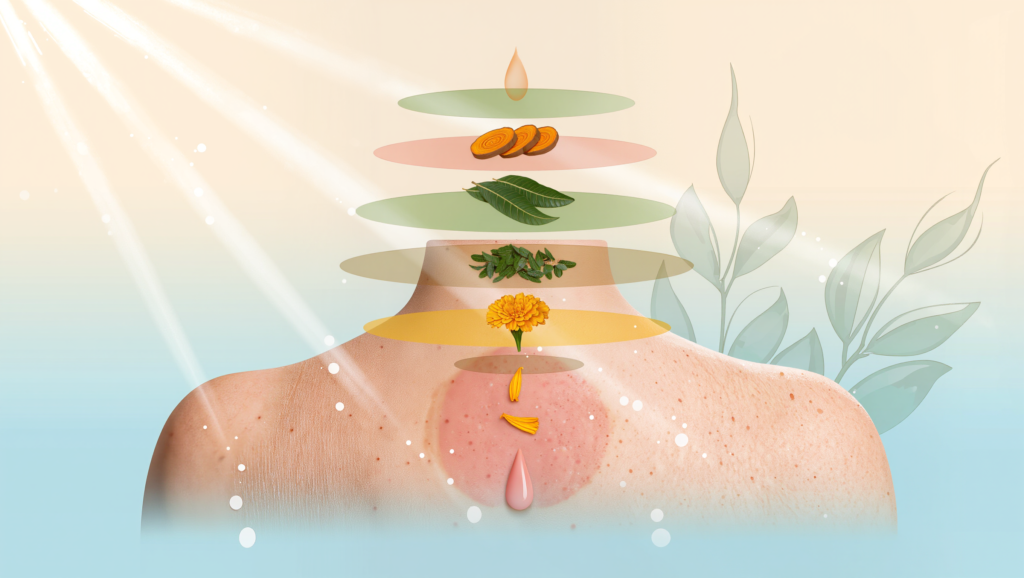
The key difference is that Ayurveda treats the body and skin as one system, not just a surface problem. It focuses on cooling Pitta, supporting detoxification, and nourishing the skin with ingredients like turmeric, sandalwood, aloe vera, manjistha, and Kumkumadi Tailam.
Why Hydroquinone Can Be Problematic For Healing Sun Damage and Hyperpigmentation
Hydroquinone is effective, but it can also be irritating, especially for sensitive skin. It may cause redness, dryness, and in some cases, a condition called ochronosis (bluish-black discoloration) when used long-term or improperly. That is why many people are looking for gentler alternatives that work more like nourishment than aggression.
Ayurveda takes a different path. Instead of trying to “strip” pigment, it tries to calm the root drivers of uneven tone: heat, inflammation, and oxidative stress. That is much kinder to the skin over months and years.
The Ayurvedic View: Cooling Pitta And Healing Heat
In Ayurveda, skin discoloration and sun damage are often linked to Pitta imbalance. Pitta is the hot, sharp, acid-like energy that governs transformation, metabolism, and the skin’s sensitivity to heat. When Pitta is high, the skin can become inflamed, red, and prone to patches of hyperpigmentation.
Ayurvedic treatment for sun damage and pigmentation focuses on:
- Cooling the skin.
- Detoxifying the body.
- Repairing damaged skin cells.
- Reducing inflammation and oxidative stress.
That is why cooling herbs like sandalwood and aloe vera are classic choices. They soothe heat and redness while supporting repair.
Aloe Vera: The Gentle Healing Base
Aloe vera is one of the most reliable Ayurvedic ingredients for sun-damaged skin. Aloe vera has cooling and anti-inflammatory properties that are perfect for soothing sunburned skin, hydrating, and repairing the skin barrier. It also supports faster healing and reduces dehydration from within.
A simple way to use it:
- Apply fresh aloe vera gel directly to the face or sun-exposed areas.
- Leave it on for 15–20 minutes, then rinse.
- Use daily or as needed after sun exposure.
Aloe vera is gentle enough for most skin types, including sensitive skin, and does not strip moisture.
Turmeric: The Anti-Inflammatory, Pigment-Supporting Herb
Turmeric is a cornerstone for hyperpigmentation in Ayurveda. It is a powerful antioxidant and anti-inflammatory agent that helps reduce redness, fight free radicals, and promote an even skin tone.
Experts recommend an aloe vera and turmeric mask for sun-damaged skin. The recipe is simple:
- 2 tablespoons fresh aloe vera gel
- ½ teaspoon turmeric powder
- 1 teaspoon honey (optional, for hydration)
Mix into a smooth paste, apply to the face and neck (avoiding the eye area), leave on for 15–20 minutes, then rinse with lukewarm water. Follow with coconut oil or another gentle moisturizer.
Sandalwood and turmeric together are powerful for healing sunburn and recovering from actual sun damage.
Sandalwood: Cooling, Anti-Inflammatory, Pigment-Friendly
Sandalwood is another classic Ayurvedic herb for cooling and brightening the skin. It has cooling properties and is effective in reducing sunburn and inflammation, with a calming effect on irritated skin.
Use sandalwood as a paste:
- Mix 1 teaspoon turmeric with 1 tablespoon sandalwood powder.
- Add rose water to form a paste.
- Apply to the face for 15–20 minutes, then rinse with lukewarm water.
Sandalwood can stimulate faster healing of blisters, while turmeric is renowned for its anti-inflammatory properties.
Kumkumadi Tailam: The Golden Facial Oil For Pigmentation
Kumkumadi Tailam is a traditional Ayurvedic facial oil made with saffron and 25+ herbs. It is famously called a “golden elixir” used for glowing skin and treating pigmentation.
How to use it:
- Apply aloe vera gel first.
- Then apply 3–5 drops of Kumkumadi Tailam before bedtime.
- Massage gently and leave overnight.
Some experts lists Kumkumadi Tailam as one of the key ancient Ayurvedic remedies for melasma and skin discoloration. The oil is designed to nourish, repair, and gradually improve tone.
Manjistha: Blood-Purifying, Skin-Brightening Herb
Manjistha is a classic Ayurvedic herb for clearing skin discoloration and supporting a brighter tone. It is described as a blood-purifying herb that helps detoxify the body and reduce pigmentation.
Ayurvedic treatment works by cooling the skin, detoxifying the body, and repairing damaged skin cells, and Manjistha is central to this approach. While topical use is common, Manjistha is also used internally as part of a detoxifying diet.
Ubtan: Gentle Exfoliation For Even Tone
Ubtan is a traditional Indian powder mix used by brides for centuries. It gently exfoliates and detoxifies the skin. Ingredients:
- Gram flour
- Turmeric
- Sandalwood powder
- Milk or rose water
Mix into a paste, apply and scrub gently once semi-dry, then wash off. This helps remove dead skin cells and supports a smoother, more even tone without harsh peels.
Licorice Root: The Brightening Botanical
Licorice root is another powerful Ayurvedic ingredient for pigmentation. It helps inhibit melanin production and supports a lighter, more even tone.
Some experts suggests licorice and aloe vera brightening serum:
- Mix licorice extract with aloe vera gel.
- Apply to dark spots or uneven areas.
- Use daily or as directed.
Licorice is gentle compared to harsher chemical depigmenting agents.
Saffron: Luxury Brightening Herb
Saffron is a luxurious herb in Ayurveda for enhancing glow and treating pigmentation.
How to use:
- Soak a few saffron strands in 2 tablespoons raw milk overnight.
- Apply this infusion to the face with a cotton ball.
- Use nightly or a few times a week.
Saffron is calming and brightening, and it helps reduce dark spots over time.
Bakuchi Oil: Traditional For Skin Discoloration
Bakuchi oil (made from Psoralea corylifolia) is another traditional Ayurvedic remedy for melasma and skin discoloration. It is used carefully due to its potency and should be guided by an experienced practitioner.
Diet And Lifestyle That Helps With Sun Damage
Ayurveda does not treat skin in isolation. It supports the whole system.
- Drinking warm water with turmeric and honey.
- Abhyanga (oil massage) with sesame or almond oil.
- Using gentle herbal cleansers like Multani Mitti or neem-based soap.
- Eating seasonal fruits, fresh vegetables, ghee, and turmeric.
- Avoiding overly spicy, oily, and processed foods.
- Drinking herbal teas with tulsi, ginger, or fennel.
Avoid harsh skin treatments like microdermabrasion and glycolic peels during spring or summer, as they make skin more photosensitive.
Sun Protection As Part Of Healing
Ayurveda still respects basic sun protection. Use a natural sunscreen with zinc oxide or titanium oxide, wearing protective clothing and hats, and avoiding prime-time sun (10 a.m. to 2 p.m.).
That is not contradictory to Ayurveda; it is practical. Healing sun damage is much easier when you stop adding more damage.
Bottom Line
Ayurveda heals sun damage and hyperpigmentation gently by cooling heat, reducing inflammation, repairing skin cells, and using botanicals like aloe vera, turmeric, sandalwood, Kumkumadi Tailam, Manjistha, licorice, and saffron.
This approach is slower than hydroquinone but safer for long-term use and more aligned with overall health. If you want to heal pigmentation without harsh chemicals, Ayurveda offers a gentle, time-tested path that works from the inside out.