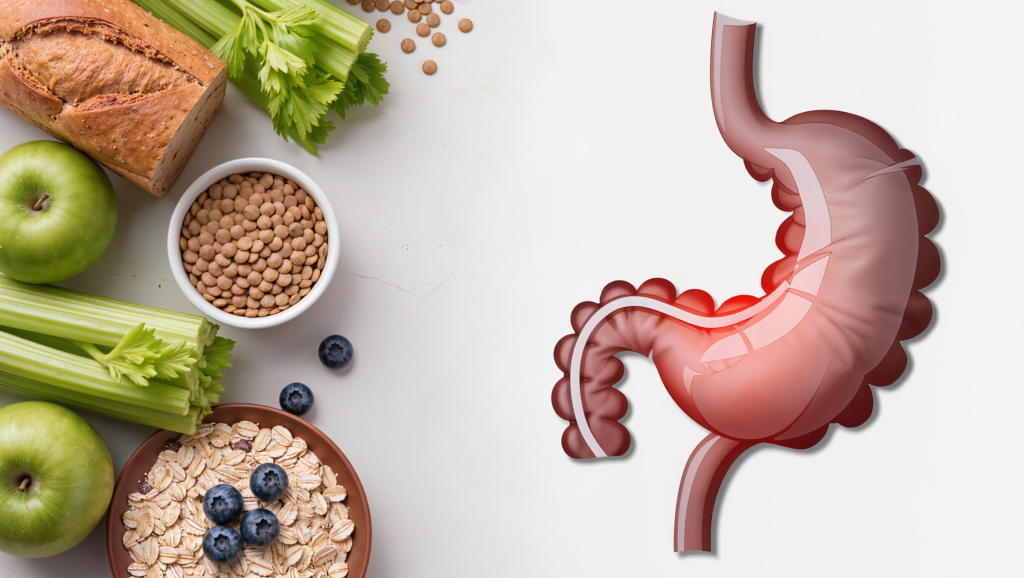












A high-fiber diet is usually framed as one of the healthiest things you can do for your gut, but for some people with Small Intestinal Bacterial Overgrowth (SIBO) or IBS, it can absolutely make symptoms worse. The surprise is not that fiber is bad in general — it is that the wrong amount, the wrong type, or the wrong timing can feed the very symptoms people are trying to fix.
That does not mean fiber is the enemy. It means digestion is more complicated than “more fiber = better gut.” If you have bloating, abdominal pain, gas, or bowel instability, especially with suspected SIBO or IBS, a high-fiber diet may need to be adjusted rather than blindly pushed higher.
Why Fiber Usually Gets A Good Reputation
Fiber has a strong public-health reputation for good reason. In many people, fiber supports regular bowel movements, feeds beneficial microbes, and helps produce short-chain fatty acids that strengthen the intestinal barrier and reduce inflammation.
That is one reason general nutrition advice often says to eat more vegetables, beans, fruits, and whole grains. Those foods usually help the average healthy gut do its job better. The trouble starts when the gut is already sensitive, inflamed, or microbiologically imbalanced.
Why SIBO Changes The Fiber Story
SIBO, or small intestinal bacterial overgrowth, is a situation where the small intestine contains too much or the wrong kind of bacterial activity. Some point out that it may not simply be the number of bacteria that matters, but the type of bacteria present in the small intestine.
That is huge. Fiber feeds bacteria. If the bacterial population is in the wrong place, or if the fermentation pattern is already too aggressive, fiber can become a symptom amplifier instead of a symptom fixer.
Specialists in gastroenterology note that foods that are not well absorbed should be minimized because they can become fuel for bacteria in the lower small intestine, and they specifically say that high-fiber diets can worsen symptoms for many IBS patients. That means the same fiber that helps one person may trigger another person’s bloating and pain.
Why Fiber Can Cause Bloating
The short answer is fermentation. Fiber is not digested by human enzymes, so gut bacteria ferment it instead. That fermentation produces gas, which can be a problem when there is already too much microbial activity or impaired transit.
This is why legumes, raw vegetables, certain grains, and fiber supplements can create immediate discomfort in people with IBS or SIBO. The gut may not be able to handle the residue and fermentation load efficiently, so bloating, distension, cramps, and pressure build up.
In plain English: what’s healthy for one gut can be a gas bomb for another.
The Overlooked Danger: Fiber Is Not One Single Nutrient
One of the biggest mistakes people make is treating fiber like a single nutrient with a single effect. It is not. There are many kinds of fiber, and they behave differently in the gut.
Some fibers are more fermentable and may worsen gas and bloating in people with IBS or SIBO. Others are better tolerated in modest amounts, especially when they come naturally from cooked vegetables rather than dense fiber supplements.
This is why blanket advice like “just eat more fiber” can be unhelpful or even insulting to someone whose abdomen already feels like it is in revolt.
What The Research Is Suggesting About High Fiber Diet on SIBO And IBS
The summary of the evidence is especially interesting because it highlights a pattern that many people with IBS symptoms actually share: reduced levels of beneficial fiber-feeding bacteria like Prevotella, and higher levels of sugar-loving bacteria.
Sme sources also describes a study where healthy people who were switched from a habitual high-fiber diet to a low-fiber, high-sugar diet for seven days developed new gastrointestinal symptoms in 80 percent of cases. Those symptoms disappeared when they returned to the high-fiber diet, and the microbial changes were linked to intestinal permeability changes.
That sounds contradictory at first: if low fiber caused symptoms in healthy people, why do SIBO and IBS patients sometimes feel worse on fiber? The answer is context. Healthy guts and dysbiotic guts are not the same terrain. A high-fiber diet may support a balanced microbiome, but if bacterial placement, motility, or fermentation is already off, that same fiber can intensify symptoms.
SIBO, IBS, And The Low-FODMAP Detour
A lot of people with IBS or SIBO feel better when they reduce fermentable carbohydrates, especially during flare-ups. That is why low-FODMAP diets are so commonly discussed. Foods high in fermentable carbs can make symptoms worse because they provide bacterial fuel and increase gas production.
But here is the catch: low-FODMAP is not the same as “zero fiber forever.” It is a targeted short-term strategy, not a permanent anti-plant lifestyle. The goal is often to calm symptoms so the gut can heal, identify triggers, and later reintroduce tolerable foods in a smarter way.
That is where people get stuck. They hear that fiber is good, so they keep pushing it even when their own body is clearly saying no. Or they hear that fiber is bad for SIBO, so they eliminate everything and end up undernourished. Neither extreme is ideal.
Why High-Fiber Diets Can Backfire In Sensitive Guts
In a healthy gut, fiber supports beneficial bacteria and helps build short-chain fatty acids that support the intestinal barrier. In a sensitive gut, though, high fiber can:
- Increase fermentation and gas.
- Worsen bloating and pressure.
- Aggravate abdominal pain.
- Make stools too bulky or too loose depending on the person.
- Feed symptoms when small intestinal motility is poor.
That is why several SIBO-focused clinical resources recommend lower-fiber approaches, at least initially, and emphasize easily digested foods rather than large loads of high-residue produce or bulky supplements.
Why Fiber Supplements Are A Special Problem
Fiber supplements are often marketed as a universal gut-health fix, but that can be a mistake for IBS and SIBO sufferers. Supplements tend to deliver concentrated fiber without the balancing structure of a whole food, which can make fermentation more intense and symptoms more obvious.
Many gastroenterology instructions caution against using high-residue foods and bulky fiber supplements as the main strategy when symptoms are active. Whole-food fiber and supplemental fiber are not the same experience, and the latter is often much harder for a reactive gut to tolerate.
The Role Of Motility
Another overlooked issue is motility. Frequent meals and snacks may interfere with the body’s cleansing waves, making it easier for bacteria to stay in the small intestine.
That matters because if motility is sluggish, even “healthy” fiber can sit around too long and ferment more than it should. So the problem may not be the fiber alone. It may be the fiber combined with poor motility, poor absorption, and a microbiome that is no longer behaving properly.
How To Tell If Fiber Is Hurting You
If you have IBS or SIBO and your fiber intake is making things worse, the signs usually show up clearly:
- More bloating after meals.
- More gas or distension.
- Abdominal cramping.
- Feeling full too quickly.
- Constipation that worsens with bulky roughage.
- Diarrhea or urgency after certain high-fiber foods.
If this happens consistently, it is worth paying attention instead of assuming your body just needs “more time to adapt.” Sometimes adaptation is real. Sometimes the gut is just telling you the current strategy is wrong.
What To Eat Instead During A Fiber Sensitive Gut Phase
Clinical diet guidance for symptomatic SIBO often leans toward easily digested foods, moderate calories, and reduced residue. That usually means cooked vegetables rather than raw salads, modest fiber from tolerated fruits and vegetables, and avoidance of common fermentable triggers like certain sweeteners and large legume loads.
One gastroenterology resource explicitly recommends cooked or lightly steamed vegetables over raw vegetables because they are easier to digest and absorb, and it says to avoid large salads full of raw vegetables. That advice is not anti-vegetable. It is pro-comfort.
The Big Takeaway: Personalization Beats Dogma
The biggest mistake in gut advice is assuming the same fiber target works for everybody. For a healthy person, a higher-fiber diet may be protective and beneficial. For someone with active Irritable Bowel Symdrome (IBS) or SIBO symptoms, the same approach may be too much, too soon, or the wrong type of fiber altogether.
That does not make fiber bad. It makes it conditional. The better question is not “Should I eat more fiber?” but “What kind of fiber, in what amount, and at what stage of my gut issue?” That question is much more useful.
Bottom Line
Yes, a high-fiber diet can make an IBS or SIBO gut condition worse in the wrong context, especially when the gut is already fermenting too much, motility is poor, or fiber is coming from bulky or highly fermentable sources.
But fiber is not the villain overall. In healthy guts, it supports beneficial bacteria, produces short-chain fatty acids, and helps maintain the intestinal barrier. The real lesson is that gut health is not a one-size-fits-all contest between “fiber good” and “fiber bad.” It is a balancing act, and for people with SIBO or IBS, the safest path is often a more individualized approach rather than forcing a high-fiber ideal that your body clearly does not want right now.