











If you think oranges are the gold standard for vitamin C, it may be time to meet baobab. This unusual African fruit—also called the “tree of life”—comes from the iconic baobab tree (Adansonia digitata) and is gaining attention for its exceptionally high vitamin C content, fiber, and antioxidant profile. Even though Baobab has a higher vitamin C content, than Vitamin C, It still pales a lot when compared to another tropical fruit that we have a full article on called Camu Camu: The Amazonian Berry
Baobab fruit pulp has been reported to contain roughly 150–500 mg of vitamin C per 100 g, depending on the study and whether the fruit is fresh or dried. By comparison, a typical orange provides about 53 mg per 100 g. That means, gram for gram, baobab can deliver several times more vitamin C than oranges—though the exact amount varies widely by fruit, region, and processing method.
But baobab is more than a vitamin C powerhouse. It is also rich in fiber, polyphenols, and minerals, and it has been used for centuries in African food traditions. In this post, we’ll explore what makes baobab special, how it compares to oranges, and how to use it in your diet.
What is Baobab?
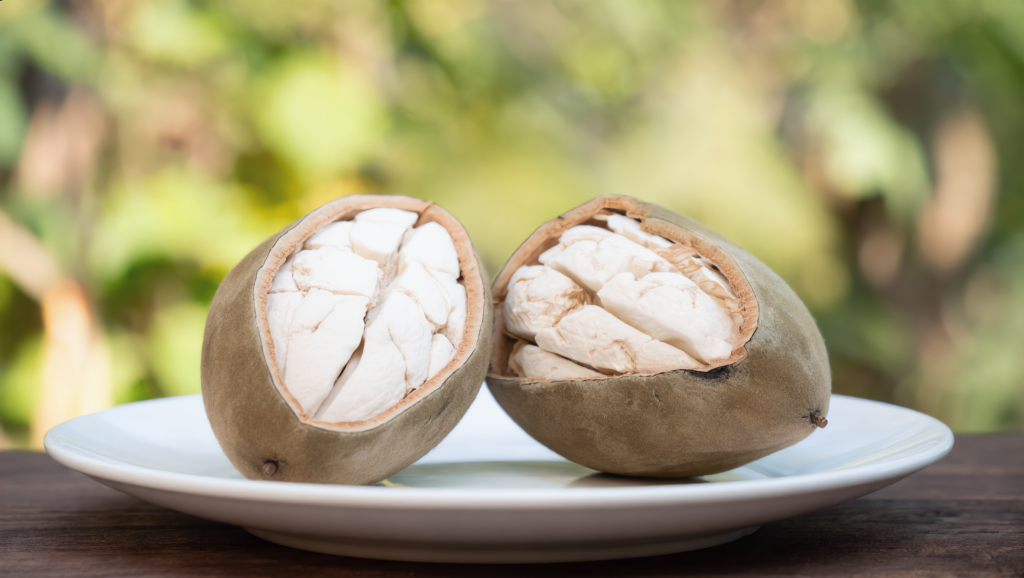
Baobab is the fruit of the baobab tree, a massive, long-lived tree native to Africa. The fruit has a hard outer shell and a dry, powdery pulp inside that is naturally rich in nutrients.
Key facts:
- Scientific name: Adansonia digitata
- Common name: Baobab, “tree of life”
- Edible part: The dry, powdery fruit pulp
- Traditional use: Food, beverage, and traditional medicine across Africa.
Unlike many fruits, baobab pulp is naturally dehydrated on the tree. This makes it easy to grind into a powder that can be added to drinks, smoothies, yogurt, or baked goods.
Baobab Vs. Orange: Vitamin C Content Comparison
The most talked-about feature of baobab is its vitamin C content. But how does it really compare to oranges?
| Feature | Baobab fruit pulp | Orange |
|---|---|---|
| Vitamin C per 100 g | About 150–500 mg (varies by study and form) | About 53 mg |
| Form | Usually dried powder | Fresh fruit or juice |
| Other nutrients | Fiber, polyphenols, minerals | Vitamin C, folate, potassium |
| Typical use | Powder added to food/drinks | Fresh fruit or juice |
Why the numbers vary
The vitamin C content of baobab can vary widely depending on:
- Fresh vs. dried pulp
- Region and growing conditions
- Ripeness and maturity
- Processing and storage
One review reported baobab pulp at 466 mg per 100 g dry weight, while another found 163.8–288.9 mg per 100 g dry weight. .This is why it is important not to treat every baobab product as identical.
Why Vitamin C Is Important
Vitamin C is an essential nutrient that your body cannot make on its own. It plays a role in:
- Collagen production (skin, joints, blood vessels).
- Antioxidant defense against free radicals.
- Iron absorption from plant-based foods.
- Immune function.
This is why baobab’s high vitamin C content is not just a marketing claim—it has real nutritional relevance.
Polyphenol And Other High Nutritional Contents Of Baobab
Baobab is not just about vitamin C. It is also rich in:
- Dietary fiber: Both soluble and insoluble.
- Polyphenols: Plant compounds with antioxidant activity.
- Minerals: Potassium, magnesium, calcium, and iron.
Fiber and gut health
The high fiber content in baobab may:
- Support digestive health.
- Promote beneficial gut bacteria.
- Help with satiety and blood sugar control.
Polyphenols and antioxidants
Baobab’s polyphenols may:
- Reduce oxidative stress.
- Support cardiovascular health.
- Have anti-inflammatory effects.
What Science Research About Baobab Shows So Far
The evidence for baobab’s health benefits is still limited, but it is growing.
Human studies: limited but promising
A 2026 review found only six human intervention studies on baobab fruit pulp, mostly focused on glycemic response and iron status.
- Glycemic response: Some studies suggest baobab may help moderate blood sugar spikes.
- Iron status: One trial in schoolchildren found increased hemoglobin but no significant improvement in ferritin or soluble transferrin receptor.
Iron absorption: a promising area
Baobab’s high vitamin C and citric acid content may enhance iron absorption from plant-based foods.
- In vitro studies: Show increased iron bioaccessibility when baobab is added to pearl millet porridge.
- This is especially relevant for people at risk of iron deficiency.
Ongoing research
A 2025 randomized placebo-controlled trial is currently exploring baobab fruit powder’s effects on gut and cardiometabolic health in people with obesity.
This suggests that more human evidence is on the way.
How To Use Baobab In Your Diet
Baobab is versatile and easy to add to your routine.
1. Smoothies and drinks
- Add 1–2 tablespoons of baobab powder to a smoothie.
- Mix with water or plant-based milk for a quick drink.
2. Yogurt and oatmeal
- Stir into yogurt or oatmeal for a tangy, citrus-like flavor.
- Adds fiber and vitamin C without added sugar.
3. Baking
- Use baobab powder in muffins, pancakes, or energy balls.
- It adds a subtle tang and nutritional boost.
4. Traditional preparations
- In Africa, baobab is often used in porridges, sauces, and beverages.
- This is a great way to enjoy it in a more traditional context.
Safety And Side Effects Of Using Baobab
Baobab is generally considered safe when consumed as food, but there are a few things to keep in mind.
1. Fiber content
- The high fiber can cause bloating or gas in some people.
- Start with a small amount and increase gradually.
2. Vitamin C excess
- While vitamin C is water-soluble, very high doses can cause digestive upset.
- Stick to food-based amounts unless advised otherwise.
3. Quality and purity
- Look for products that specify the source and processing method.
- Avoid products with added sugars or fillers.
Using Baobab As A Functional Food
Baobab is part of a growing category of functional foods—foods that offer benefits beyond basic nutrition.
Why this matters
- Nutrient density: High in vitamin C, fiber, and minerals.
- Sustainability: Baobab trees are resilient and support local economies.
- Cultural value: A traditional food with deep roots in African communities.
Bottom line
Baobab is a nutrient-dense African fruit that offers significantly more vitamin C than oranges, along with fiber, polyphenols, and minerals. While the evidence for its health benefits is still limited, it is a promising addition to a healthy diet.
Key takeaways:
- Baobab has 150–500 mg of vitamin C per 100 g, depending on the form.
- It is richer in vitamin C than oranges on a gram-for-gram basis.
- It is also high in fiber and polyphenols, which may support gut and metabolic health.
- Human evidence is still limited, but research is ongoing.
- It is easy to add to your diet in smoothies, yogurt, or baking.
If you are looking for a new way to boost your vitamin C intake, baobab is worth exploring. It is a nutrient-dense, versatile fruit with a rich history and a bright future in modern nutrition.