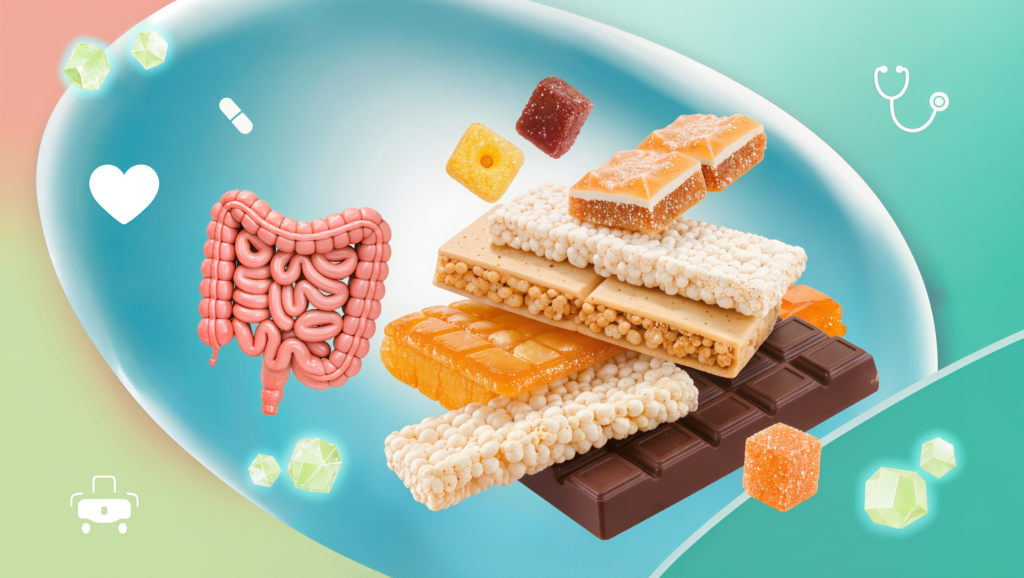












Sugar alcohols sound harmless, even kind of wholesome, but they can absolutely cause gut problems in real life. If you’ve ever eaten a “better-for-you” protein bar, sugar-free candy, or keto snack and then spent the next hour dealing with bloating, gas, or the urgent need to find a bathroom, sugar alcohols may be the reason.
The weird part is that these ingredients are often marketed as the smart swap: fewer calories, less sugar, lower net carbs. That part is technically true, but your digestive system does not care about marketing. It cares about absorption, fermentation, and whether something is going to pull water into your intestines.
What Are Sugar Alcohols?
Sugar alcohols are a type of carbohydrate used as sweeteners in many sugar-free or reduced-sugar foods. Common examples include sorbitol, xylitol, mannitol, erythritol, and maltitol. They taste sweet but are not fully absorbed the same way regular sugar is, which is part of why they have fewer calories.
That low-calorie advantage is the selling point. The digestive downside is the tradeoff. Because these sweeteners are absorbed poorly or slowly, they can reach the colon where gut bacteria ferment them and create gas, bloating, and discomfort.
Why “Health Snacks” Use Sugar Alcohols
Brands love sugar alcohols because they let them make products that look more diet-friendly. They help keep labels lower in sugar and lower in total calories, which is especially appealing in protein bars, keto treats, sugar-free gum, and “no added sugar” snacks.
The problem is that “health snack” does not automatically mean “digestive-friendly snack.” A bar can be high in protein and still cause serious stomach trouble if it also contains multiple sugar alcohols, added fibers, and other ingredients that your gut has to work hard to process. In other words, the snack can be healthier on paper while still being rough on your gut.
The Main Gut Problem: Fermentation
One reason sugar alcohols cause gas and bloating is fermentation. When they make it to the colon, bacteria break them down and produce gas as a byproduct. That gas can cause pressure, distension, cramping, and that classic “why does my stomach feel inflated after one snack?”
This is especially important because many people assume bloating means they ate too much food. Sometimes that is true. But sometimes the issue is not quantity; it is ingredient type. A small snack can still create a big amount of gut discomfort if the ingredient mix is poorly tolerated.
The Other Big Problem: Osmotic Effect
Sugar alcohols can also pull water into the intestines, which is why they can have a laxative effect. That water movement can soften stools or even trigger diarrhea, especially when intake is high.health.
This is why product warnings are common for ingredients like sorbitol and mannitol. The body is basically saying, “I am not fully processing this, so let’s move it along.” That may sound efficient in theory, but in practice it can mean urgency, loose stools, and a very annoying afternoon.
Reason Why Not All Sugar Alcohols Hit the Same
The gut response varies depending on the specific sugar alcohol and the amount eaten. Some are more likely to cause symptoms than others, and individual tolerance differs a lot.
Harvard Health notes that high amounts of sugar alcohols can cause abdominal pain, diarrhea, or loose stools, and that slow digestion gives gut bacteria more time to ferment them. Health.com also notes that around 20 grams may trigger digestive trouble for some people, though tolerance varies widely. That means one person may handle a snack bar just fine while another gets symptoms from a much smaller amount.
Why Some People Are More Sensitive To Sugar Alcohols
Not everyone reacts the same way to sugar alcohols, and the microbiome seems to be part of the reason. A PubMed study found that certain gut bacteria can help suppress sorbitol-induced diarrhea, which suggests that your gut flora may influence whether you tolerate sugar alcohols well.
UC Davis also reported that changes in the gut microbiome after antibiotics and a high-fat diet may contribute to “sorbitol intolerance,” with some people getting bloating, cramps, and diarrhea from even a small amount. That is a big deal because it means sugar alcohol reactions are not just about the ingredient itself. They are also about your gut ecosystem.
Irritable Bowel Symdrome Makes It Worse
People with irritable bowel syndrome often notice sugar alcohols more strongly because their digestive systems are already sensitive. Mary Washington Healthcare notes that GI side effects are seen more in children and people with IBS, including bloating, gas, upset stomach, and diarrhea. Harvard also highlights abdominal pain, diarrhea, and loose stools as common issues when sugar alcohol intake is high.
This is one reason low-FODMAP diets often restrict sugar alcohols. Polyols are part of the FODMAP group, and that matters because many IBS sufferers are trying to reduce fermentable carbs that can trigger symptoms. If your stomach is already reactive, sugar alcohols can be the final straw.
The Sneaky Cumulative Effect
One of the biggest traps is not any single snack. It is the accumulation of several products across the day. You might have a protein bar in the morning, sugar-free gum after lunch, a “keto” dessert later, and a sugar-free drink in the evening. Each one seems small. Together, they can add up to a gut disaster.
That cumulative effect is why people often say, “I only had a little bit of everything.” Exactly. Your gut may not care that the servings were small if the total sugar alcohol load was enough to push it over the edge.
Why Sugar Alcohol Content on Labels Can Be Misleading
A lot of people assume “sugar-free” automatically means better. But sugar-free only means the product does not contain regular sugar in significant amounts. It does not mean it is gentle on the digestive system.
A snack can still contain:
- Sugar alcohols.
- Artificial sweeteners.
- Added fiber isolates.
- Emulsifiers.
- High levels of protein concentrate.
- Sugar alcohol blends that are harder to tolerate.
So the label might be lower in sugar, but the ingredient list can still be a digestive minefield.
Erythritol Is Often Easier, But Not Perfect
Some sugar alcohols, especially erythritol, are often better absorbed than others and may cause fewer digestive symptoms in moderation. That is why some people tolerate erythritol much better than sorbitol or maltitol.
Still, “better tolerated” is not the same as “risk-free.” If a product is loaded with erythritol or contains several sugar alcohols at once, your gut can still complain. The dose matters, and so does the rest of the snack formula.
Why “Healthy” Protein Bars Are a Common Culprit Of Misleading Sugar Alcohols Content in Labels
Protein bars are probably the biggest offender in the health-snack world. They often promise muscle support, low sugar, and convenience, but then deliver a formula designed more for shelf stability and taste than for digestion. That can mean sugar alcohols plus fiber additives plus thickening agents all in one bar.
The result is a food that can be:
- Low in sugar.
- High in marketing.
- Surprisingly rough on the stomach.
- Not all that satisfying.
If your “healthy snack” regularly gives you gas and bloating, it is not really functioning as a healthy snack for your body.
How to Tell If Sugar Alcohols Are the Problem
A good way to troubleshoot is to look at timing. If symptoms show up after a sugar-free snack, gum, or bar, check the ingredient list for sugar alcohols. Watch for words like sorbitol, xylitol, maltitol, mannitol, erythritol, and isomalt.
The pattern often looks like this:
- You eat the snack.
- You feel okay at first.
- Later you get bloated, gassy, crampy, or loose.
- It keeps happening with similar products.
That pattern is a clue. The gut is often very good at pointing to the culprit once you start paying attention.
Alternatives To Eating Sugar Alcohols
If sugar alcohols bother you, the easiest fix is to choose snacks with simpler ingredient lists. Good options often include:
- Fruit.
- Nuts.
- Plain yogurt or kefir.
- Cheese.
- Hard-boiled eggs.
- Oats.
- Homemade snacks with minimal additives.
The goal is not to avoid every “healthy” packaged food forever. It is to choose snacks that support your gut instead of surprising it. A snack should help you feel better, not make you map out the nearest restroom.
Bottom Line
Sugar alcohols are not automatically bad, but they are not automatically gut-friendly either. They can cause gas, bloating, abdominal pain, loose stools, and diarrhea because they are poorly absorbed, fermented by gut bacteria, and able to pull water into the colon.
The biggest takeaway is that “health snack” marketing can hide a digestive cost. If you are sensitive, especially if you have Irritable Bowel Symdrome or a disrupted microbiome, even small amounts can trigger symptoms. The fix is simple but important: read labels, notice patterns, and stop assuming that low sugar automatically means easy on your gut.
Sources: