











That split-second sensation—walking into a café, hearing a laugh, seeing a certain arrangement of light—and suddenly it feels like you have been here before, in this exact moment. Your brain insists the scene is familiar, yet you know logically it cannot be. This is déjà vu, the “already seen” phenomenon that has fascinated philosophers, neurologists, and psychologists for over a century.
Most of the time, déjà vu is a harmless quirk of memory and perception. But in some cases, it can be a subtle signal from the brain—especially when it becomes frequent, intense, or accompanied by other symptoms. Understanding what déjà vu is, why it happens, and when it might matter can help you separate normal brain glitches from potential health concerns.
What is Déjà vu?
Déjà vu is French for “already seen.” It describes the eerie feeling that a new experience has happened before, even though you know it has not.
Key features include:
- A strong sense of familiarity with a current situation.
- Awareness that the familiarity is misplaced or incorrect.
- A brief duration, usually lasting only a few seconds.
- Occurrence in otherwise healthy individuals, often during fatigue, stress, or travel.
Surveys suggest that about two-thirds of people experience déjà vu at least once in their lives. For most, it happens occasionally—perhaps a few times a year—and fades quickly without consequence.
The Memory Systems Behind Déjà vu
To understand déjà vu, it helps to know how recognition memory works. The brain uses at least two systems when deciding whether something is familiar:
- Familiarity-based recognition: A fast, automatic feeling that something is known or old, without recalling specific details.
- Recollection-based recognition: A slower, more detailed retrieval of context—where, when, and how you encountered something before.
Déjà vu appears to occur when these systems fall out of sync. The familiarity system fires strongly, signaling “this is familiar,” while the recollection system cannot find a matching memory. The result is a conflict: your brain feels certain it has been here before, but your conscious mind knows that is impossible.
Neurocognitive models describe this as a temporary glitch in memory processing, where automatic and controlled systems become misaligned. The automatic system prematurely registers a situation as familiar before the controlled system completes its verification.
Where In The Brain Does Déjà Vu Happen?
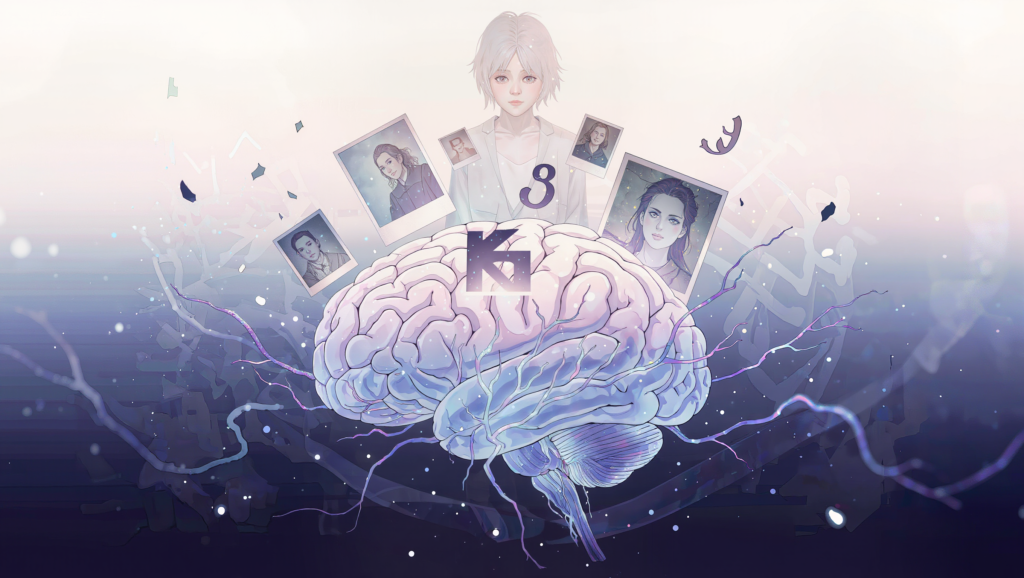
Research points to the medial temporal lobe as the key region involved in déjà vu. This area includes:
- Hippocampus: Crucial for forming and retrieving detailed memories.
- Perirhinal cortex: Involved in familiarity signals and “feeling of oldness.”
- Parahippocampal gyrus: Supports contextual and spatial memory.
- Amygdala: Adds emotional coloring to memories.
Déjà vu likely arises when there is dysfunctional connectivity between these structures and frontal decision-making regions. The temporal lobe sends a familiarity signal, while the frontal lobes evaluate whether that signal matches reality. When they disagree, you experience the uncanny sensation of déjà vu.
Functional imaging and electrical stimulation studies support this model. Brief electrical discharges in the hippocampus and surrounding temporal areas can evoke déjà vu-like sensations, similar to what occurs in mild forms of epilepsy.
Common Theories Of Why Déjà vu Happens
Several theories attempt to explain déjà vu in healthy brains:
1. Dual-process mismatch
As described above, déjà vu occurs when the fast familiarity system and the slower recollection system become out of sync. The automatic system flags a scene as familiar before the controlled system confirms or rejects that feeling.
2. Split perception
This theory suggests that déjà vu arises when you briefly glimpse a scene just before focusing on it more fully. The brain processes the input twice in quick succession, creating a sense of duplication.
3. Implicit memory
You may have encountered a similar situation before but stored it in a vague, unconscious way. When a new scene shares key elements (layout, lighting, sounds), your brain recognizes those familiar aspects without recalling the original memory, leading to a strong but misplaced sense of familiarity.
4. Gestalt familiarity
Sometimes the overall structure of a new environment resembles a past experience, even if the details differ. The brain matches the “gist” rather than the specifics, generating a feeling of familiarity that extends to the entire scene.
5. Neural delay or mismatch
Small delays in neural processing between different sensory or memory pathways could create a temporary mismatch, making the present feel like a replay of the past.
None of these theories fully explains every case, but together they suggest that déjà vu is a normal byproduct of how memory and perception interact.
Déjà vu In Healthy People vs. Epilepsy
For most people, déjà vu is occasional, brief, and benign. However, it can also occur as part of neurological conditions, particularly temporal lobe epilepsy.
Non-ictal (normal) déjà vu
- Occurs in healthy individuals.
- Happens occasionally, often a few times a year.
- Lasts only a few seconds.
- Not accompanied by other neurological symptoms.
- Often triggered by fatigue, stress, travel, or novel environments.
Ictal (epileptic) déjà vu
- Occurs as an aura or focal aware seizure symptom in temporal lobe epilepsy.
- Happens more frequently, sometimes daily or multiple times per day.
- May last longer than typical déjà vu.
- Often accompanied by other symptoms such as:
- Unusual smells or tastes.
- Rising sensation in the abdomen.
- Fear, anxiety, or depersonalization.
- Automatisms (lip smacking, hand movements).
- Confusion or loss of awareness after the episode.
Research shows that déjà vu is common and qualitatively similar whether it occurs as an epileptic aura or a normal phenomenon. What distinguishes epileptic déjà vu is “the company it keeps”—the frequency, duration, and associated symptoms.
Ictal déjà vu is primarily localized to the medial temporal lobe and is most frequently reported in cases of focal mesial temporal lobe epilepsy (FMTLE). However, not all epilepsy patients experience it, and most people who have déjà vu do not have epilepsy.
When Is Déjà vu A Health Signal?
Occasional déjà vu is nothing to worry about. It is an occasional phenomenon in healthy individuals, usually occurring a couple of times a year.
But there are red flags that suggest it may be worth discussing with a healthcare provider:
- Frequent episodes: Déjà vu happening often enough to make you wonder—daily, weekly, or multiple times a day.
- Prolonged duration: Episodes lasting longer than a few seconds, or feeling unusually intense.
- Associated symptoms: Déjà vu accompanied by:
- Unusual smells, tastes, or visual phenomena.
- Rising abdominal sensations.
- Sudden fear, anxiety, or emotional changes.
- Automatisms or unusual movements.
- Confusion, memory gaps, or loss of awareness.
- History of seizures or head injury: Especially if déjà vu begins after a neurological event.
- Other neurological signs: Such as headaches, blackouts, or changes in behavior.
In these cases, déjà vu may be a symptom of temporal lobe epilepsy or another neurological condition rather than a benign memory glitch.
Is Déjà vu A Sign Of A “Healthy” Brain?
Interestingly, some researchers argue that déjà vu is not just a glitch but a sign of well-functioning fact-checking mechanisms in the brain. The phenomenon involves a conflict between false familiarity and rational knowledge. Your brain detects that the familiarity signal is incorrect and flags it as such, which is why you recognize the experience as déjà vu rather than truly believing you have lived it before.
In this view, déjà vu reflects:
- Intact memory systems capable of generating familiarity signals.
- Functional frontal regions able to evaluate and reject false familiarity.
- A brain that can detect and label internal conflicts.
So rather than being purely a memory error, déjà vu may demonstrate that your brain’s quality-control systems are working as intended.
Factors That May Increase Déjà vu
Certain conditions and states are associated with more frequent déjà vu:
- Fatigue and sleep deprivation: Tired brains may be more prone to memory misfires.
- Stress and anxiety: Heightened arousal can affect memory processing.
- Travel and novel environments: New settings provide more opportunities for pattern overlap and implicit memory triggers.
- Young adulthood: Surveys suggest déjà vu is most common in people aged 15–25, possibly due to higher neural plasticity and novelty exposure.
- Dopamine and neurotransmitter fluctuations: Some theories link déjà vu to dopaminergic activity, though this is still under investigation.
These factors do not cause pathology on their own but may increase the likelihood of experiencing déjà vu in healthy individuals.
What To Do If You Are Concerned About Deja Vu
If your déjà vu episodes are occasional, brief, and not accompanied by other symptoms, they are almost certainly benign. No special action is needed beyond general brain health: adequate sleep, stress management, and a balanced lifestyle.
If you notice any red flags—frequency, duration, associated symptoms, or neurological history—consider:
- Keeping a log: Note when episodes occur, how long they last, what you were doing, and any accompanying sensations.
- Talking to your primary care provider: They can assess your history and decide whether referral to a neurologist is warranted.
- Neurological evaluation: This may include EEG, MRI, or other tests if epilepsy or another condition is suspected.
Early recognition of epileptic déjà vu can be important for getting the right treatment, especially if it is part of focal temporal lobe epilepsy.
Bottom line
Déjà vu is a fascinating window into how your brain constructs memory, familiarity, and reality. In most people, it is a normal, transient glitch caused by a momentary mismatch between familiarity and recollection systems in the medial temporal lobe.
Occasional déjà vu is not a sign of disease. In fact, it may reflect healthy fact-checking mechanisms that detect and label false familiarity.
However, frequent, prolonged, or symptom-rich déjà vu can be a health signal—particularly when associated with temporal lobe epilepsy. In those cases, it is worth discussing with a healthcare provider to rule out underlying neurological conditions.
So the next time you feel like you have lived a moment before, you can take comfort in knowing that your brain is doing what brains do: constantly comparing, checking, and sometimes briefly misfiling the present as past.
Sources:
- https://pubmed.ncbi.nlm.nih.gov/23315620/
- https://pmc.ncbi.nlm.nih.gov/articles/PMC3420423/
- https://pmc.ncbi.nlm.nih.gov/articles/PMC11223632/