











Okinawa’s famous longevity story is often told like it comes down to one magical food, and the purple sweet potato is usually the star of the show. That’s not the whole story, but it is definitely a big part of why the island’s traditional diet has fascinated nutrition researchers and blue-zone fans for decades.
The real answer is more interesting than “eat this one superfood and you’ll live forever.” Okinawans historically ate a mostly plant-based diet centered on sweet potatoes, vegetables, soy, and other low-calorie-density foods, with purple sweet potatoes making up a huge share of calories in the traditional pattern. The purple sweet potato is important not just because it is nutritious, but because it sat inside a whole lifestyle and eating pattern that supported long-term health.
Why Okinawa Became a Longevity Legend
Okinawa is one of the world’s famous Blue Zones, meaning it has had a high concentration of centenarians and unusually healthy aging. That reputation did not come from one food alone. It came from a whole cultural pattern of eating lightly, moving regularly, staying socially engaged, and relying on simple, nutrient-dense foods.
Still, the diet piece is huge. One source notes that in the traditional Okinawan diet, about 60 percent of calories came from sweet potatoes, with the rest emphasizing vegetables, soy products, low-GI carbohydrates, some fish, and minimal meat. Another Blue Zones source says that for much of the centenarians’ lives, about 60 percent of calories came from sweet potato.
That is a massive clue. If one food forms the backbone of a population’s calories for generations, it is not just a side dish. It becomes the foundation of the entire metabolic environment.
The Purple Sweet Potato: Okinawa’s Everyday Superfood
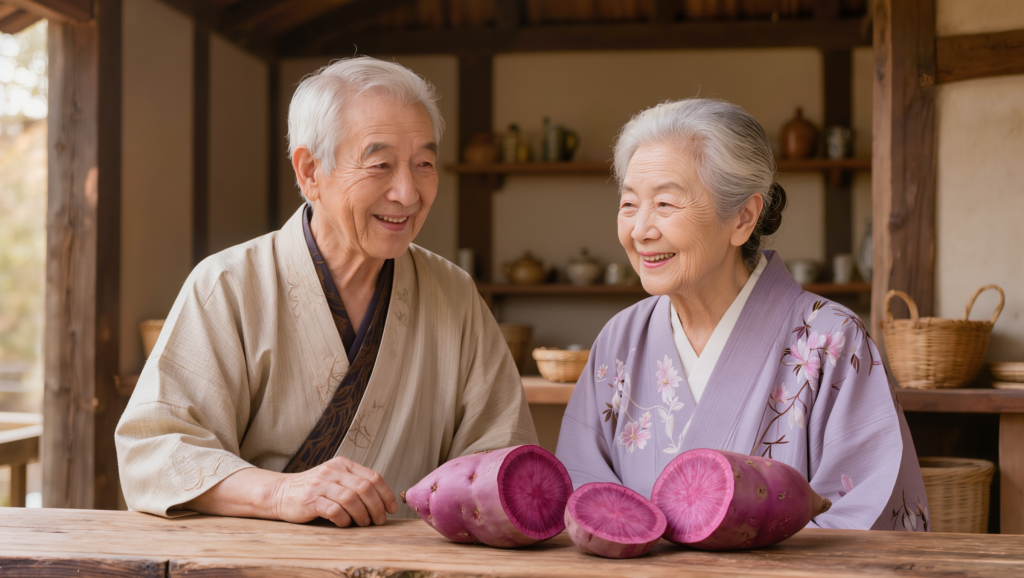
The Okinawan purple sweet potato, also called beni imo, is not a trendy imported wellness food. It was a practical staple that fit the island’s climate, agriculture, and food culture. In Okinawa, it became a cornerstone food for ordinary people, not just a “health food” for elites.
What makes it special?
- It is rich in anthocyanins, the pigments that give it its deep purple color.
- It provides fiber, potassium, vitamin C, and other nutrients.
- It has a relatively low glycemic index compared with many refined starches.
That combination is exactly the kind of thing you want in a staple food: filling, nourishing, and less likely to cause constant blood sugar drama.
Why Anthocyanins Matter So Much
Anthocyanins are the compounds responsible for the purple color, but they are also one of the reasons the potato gets its health halo. Multiple sources describe them as powerful antioxidants with anti-inflammatory properties.
That matters because chronic inflammation and oxidative stress are linked to many age-related diseases. The purple sweet potato’s pigment is not just pretty; it may help protect cells from the kinds of damage that accumulate over time.
This is one reason the Okinawan sweet potato gets so much attention in longevity discussions. It is a visually striking food with a real biochemical story behind it.
Not Just Antioxidants: It’s Also About Starch Quality
A lot of people hear “sweet potato” and assume it is only about vitamins. But the bigger longevity story is about what kind of carbohydrate Okinawans were eating.
Blue Zones notes that Japanese sweet potatoes are low to medium on the glycemic index and were the starch of choice in Okinawa for practical reasons, not just because they were “healthy” in modern marketing terms. Another source says the traditional diet emphasized low-GI carbohydrates.
That is important because the Okinawan diet was not built on large amounts of polished white rice or ultra-processed flour products. It leaned on slower-burning foods that helped people feel satisfied without overloading calories.
In other words, the potato did two jobs:
- It provided energy.
- It helped prevent overeating.
That is a very underappreciated health advantage.
Why Low-Calorie-Density Foods Help Longevity
One of the most striking findings in the Okinawan diet is how plant-heavy and calorie-light it was. The Blue Zones description highlights that the traditional diet was rich in vegetables, beans, and other plants, with less emphasis on meat and processed food. The sweet potato itself is a low energy density food, meaning you get a lot of volume and nutrients for relatively few calories.
That matters because people who live very long lives often do not spend decades overeating. Okinawans also had cultural practices like eating until 80 percent full, which helped keep energy intake moderate. So the potato was part of a larger “enough, but not too much” system.
That is the quiet genius of Okinawan eating. It is not calorie restriction in a sad, modern diet sense. It is a cultural rhythm that naturally encourages moderation.
The Sweet Potato Was A Survival Food, Not A Luxury Food
The history here is worth understanding because it shows the purple sweet potato was not adopted just because someone read a nutrition book. It became a staple because it worked. Blue Zones reports that by the 1600s, islanders turned to growing sweet potatoes after importing them from China. They were practical, resilient, and well suited to the island environment.
That matters because foods that survive harsh conditions often become culturally important for good reason. If a crop is hardy, filling, and useful in a tough environment, it can shape a population’s long-term food habits in a way that is hard for fancy modern superfoods to replicate.
The Longevity Story Is Bigger Than One Ingredient
This is where the internet often gets sloppy. The purple sweet potato is important, but it is not a magic lifespan button. Even the more serious Okinawa discussion points out that longevity came from a combination of factors: plant-rich food, smaller portions, community, movement, and a lifestyle that supported health over the long haul.
That means the potato’s role is best understood as part of a system:
- Staple calories came from a nutrient-dense plant food.
- The food was filling but not heavy.
- The rest of the diet was relatively low in meat and processed food.
- Cultural habits helped prevent overeating.
If you remove the lifestyle and keep only the potato, you get a healthy food — but not the whole Okinawan effect.
How The Okinawan Purple Sweet Potato Compares With Typical Modern Starches
Compared with white rice, refined bread, or highly processed snack foods, the Okinawan purple sweet potato has some clear advantages. It is higher in fiber, packed with protective plant compounds, and more likely to keep blood sugar steadier.
That also helps explain why it is so satisfying. A food that gives you volume, nutrients, and slower digestion is more likely to help with appetite regulation. If you can feel full without a big calorie overload, your body tends to benefit over time.
This is one of the biggest lessons from Okinawa: longevity is often built on boringly good food choices repeated for decades.
What You Can Learn From The Okinawan Eating Pattern
You do not need to move to Okinawa or eat sweet potatoes at every meal to take something useful from this model. The real lessons are pretty simple:
- Make plants the backbone of your diet.
- Favor whole foods over refined starches.
- Choose foods that are filling and nutrient-dense.
- Eat enough to feel satisfied, not stuffed.
- Use starches that come with fiber and phytochemicals.
That is why the purple sweet potato is so appealing as a longevity food. It is not just “healthy” in an abstract sense. It fits a broader pattern of eating that likely helped Okinawans live long, active lives.
So, Is The Answer Really Purple Sweet Potato?
Yes and no. Yes, because it was a cornerstone food in the traditional Okinawan diet and likely contributed a lot to the overall nutritional quality of that diet. No, because no single food explains centenarian longevity by itself.
The more accurate answer is that Okinawans lived past 100 because they built a lifestyle around simple, plant-heavy, low-calorie-density foods — and the purple sweet potato was one of the most important ones.
Bottom Line
What Okinawans ate to support extraordinary longevity was not a miracle formula but a sustainable food pattern, and the purple sweet potato was the centerpiece. It delivered fiber, antioxidants, vitamins, and slow-burning carbohydrates in a way that supported fullness without excess.
So if you are looking for the Okinawan secret, the purple sweet potato is part of it — but the deeper secret is the whole way of eating around it. The tuber mattered because it was nutritious, satisfying, and central to a life built on moderation, movement, and plants.