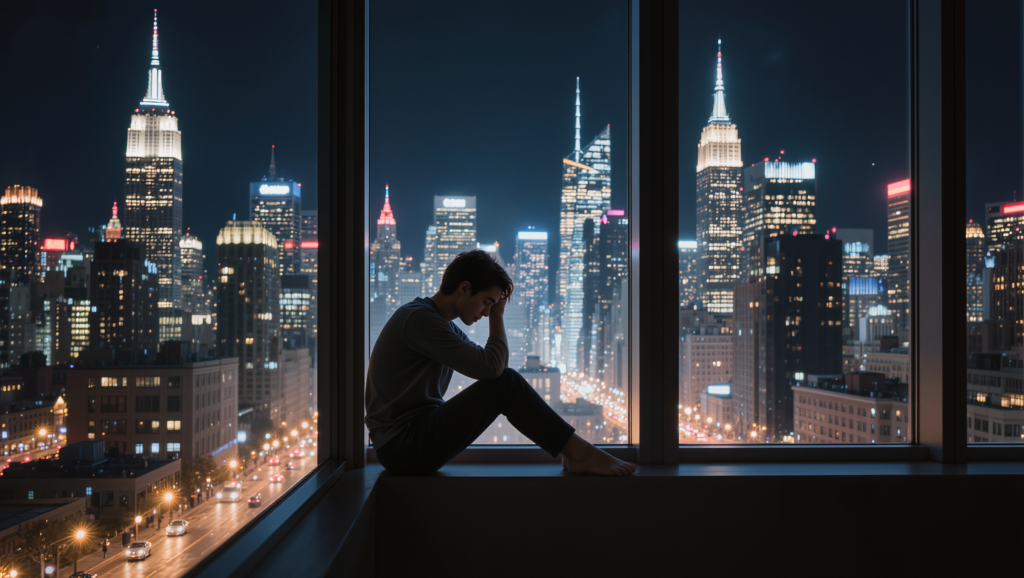












We live in a world that never really goes dark anymore, and that constant glow from streetlights, screens, and billboards is doing more than just lighting up the night. Light pollution messes with your circadian rhythm, suppresses melatonin, and contributes to poorer sleep, mood swings, and even long-term health risks like obesity and metabolic issues.
The problem is sneaky because it feels harmless — who thinks twice about a lit-up city skyline or scrolling on their phone before bed? But research shows even low levels of nighttime light can throw off your body’s internal clock, making it harder to fall asleep, stay asleep, and wake up feeling refreshed.
What Does Light Pollution Mean?
Light pollution is the excessive or misdirected artificial light that brightens the night sky and intrudes into natural darkness. It comes from outdoor sources like streetlights and building illumination, but indoor sources like screens and bedroom lights play a huge role too.
DarkSky.org explains that humans evolved with natural day-night cycles, and artificial light at night disrupts that rhythm by confusing the brain’s photoreceptors, especially those sensitive to blue wavelengths. Even small amounts of light — think a streetlamp filtering through your window — can signal “daytime” to your body when it should be winding down.
How Light Screws With Your Circadian Rhythm
Your circadian rhythm is like an internal 24-hour clock that regulates sleep, hormones, metabolism, and mood. It’s heavily influenced by light exposure through the suprachiasmatic nucleus in the brain, which syncs with environmental cues.
At night, darkness triggers melatonin production, the hormone that promotes sleepiness and has antioxidant properties. Light, especially blue light from LEDs and screens, suppresses melatonin, tricking your brain into thinking it’s still daytime. Harvard Health notes that older adults in brighter nighttime environments are more likely to need sleep meds, highlighting how light pollution can exacerbate insomnia.
This disruption isn’t just about feeling groggy. It cascades into hormone imbalances, reduced deep sleep stages, and fragmented rest, which compounds over time.
We live in a world that never really goes dark anymore, and that constant glow from streetlights, screens, and billboards is doing more than just lighting up the night. Light pollution messes with your circadian rhythm, suppresses melatonin, and contributes to poorer sleep, mood swings, and even long-term health risks like obesity and metabolic issues.
The problem is sneaky because it feels harmless — who thinks twice about a lit-up city skyline or scrolling on their phone before bed? But research shows even low levels of nighttime light can throw off your body’s internal clock, making it harder to fall asleep, stay asleep, and wake up feeling refreshed.
Sleep Disruption: The Most Obvious Victim
Even dim light at night can prevent deep, restorative sleep. A study found that sleeping with room light on shortened melatonin release duration and increased heart rate variability, indicating physiological arousal during supposed rest.
Light pollution studies link brighter nighttime environments to shorter sleep duration, dissatisfaction with sleep quality, daytime sleepiness, and impaired functioning. PubMed research on U.S. populations showed a 10-unit increase in nighttime light correlated with about 5-6 minutes less sleep per day and higher odds of insufficient sleep (<7 hours).
For shift workers or city dwellers, this adds up. Chronic sleep debt weakens immunity, raises inflammation, and sets the stage for bigger problems.
Why Pollution Disrupts Mood And Mental Health
Light pollution doesn’t stop at sleep — it affects serotonin, dopamine, and mood regulation. Disrupted circadian rhythms are tied to depression, with nighttime light exposure increasing symptoms and clinical risk.
Verywell Health reports that light prevents quality sleep, and poor sleep amplifies depression via melatonin interference and circadian misalignment. A GeroScience paper even explores links to Alzheimer’s, suggesting light pollution’s role in neurodegeneration needs more study.
Seasonal Affective Disorder (SAD) worsens in artificially lit urban winters, where natural light cues are scarce but artificial ones are constant.
Metabolic Chaos And Weight Gain
Nighttime light exposure links to obesity and diabetes. It disrupts leptin (satiety hormone) and ghrelin (hunger hormone), leading to overeating and poor food choices.
Women sleeping with lights on were 17% more likely to gain weight, partly from late-night snacking and TV habits. Broader studies associate brighter residential lighting with obesity via reduced sleep and daytime dysfunction.
Heart disease risks rise too, as light-induced sleep loss stresses the cardiovascular system.
Cancer Risk And Hormonal Havoc Of Light Pollution
One of the scariest links is cancer, especially breast cancer. Melatonin’s antioxidant role fights tumor growth, and suppressing it with light raises risks.
National Geographic highlights strong evidence for insomnia and cancer from brighter nights, with night shift workers showing elevated rates. Light pollution’s blue wavelengths exacerbate this by mimicking daylight.
The Urban vs. Rural Divide
City dwellers face worse effects due to pervasive light. Satellite data shows brighter areas correlate with more sleep meds and shorter sleep.
A county-level analysis found a 10-unit light increase tied to 2.19% higher insufficient sleep prevalence. Rural areas, with darker skies, report better sleep metrics.
Blue Light: The Worst Culprit
LEDs and screens emit blue-rich light, five times more disruptive to circadian rhythms than older bulbs. Indoor exposure often hits harder than outdoor due to proximity and duration.
What You Can Do About It
Reclaim your nights with practical steps:
Block Outdoor Light
Ditch Screens Early
Smart Lighting Choices
Bedroom Optimization
Daytime Habits
Why Society Needs Darker Nights
Reducing light pollution benefits everyone. Science.org calls for urban redesign to cut nocturnal light for health and ecology. Public policy could mandate shielded fixtures and lower lux levels.
The Bigger Picture
Light pollution’s health toll is population-level. PMC reviews link it to broad circadian disruption across species, with humans bearing metabolic, mental, and oncogenic costs.
Effect sizes vary — some studies show small daily sleep losses, but they accumulate. Idiosyncratic responses mean some feel it more, but no one escapes unscathed.
Bottom Line
Light pollution’s hidden cost is a disrupted circadian rhythm leading to poor sleep, mood issues, metabolic woes, and disease risks like cancer and diabetes. Even faint nighttime light suppresses melatonin and fragments rest, with urbanites hit hardest.
Simple fixes like blackout curtains, screen limits, and warm lighting reclaim darkness affordably. Prioritizing dark nights isn’t anti-progress — it’s pro-health in a glowing world. Your sleep, mood, and body will thank you.
- https://pubmed.ncbi.nlm.nih.gov/31342600/
- https://pmc.ncbi.nlm.nih.gov/articles/PMC2627884/
- https://pmc.ncbi.nlm.nih.gov/articles/PMC6996197/