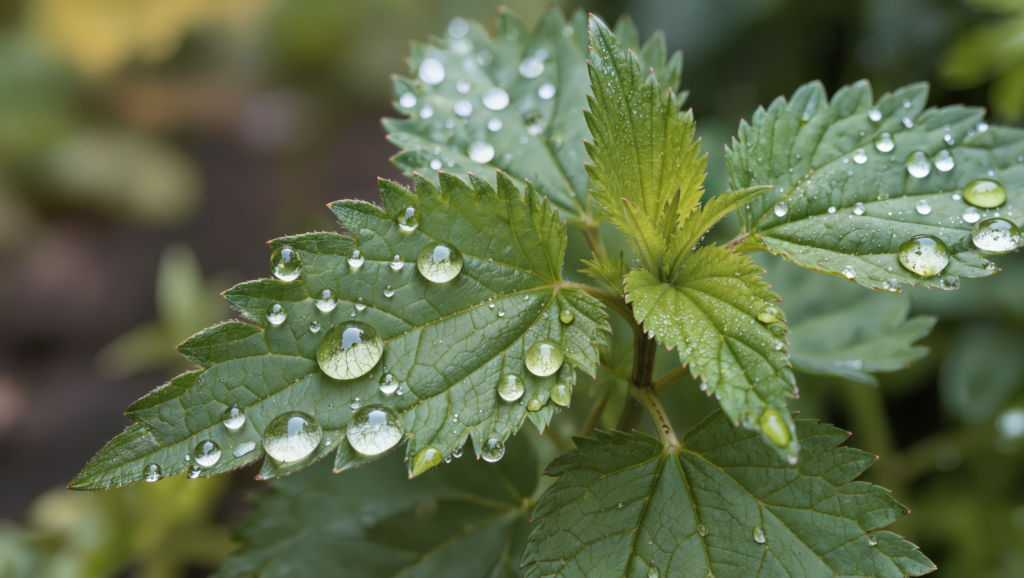












Stinging nettle is one of those plants people spend years avoiding, then suddenly discover is actually a nutrient-rich medicinal herb with a long history of use. It has been used for everything from joint pain and allergies to prostate health and blood sugar support, and the research is interesting enough that this “weed” deserves a much better reputation.
The catch is that nettle is not a miracle cure. Some of its uses are backed by promising but limited evidence, while others are still mostly traditional or preliminary. But if you want the real story, nettle is a surprisingly powerful plant with both culinary and medicinal value.
What Is Stinging Nettle?
Stinging nettle (Urtica dioica) is a wild perennial plant found across Europe, Asia, North Africa, and North America. The “sting” comes from tiny hairs on the leaves and stems that inject irritating compounds when touched, which is why people treat it like the botanical version of a bad mood.
Once cooked or dried, though, those stinging hairs lose their effect. That is why nettle can be turned into tea, soup, greens, and extracts without turning dinner into a contact-sport experience.
Why People Started Using Stinging Nettle For Medicinal Purposes
Nettle has a long history in folk medicine and Its has been traditionally used for arthritis, asthma, hay fever, fluid retention, urinary issues, and general tonic purposes.
In older traditions, it was valued as:
- A diuretic.
- An anti-inflammatory herb.
- A remedy for joint pain.
- A support for urinary and prostate symptoms.
Modern research has not proven every one of those uses, but it has confirmed enough of the plant’s chemistry and biological activity to make the traditional reputation look less like folklore and more like early observational medicine.
The Nutritional Benefits Of Stinging Nettle Most People Overlook
Nettle is not just medicine; it is also food. Young nettle leaves can be cooked into soups, salads, and other dishes, and that nettle leaves contain flavonoids, tannins, vitamins A and C, and even notable iron content.
Areview on nettle’s nutritional and pharmacological importance describes the plant as edible and useful in curries, soups, and other preparations, with leaves, roots, and seeds all having distinct roles. That matters because many “medicinal herbs” are basically not good food, but nettle is one of those rare plants that is both nutritious and pharmacologically interesting.
So if you have been thinking of nettle only as a stingy weed, you are missing half the story.
Benefit 1: Joint pain and inflammation
This is probably the most believable and best-known use of nettle. Several sources say nettle leaf may help with pain and inflammation, especially for arthritis and sore joints.
Rubbing stinging nettle leaves on painful joints has shown some pain relief in research, and a small study found stewed nettle leaves helped as an addition to diclofenac, a nonsteroidal anti-inflammatory drug. Nettle extract may interfere with inflammation, which is a major driver of arthritis pain and joint damage.
The anti-inflammatory angle makes sense because nettle contains bioactive compounds such as flavonoids and other phytochemicals that can affect inflammatory pathways. That does not mean nettle replaces arthritis treatment, but it does suggest why so many people with joint pain keep coming back to it.
Benefit 2: Hay fever and allergies
Nettle has a long folk reputation for easing seasonal allergies, and that use gets some support in modern summaries. The logic is that nettle may reduce histamine release or otherwise calm allergic inflammation.
Some research has linked nettle leaf to reduced sneezing, runny nose, and itchy eyes, but more well-designed studies are needed. That is a pretty fair summary of nettle in general: plausible, promising, not fully nailed down.
If you are the kind of person who gets wrecked by spring pollen, nettle tea or extract might be worth discussing with a clinician, especially if you want a more botanical approach. Just do not expect it to behave like a prescription antihistamine.
Benefit 3: Benign prostatic hyperplasia, or BPH
Nettle root gets a lot of attention for urinary symptoms related to BPH, which is a noncancerous enlargement of the prostate.
This is one of the more serious and clinically relevant uses in the nettle world. Nettle root is commonly used in Europe for BPH symptoms, and nettle extracts may help by binding to sites on sex hormone binding globulin, thereby lessening testosterone’s effect on the prostate.
That mechanism is interesting, but the evidence is still mixed. So nettle root may be a useful support herb for urinary symptoms, but it should not be treated as a substitute for proper evaluation if you have trouble urinating, frequent nighttime urination, or prostate concerns.
Benefit 4: Blood sugar support
Nettle is often discussed in the context of blood sugar control, and this is another area where the science is suggestive but not settled.
Research show there is some evidence that nettle may help control blood sugar in people with type 2 diabetes, but the research is mixed and some studies have even found it can raise blood sugar. That kind of contradiction usually means the plant has real bioactivity, but the outcome depends on dose, preparation, timing, and the person using it.
Because of that uncertainty, nettle should be treated carefully if you are on diabetes medication. The plant may have insulin-like effects in some contexts, but it is not a “natural insulin replacement.”
Benefit 5: Blood pressure and circulation
Nettle has also been used traditionally as a diuretic, which can influence blood pressure and fluid balance. Some animal research suggests nettle may lower blood pressure, but human evidence is not strong enough for firm conclusions.
The broader pharmacology review describes nettle as having hypotensive and cardiovascular-related properties across different parts of the plant. That is intriguing, but again, it is not the same as a proven treatment for hypertension. Think of it as a herb with cardiovascular promise, not a blood pressure medication.
Benefit 6: Antioxidant and antiulcer activity
The latest review data describe nettle as having antioxidant, anti-inflammatory, antiproliferative, and antiulcer characteristics. That is a lot for one weed to be carrying around.
Antioxidants matter because oxidative stress is involved in aging, inflammation, and many chronic diseases. Antiulcer activity also suggests nettle could be useful in supporting the digestive tract, though the evidence is still much more preliminary than mainstream ulcer care.
This is one reason nettle keeps showing up in “super herb” conversations. It is not just one compound doing one thing; it is a whole plant with multiple biologically active components.
Culinary Uses Of Stinging Nettle That People Seem To Forget
One of the most underrated things about nettle is that it is simply a good food when prepared correctly. Nettles can be used in soups, salads, curd cheese, and even spinach-like dishes, and that cooking or drying removes the sting.
Young leaves can be used in curries, herb soups, and sour soups. That makes nettle a true “food as medicine” plant rather than a supplement pretending to be one.
If you are after a practical way to use nettle, food is often the easiest entry point:
- Nettle soup.
- Nettle tea.
- Sautéed nettle greens.
- Nettle pesto.
- Dried nettle in broths or teas.
Risks and Cautions To Note When Using Stinging Nettle
Nettle is useful, but it is not risk-free. People should talk to a doctor before using it, especially if they are managing diabetes, blood pressure, urinary issues, or other chronic conditions.
The main cautions are:
- It can interact with blood sugar control.
- It may affect blood pressure or diuresis.
- The fresh plant can sting skin.
- Supplement products can vary in strength and quality.
If you are pregnant, breastfeeding, or taking medication, nettle is not something to casually experiment with just because it is “natural.” Natural does not automatically mean harmless.
What Scientific Evidences Really Says About Stinging Nettle
The honest read is this: nettle has a strong traditional reputation, solid nutritional value, and a respectable amount of modern pharmacological interest, but the clinical evidence is uneven.
The best-supported uses are probably:
- Mild support for joint pain and inflammation.
- Possible support for BPH urinary symptoms.
- Potential allergy relief.
The weaker or more uncertain uses include:
- Blood sugar control.
- Blood pressure lowering.
- Broader disease claims.urmc.
That does not make nettle overrated. It just means it should be respected as a useful herb, not worshipped as a cure-all.
The bottom line
Stinging nettle is a plant most people try to avoid, but it turns out to be a surprisingly powerful food and herb with real anti-inflammatory, antioxidant, and symptom-relief potential.
If you want a simple take-home:
- Eat it cooked or dried, not fresh from the patch.
- Consider it as a tea, green, or extract if you want support for joints, allergies, or urinary symptoms.
- Do not treat it like a substitute for medical care.
So yes, the weed everyone avoids may actually deserve a place in the kitchen and the herbal cabinet. The sting is real, but so is the value hidden underneath it.
Sources: