











Before refrigerators, people had to be a lot more clever about keeping food edible. That is why fermenting, drying, and salting became foundational preservation methods across cultures, and why they are suddenly trendy again in a world that is worried about waste, resilience, and better flavor.
The short version is this: these old techniques work because they change the conditions microbes need to spoil food. Drying removes water, salting pulls moisture out, and fermentation creates an acidic or alcoholic environment that suppresses harmful organisms. The long version is much more interesting, because these methods are not just survival hacks—they are a whole food philosophy that modern kitchens are quietly rediscovering.
Why Old Food Preservation Methods Are Trending
A lot of people are turning back to ancestral methods for practical reasons. Food prices are up, people want less waste, and many home cooks are looking for ways to preserve garden harvests, bulk produce, or pantry surplus without relying entirely on electricity.
There is also a flavor reason. Fermented, dried, and salted foods do not just last longer; they often taste deeper, sharper, saltier, funkier, or more complex than fresh food. That sensory payoff matters. The old methods survived for centuries not because people were nostalgic, but because they were effective and delicious.
Drying: The Oldest Food Preservation Cheat Code
Drying is probably the simplest preservation method in human history. Remove moisture, and you make it much harder for bacteria, yeast, and mold to grow. The key idea is water activity: microbes need water, and if you take it away, spoilage slows dramatically.
Ancient cultures dried fish, fruits, herbs, vegetables, and meat using sun, wind, and fire-heated structures. Today we use dehydrators and ovens, but the principle is exactly the same. Once food is dry enough, it becomes much more shelf-stable and much easier to store without refrigeration.
Drying also concentrates flavor. That is why jerky tastes intense, dried fruit tastes sweeter, and dried herbs smell stronger than fresh ones. You are not just preserving food; you are distilling it.
What Drying Does Well
- Extends shelf life without electricity.
- Concentrates flavor.
- Reduces food waste during peak harvest seasons.
- Works for fruits, vegetables, herbs, and meats.
What Drying Does Badly
- It can fail if the food is not dried thoroughly.
- It depends on clean conditions and proper airflow.
- It does not work as well in humid climates without equipment.
So drying is simple, but not casual. It rewards patience and setup.
Fermentation: Preservation Through Good Microbes
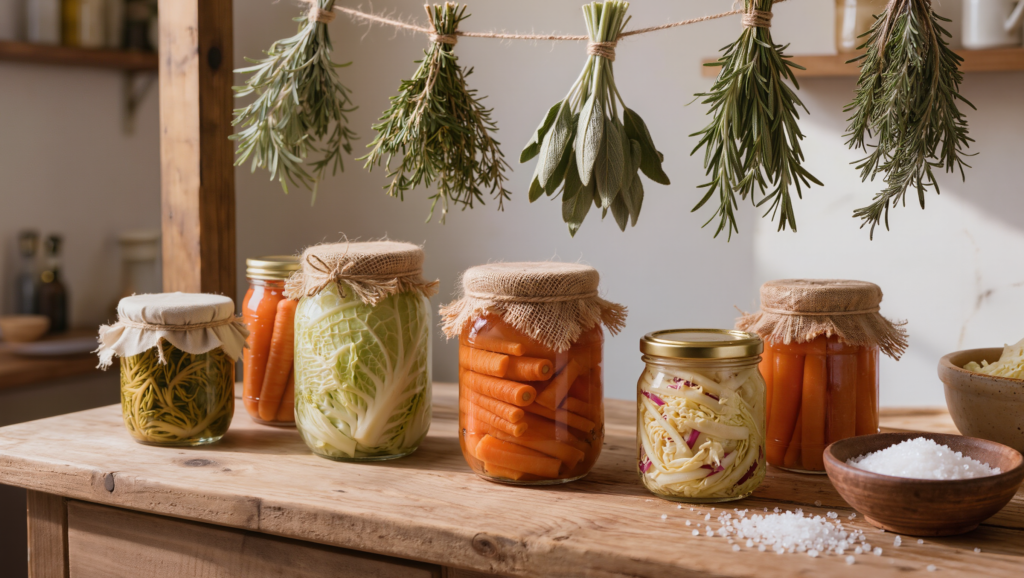
Fermentation is the cool kid of old food preservation methods, and for good reason. Instead of trying to kill every microbe, fermentation invites the right ones to do the work. Beneficial bacteria or yeast convert sugars into acids or alcohol, which lowers pH and makes the environment hostile to spoilage organisms.
That is why fermented foods can last longer, taste better, and in many cases become more digestible or nutritionally interesting. Think yogurt, kimchi, sauerkraut, idli batter, dosa batter, kombucha, pickled vegetables, and naturally fermented breads.
Fermentation is not just about food storage. It is also about transformation. A cabbage becomes sauerkraut. Milk becomes yogurt. Grains become a bubbling batter with new texture and flavor. The preservation effect is real, but the culinary side is often what makes people fall in love with it.
Why Fermentation Works So Well
- It lowers pH, which blocks harmful microbes.
- It can improve taste and texture.
- It can add probiotic potential, depending on the food and process.
- It often increases shelf life while keeping food interesting.
Fermentation is also one reason many cultures developed signature food identities. Korean, Indian, Chinese, Eastern European, and African cuisines all have traditional fermented foods because the method is so practical and so adaptable.
Salting: The Brutally Effective Preservation Method
Salting works because microbes hate dryness and osmotic pressure. Salt draws moisture out of food and out of microbial cells, making it harder for spoilage organisms to grow. That is why salt curing has been used for fish, meat, and some vegetables for centuries.
Salted foods are not necessarily “alive” in the way fermented foods are. Sometimes salting is mainly about preservation rather than microbial transformation. Salted fish, cured meats, and brined vegetables all rely on the same basic idea: make life miserable for the bacteria you do not want.
Salt also deepens flavor and changes texture in a way people often love. That is why cured ham, salted fish, and brined pickles are so enduring. People kept using salt because it was reliable, not because it was trendy.
The Science Behind The Old Food Preservation Wisdom
Our ancestors may not have used the same language we do now, but they understood the effects very well. Modern food science explains the old methods in terms of water activity, acidity, osmotic pressure, and microbial inhibition.
- Drying lowers water activity.
- Salting reduces available moisture and stresses microbes.
- Fermentation lowers pH and creates inhibitory byproducts like acids or alcohol.
This is why these techniques have lasted so long. They are not culinary superstition; they are practical microbiology in home-kitchen form.
Why The Modern World Forgot Old Food Preservation Methods
Refrigeration changed everything. Once cold storage became cheap and widespread, many households stopped needing to dry, salt, or ferment food as a basic survival strategy. Industrial food systems also standardized preservation through packaging, additives, freezing, and canning, which made traditional methods feel old-fashioned.
But “obsolete” is not the same thing as “unnecessary.” The recent resurgence in fermented foods and home preservation shows that people still value the old methods for flavor, self-reliance, and lower waste. In a weird way, the fridge era made these arts feel quaint, and then modern anxiety brought them back.
Food Waste And Resilience
One of the biggest benefits of these methods today is waste reduction. If your garden produces more cucumbers, tomatoes, cabbages, herbs, or fruit than you can eat fresh, preserving them by drying, fermenting, or salting can keep food in circulation instead of letting it rot.
That matters more than ever in a world where food waste is a major sustainability problem. Traditional preservation turns surplus into shelf-stable food, which is basically the original circular economy. You grew it, you saved it, you ate it later. Simple, elegant, and annoyingly effective.
Why Flavor Is The Underrated Benefit Of Old Food Preservation Methods
People often come to preservation for practicality, but stay for the flavor. Drying concentrates sweetness and savoriness. Fermentation adds tang, funk, and complexity. Salting amplifies savoriness and can transform texture in a way that makes food more satisfying.
That is why these methods are back in restaurants and home kitchens alike. They are not just survival tools for people without fridges. They are flavor technologies. The fact that they preserve food is almost a bonus at this point.
What To Watch Out For When Practising Traditional Food Preservation Methods
Traditional preservation is powerful, but it is not foolproof. Bad drying can lead to mold, poor fermentation can spoil food, and salting without the right ratios can create unsafe conditions or terrible texture. These are methods that reward respect.
A few practical truths:
- Dry foods fully and store them dry.
- Use the right salt concentration for curing and brining.
- Keep fermentation clean, controlled, and appropriately salted.
- Do not assume “old method” means “safe by default.”
Our ancestors were clever, but they also learned by trial, error, and sometimes food poisoning. Modern knowledge lets us keep the wisdom and skip the worst mistakes.
The Modern Takeaway
Fermenting, drying, and salting are back because they solve real problems that never went away. They preserve food without refrigeration, reduce waste, create better flavor, and reconnect people with a more resilient kitchen.
The lost arts were never truly lost. They were just waiting for people to remember that preserving food is not a relic of the past—it is a very useful skill for the present.
Final Thought
If you have no fridge, no problem is not just a catchy phrase. It is a reminder that humans survived for millennia by understanding moisture, salt, microbes, and time. The fridge made life easier, but the old food preservation methods made civilization possible. And now, thankfully, they are back in the spotlight where they belong.