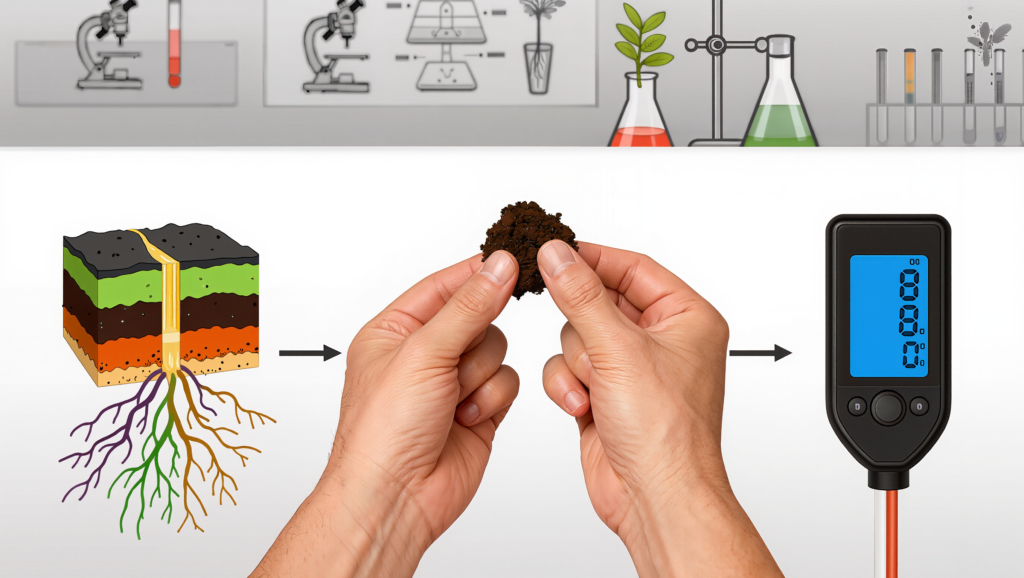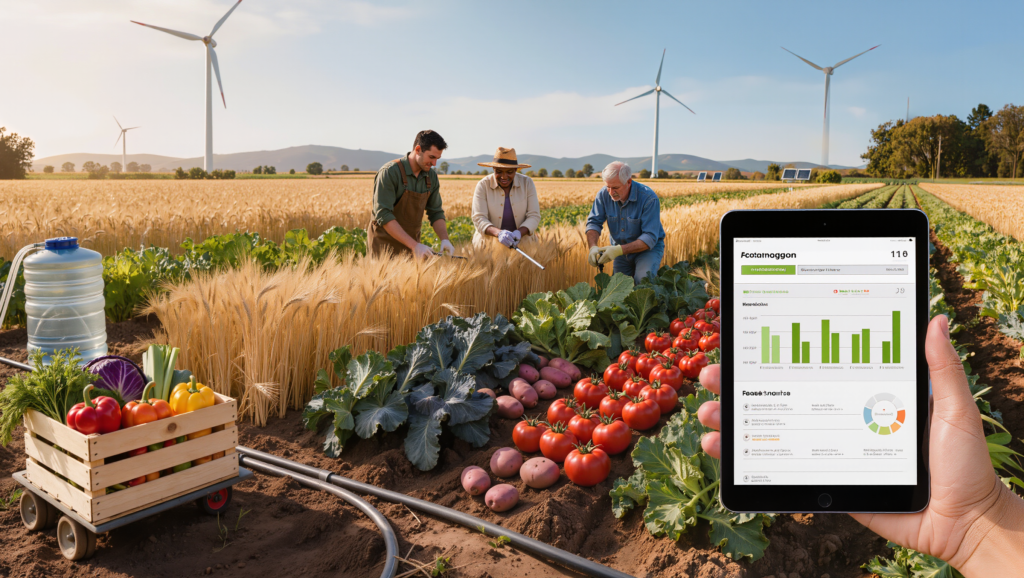












Regenerative farming is changing the nutrition conversation because it treats soil as the starting point of food quality, not just a background detail. The basic idea is simple: healthier soil can support healthier crops, and healthier crops may carry better nutrient profiles, stronger resilience, and fewer losses from stress.
That does not mean every regenerative farm magically produces superfoods. It means the way we farm can influence how plants grow, what they accumulate, and how stable our food supply becomes in a more climate-stressed world.
Why Regenerative Farming Matters Now
A lot of people hear “regenerative agriculture” and think it is just a trendier version of organic or sustainable farming. In reality, it is better understood as a set of practices designed to rebuild soil function, biodiversity, and ecosystem resilience over time.
That matters because industrial agriculture has done real damage to soils through intensive tillage, synthetic fertilizer reliance, herbicide-pesticide use, and monocropping. Those practices can boost short-term yield, but they also tend to weaken soil structure, reduce microbial diversity, and increase vulnerability to drought, erosion, and nutrient decline.
The nutrition angle enters here because food is only as nutrient-rich as the system that grows it. If the soil is biologically exhausted, the crop is more likely to reflect that stress.
What Happens In Regenerative Farming Practices
Regenerative agriculture is not one single method. It is a toolbox of soil-building practices that usually includes cover crops, reduced tillage, crop diversity, compost or organic amendments, rotational grazing, and living roots in the soil for as much of the year as possible.
The reason these practices matter is that they improve the ecosystem below ground. Better soil structure means better water retention, more microbial activity, improved nutrient cycling, and greater resistance to environmental shocks. That is why regenerative farming is often discussed alongside resilience, not just yield.
A useful way to think about it:
- Conventional farming often asks, “How much can we extract?”
- Regenerative farming asks, “How much function can we restore?”
- Nutrition benefits, if they appear, are downstream of that restored function.
The Soil-To-Nutrition Connection
This is the part that gets exciting. A well known cited narrative review says regenerative organic agriculture aims to promote soil health, biodiversity, and long-term sustainability, while explicitly linking soil quality to food nutritional value and human health. Another review asks whether agronomic approaches aligned with regenerative agriculture improve micronutrient concentrations in edible crop portions, which shows the scientific community is actively asking the same question consumers are.
The logic is straightforward:
- Healthy soil supports active nutrient cycling.
- Active nutrient cycling helps plants access minerals.
- Plants under less stress may accumulate more or better-balanced nutrients.
- Better-managed ecosystems may also reduce dilution effects that happen when yield is pursued without regard to nutrient density.
This does not mean every regenerative tomato has twice the vitamin C of a conventional one. But it does suggest farming method matters more than many people assume.
What The Evidence Is Saying So Far About Regenerative farming
The evidence is promising, but it is still developing. A 2022 comparison of regenerative farming practices and soil health found preliminary indications that regenerative methods can enhance the nutritional profiles of crops and livestock. The same research line suggests there may be measurable differences in soil health and crop nutrient density between paired farms.
Meanwhile, the Frontiers scoping review points out that the question is still being studied systematically, especially for micronutrient levels in edible plant parts. That is important because it keeps the conversation honest. The science is not saying “regenerative always equals more nutrients.” It is saying the relationship is plausible, emerging, and worth investigating carefully.
In other words, the nutrition claims are not hype alone, but they are also not fully settled.
Why Soil Health Changes Food Quality
Plants are not passive objects. They respond to their environment constantly. Soil that has better structure, microbial life, and water retention can affect nutrient uptake, phytochemical production, and stress physiology.
This matters in several ways:
- Microbial activity can improve mineral availability.
- Better water management reduces stress on plants.
- Diverse rotations can help break pest and disease cycles.
- Living roots and cover crops can stabilize the system year-round.
When a plant is less stressed, it may invest more in growth and more in the compounds that make it nutritionally interesting, like polyphenols and antioxidants. That is one reason regeneratively grown food is often described as tasting better or feeling “more alive,” though sensory claims should always be treated carefully.
Why Nutrition Is Not Just Vitamins And Minerals
One of the most overlooked parts of the regenerative conversation is that nutrition is bigger than micronutrients alone. Food quality also includes:
- Phytochemicals.
- Fatty acid profiles in animal products.
- Soil-derived mineral balance.
- Post-harvest freshness.
- Storage stability.
- Crop resilience during drought or heat.
If regenerative systems increase resilience, that can matter even when laboratory nutrient values are only modestly different. A more resilient farm may produce food more consistently during climate stress, and that consistency is a form of nutrition security in itself.
This is the part people miss when they reduce the topic to “does regenerative farming make broccoli more nutritious?” Sometimes the larger answer is: it may make the whole food system less fragile.
Climate And Nutrition Are Now Linked
One reason regenerative agriculture has gained momentum is that climate volatility is already affecting food production. Modern industrial systems have contributed to soil degradation, greenhouse gas emissions, and ecosystem stress. Regenerative methods are being studied as a response because healthier soils can hold more water, support better root growth, and potentially improve carbon storage.
This climate resilience matters to nutrition because the crops people rely on need stable growing conditions to maintain quality. When drought, heat, and soil loss increase, nutrient stability can suffer.
So the food system overhaul is not just about producing “better” food. It is about keeping food functional under pressure.
Animal Nutrition Also Changes
Regenerative farming is not only about crops. It also matters for livestock. The 2022 comparison study included both crops and livestock, suggesting regenerative practices may influence nutrient density across the food system, not just on the plant side.
That makes sense because animals grazing on healthier forage, managed in more integrated systems, may produce different fat profiles and potentially more nutrient-dense products. While the exact outcomes vary, the bigger pattern is clear: soil health influences forage quality, forage quality influences animal nutrition, and animal nutrition influences what ends up on the plate.
Again, this is not a universal guarantee. But it is a credible pathway.
The Limits Of The Hype
Regenerative agriculture can sound like a cure-all, and that is where skepticism is useful. The scientific literature does not treat regenerative farming as a single standardized system, and outcomes depend heavily on which practices are used, where they are used, and how well they are managed.
Some key cautions:
- Soil carbon gains can slow as systems approach equilibrium.
- Poorly managed grazing can degrade soils instead of improving them.
- Yield performance can vary by climate and year.
- Nutrient gains are promising but not uniformly proven across all crops and regions.
That means regenerative agriculture should be valued for resilience, soil health, and ecosystem services, not sold as a miracle fix for every agricultural problem.
Why This Is A Nutrition Story, Not Just An Agriculture Story
The reason regenerative farming matters to nutrition is that it moves us away from treating food as a commodity divorced from biology. Once you start viewing soil, plant health, and nutrient density as part of the same chain, the whole logic of eating changes.
That chain looks like this:
- Soil biology influences plant biology.
- Plant biology influences food composition.
- Food composition influences human health.
- Human demand then shapes farming systems again.
This is a much more complete way to think about nutrition than just counting calories or chasing individual nutrients.
What Regenerative Farming Could Change In The Future
If the evidence continues to build, regenerative agriculture could influence how we think about:
- Crop breeding.
- Food labeling.
- Public health nutrition.
- Farm subsidies.
- School and hospital procurement.
- Supply-chain standards for nutrient density.
The future may not be “conventional vs. regenerative” as a clean binary. It may instead be a hybrid system that combines regenerative principles with precision agriculture, data-driven nutrient management, and soil-specific practices. That is probably the most realistic path forward.
Bottom Line
Regenerative farming is rewriting the rules of nutrition by making soil health part of the food-quality conversation. Early research suggests that regenerative practices can improve soil function and may enhance nutrient density, micronutrient concentrations, and the resilience of both crops and livestock.
The strongest case for regenerative agriculture is not that it magically creates miracle foods, but that it builds a more stable, biologically rich, and potentially more nutritious food system over time. In a world of climate stress and soil decline, that is not a small upgrade — it is a food-system overhaul.
Sources:
- https://pmc.ncbi.nlm.nih.gov/articles/PMC12108233/
- https://pmc.ncbi.nlm.nih.gov/articles/PMC8801175/