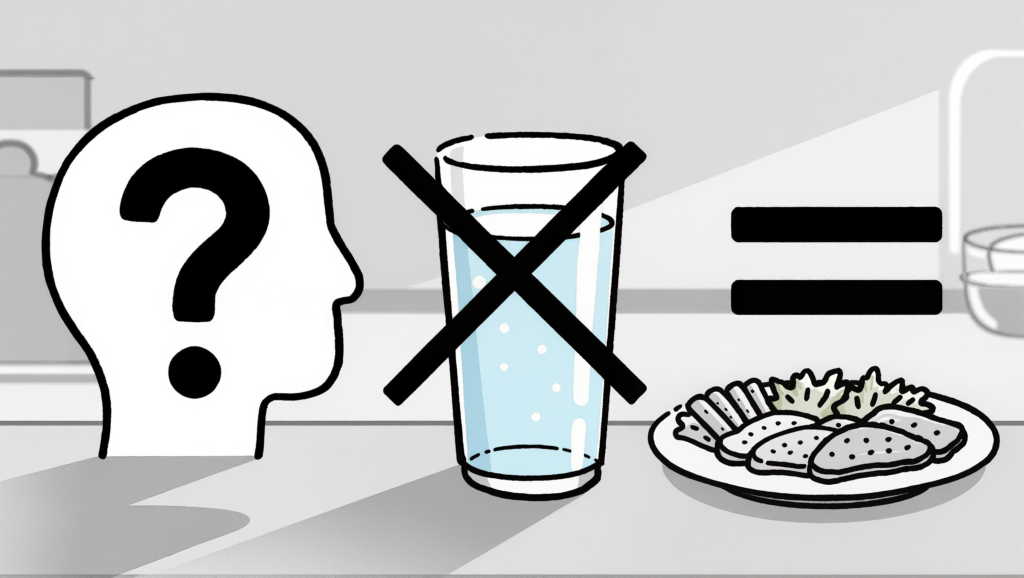












Sometimes what feels like hunger is actually your body asking for water. That confusion happens because the brain uses overlapping signals to regulate both drives, especially through the hypothalamus, and mild dehydration can make those signals feel weirdly similar.
The result is the classic “I need a snack” moment that turns out to be “I need a glass of water.” That mix-up can lead to unnecessary eating, cravings, low energy, and a lot of frustration about why you’re hungry again so soon.
Why The Brain Mixes Up Thirst And Hunger
Hunger and thirst are both basic survival drives, and both are regulated in part by the hypothalamus. Because the same control center helps coordinate both, their signals can overlap or be misread when your hydration status drops.
That overlap is not just a quirky brain glitch. It makes biological sense. The body is trying to maintain homeostasis, so when fluids are low, your internal alarm system can become less precise about whether it needs water, food, or just some form of quick energy and comfort.
In other words, the brain is not “broken.” It is just doing a rushed job under stress.
What Dehydration Does To Appetite Signals
When dehydration sets in, several things can happen at once. Mild dehydration may disrupt appetite hormones such as ghrelin and leptin, which can make you feel hungry even when your stomach is not actually empty. It also notes that dehydration can increase cravings for high-energy foods, especially carbohydrates.
Ageist similarly says chronic dehydration can affect hunger, satiety cues, and your relationship with food, making you feel like you need to graze constantly despite having eaten. That is important because the feeling of hunger is not always a clean signal. Sometimes it is a blended message coming from hydration status, fatigue, mood, and digestion all at once.
So if you find yourself reaching for snacks in a way that feels oddly urgent, dehydration may be part of the story.
Why False Hunger Feels So Convincing
False hunger is convincing because dehydration can mimic the same discomforts people associate with being underfed. Dehydration can cause dry mouth, headache, fatigue, sluggishness, lightheadedness, and brain fog, all of which can be mistaken for food cravings or hunger. Also low energy and dry mouth can easily be interpreted as hunger rather than thirst.
That is why people often say:
- “I’m starving,” when they are actually tired.
- “I need sugar,” when they are actually dehydrated.
- “I’m hungry again,” when they may just be underhydrated.
The brain does not always separate these sensations cleanly. If you are a little dehydrated and mentally taxed, the safest interpretation can become “eat something,” even if water would have solved most of the problem.
The Salt And Sweet Craving Trap Of Dehydration
One of the weirdest parts of dehydration is that it can push people toward specific cravings. Dehydration can trigger cravings for high-energy foods, especially carbohydrates, as the body tries to compensate for a perceived energy dip. Dehydration can also prompt cravings for sweets because water is needed for glycogen handling and energy storage.
That means you may think you want:
- Cookies.
- Chips.
- Bread.
- Candy.
But what your body may really want is fluid balance. This is one reason people can overeat in the afternoon or late at night when they are actually just underhydrated and mentally drained.
It is a sneaky problem because the snack may temporarily make you feel better, but it does not fix the root cause.
How To Tell Hunger From Thirst
The difference between true hunger and thirst is often in the details. A“water test”: drink a full glass of water and wait 15 to 20 minutes before eating. If the urge fades, the body was probably asking for hydration, not food. It also says true hunger is usually gradual, while dehydration-driven hunger tends to feel more sudden and may come with dry mouth, headache, fatigue, or a craving for salty or sweet food.
A practical comparison looks like this:
| True Hunger | Possible Thirst |
|---|---|
| Builds gradually | Appears suddenly |
| Feels like stomach emptiness or growling | Feels like dry mouth, headache, fatigue |
| Improves after eating | May improve after drinking water |
| Usually not highly specific | Often comes with odd cravings or “snacky” urgency |
This is not a perfect test, but it is a very useful one.
Why Mild Dehydration Happens So Easily
The tricky part is that you do not have to be severely dehydrated for this confusion to happen. Even a relatively small drop in hydration can affect mood and mental performance. A 1 to 2 percent loss of body weight from fluid can impair mental function and create fogginess, even mild dehydration can slow focus and mood and increase sugar cravings, irritability, and fog.
That means you might not feel “thirsty” in a dramatic way. You may just feel:
- Off.
- Snappy.
- Distracted.
- Snacky.
- Weirdly tired.
People often assume those feelings mean they need caffeine or food, when hydration may be the first thing to address.
Hydration And Digestion Also Matter
Another reason dehydration can feel like hunger is that water helps digestion and nutrient absorption work properly. Dehydration can negatively affect digestion and slow metabolic rate because water is essential for breaking down food and aiding nutrient absorption. If digestion is sluggish, the body can feel less satisfied and more likely to interpret the state as a nutrient problem.
That can create a frustrating cycle:
- You’re a little dehydrated.
- Digestion feels off.
- Hunger cues get messy.
- You snack.
- You still feel unsatisfied.
- You snack again.
So hydration is not just about quenching thirst. It is part of the machinery that helps your body properly interpret appetite.
The “Too Busy To Drink Water” Problem
A huge reason false hunger is so common is that people simply forget to drink. They wait until thirst is obvious, but thirst is often a late signal. Regular fluid intake throughout the day is recommended, also being proactive rather than waiting until you feel parched is advised. It also mentions simple habits like carrying a water bottle and drinking at set times.
That matters because in real life, thirst often gets drowned out by:
- Work stress.
- Screen time.
- Exercise.
- Coffee intake.
- Busy schedules.
- Habitual snacking.
If you are always in motion, your body may default to the easiest available input, which is food.
How To Prevent False Hunger
The simplest prevention strategy is also the most boring: drink water regularly before you get overly thirsty. A consistent hydration routine, such as drinking water on waking, before meals, and throughout the day. It also recommended to use urine color as a rough indicator; pale yellow is generally a better sign than dark yellow or amber.
Practical habits include:
- Start the day with water.
- Drink a glass before meals.
- Keep water visible and easy to grab.
- Eat water-rich foods like cucumber, celery, and watermelon.
- Pay attention to headaches and dry mouth as early dehydration clues.
You can also pair hydration with food instead of treating them like separate events. A balanced meal plus water is much more likely to satisfy you than a random snack attack.
When Hunger Is Real
Of course, not every “maybe I’m thirsty” moment is just dehydration. Real hunger has its own signals. True hunger tends to be more gradual and may come with a hollow or empty stomach, growling, shakiness, or lightheadedness related to low blood sugar. If the feeling persists after water and time, food is probably the right answer.
That is why the best approach is not to ignore hunger. It is to interpret it more accurately. Sometimes you need water first. Sometimes you need food. Sometimes you need both.
Bottom Line
Your brain can’t always tell hunger from thirst because both signals are regulated by overlapping brain systems, especially the hypothalamus, and dehydration can blur the line between them. When fluids are low, you may feel tired, foggy, irritable, or craving sugar and salt, and those sensations can easily be mistaken for hunger.
The fix is simple but powerful: hydrate regularly, notice the clues, and try the water test before reaching for a snack. That one small habit can save you from a lot of false hunger, unnecessary eating, and “why am I still hungry?” confusion.
Sources: