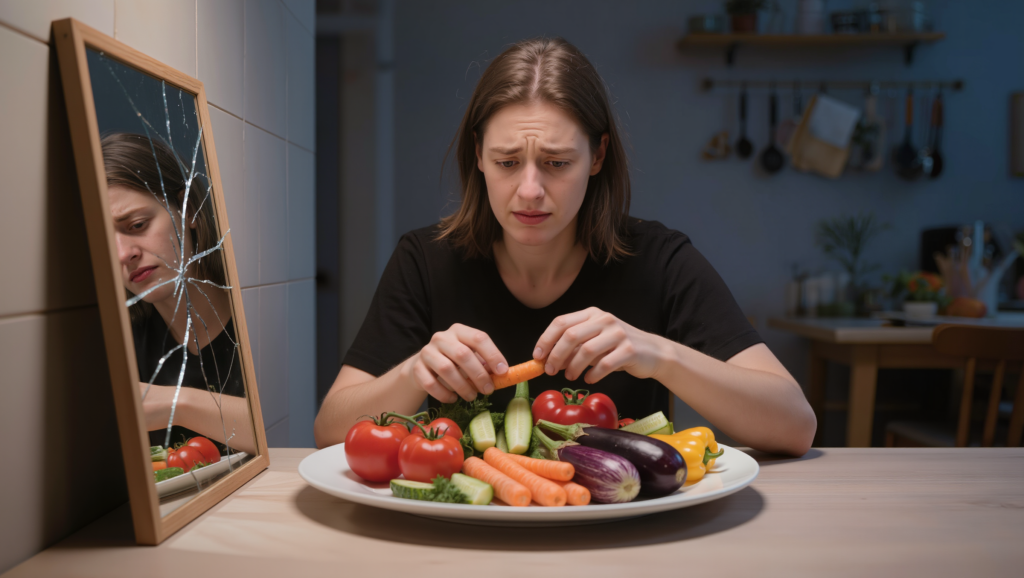












“Clean eating” sounds harmless, even admirable. But when healthy eating turns into rigid rules, fear, guilt, and social avoidance, it can cross the line into orthorexia, a harmful obsession with eating what is perceived as pure or healthy.
The tricky part is that orthorexia often starts with good intentions. People may begin by trying to feel better, improve energy, or eat more nutritious foods, but over time the rules tighten, the anxiety grows, and food stops being just food.
What Is Orthorexia
Orthorexia is an unhealthy obsession or preoccupation with healthy or clean eating. It is a pattern where the food rules become increasingly rigid, restrictive, and distressing, even if the person starts out trying to improve health. It can also be described as an obsession with eating in a proper or healthy way, and that the difference between healthy eating and orthorexia is the amount of fixation, distress, and interference in daily life.
National Eating Disorders Association notes that orthorexia is often described as a fixation on “righteous eating” and that it can compromise nutrition, mental health, and social life. In plain language, it is when “I want to eat well” turns into “I am afraid to eat anything that is not perfect.”
Why Clean Eating Can Become Dangerous
Healthy eating is generally beneficial. The problem starts when “healthy” becomes moralized, and foods get split into rigid categories like good, bad, pure, impure, clean, dirty, or acceptable versus forbidden. That kind of thinking can create a loop of fear and control that gradually narrows a person’s food choices and daily life.
Orthorexia can involve eating only foods the person deems healthy, cutting out entire food groups, compulsively checking labels, and doing frequent cleanses or detoxes. People may rigidly avoid foods they cannot verify, avoid restaurants or vacations, and create rules that are difficult to maintain.
The danger is not just psychological. It is also nutritional and physical:
- Nutrient deficiencies.
- Fatigue.
- Bone loss in severe cases.
- Weakness and low energy.
- A shrinking social life.
That means orthorexia can harm the body even while the person thinks they are “being healthy.”
How Orthorexia Differs From Normal Healthy Eating
This distinction is important because a lot of people genuinely care about nutrition without having an eating disorder. Being aware of nutritional quality is not a problem by itself; the problem is when food rules become obsessive and create distress. Orthorexia is not simply choosing nutritious foods, but rather an unhealthy obsession that becomes rigid and disruptive.
A helpful way to think about the difference:
- Healthy eating is flexible.
- Orthorexia is rigid.
- Healthy eating supports life.
- Orthorexia starts running life.
If a person can enjoy a meal out, adapt to travel, and tolerate occasional imperfections, that is usually not orthorexia. If one ingredient creates panic, guilt, or self-punishment, that is a red flag.
The warning signs
The sources are remarkably consistent on the warning signs. Some signs include strict food rules, obssesive label checking, food avoidance, negative self-image, and excessive detox behavior, cutting out entire food groups, only eating “clean” foods, and increasing supplements or herbal remedies in an effort to stay healthy. Also includes fear of food preparation, refusal to eat food made by others, and avoiding social eating events.
Common warning signs include:
- Obsessive thoughts about food purity.
- Compulsive label checking.
- Eliminating entire food groups.
- Refusing restaurants or social meals.
- Anxiety if “safe” foods are unavailable.
- Frequent cleanses or detoxes.
- Increasing guilt after eating “non-clean” foods.
One of the most telling signs is that the person’s world gets smaller. Food rules begin to control travel, celebrations, dating, holidays, and even family time.
Physical Consequences Of Orthorexia Nobody Talks About Enough
Orthorexia can look “healthy” on the outside while creating real damage on the inside. Even if a person is not underweight, orthorexic behaviors can still cause nutrient deficiencies, fatigue, and bone loss. Restrictive eating can reduce calorie intake enough to affect muscle mass, cardiovascular health, blood pressure, and heart rate, while also contributing to constipation, bloating, anemia, brittle nails, dry skin, and weakness.
That is the hidden irony: a person may be chasing health but slowly undermining it. Restricting too many foods can reduce:
- Energy intake.
- Protein variety.
- Micronutrient coverage.
- Digestive comfort.
- Bone and muscle support.
So even when the motivation is purity, the result can be malnutrition.
The Mental Toll Of Orthorexia
Orthorexia is not only about food. It is also about anxiety, control, identity, and self-worth. It can be described as distressing, and it can negatively impact quality of life and mental wellbeing. The stress and preoccupation of being a “healthy eater” may signal orthorexia, especially when the person becomes highly perfectionistic.
That psychological pressure often shows up as:
- Guilt after eating.
- Shame over “slipping.”
- Constant self-monitoring.
- Fear of being judged.
- A sense that one wrong meal ruins everything.
Over time, food becomes a test instead of nourishment. That is a miserable way to live, even if it looks disciplined from the outside.
Why Orthorexia Affects Social Life Negatively
A lot of eating disorders isolate people, but orthorexia has a particularly sneaky way of shrinking social life because so many social events revolve around food. Food rules can take over relationships, travel, celebrations, and other parts of life. People may avoid get-togethers when food options do not fit their rules. The impact on social eating events.
This can look like:
- Skipping dinner invites.
- Avoiding family gatherings.
- Micromanaging restaurants.
- Refusing spontaneous trips.
- Feeling isolated while trying to stay “on plan.”
The cruel part is that the behavior often begins in the name of health but ends up damaging connection, which is another major pillar of health.
How Diet Culture Fuels The Orthorexia Problem
Orthorexia thrives in cultures that glorify purity, perfection, and constant self-optimization. If every wellness influencer is telling you that one food is toxic, another is miraculous, and your whole moral worth is visible on your plate, clean eating can become fertile ground for obsession. Orthorexia can appear deceptively health-minded at first, which is part of why it gets overlooked.
The problem is not interest in nutrition. The problem is when nutrition becomes a moral identity and every deviation feels like failure.
Getting Help With Orthorexia Without Shame
If orthorexia sounds uncomfortably familiar, the important thing is not to shame yourself. If you notice symptoms in yourself or a loved one, it is best to consult a physician. Support from a dietitian, primary care provider, and sometimes a counselor is recommended to help rebuild a healthy relationship with food.
That support may involve:
- Reintroducing eliminated foods gradually.
- Reducing fear-based food rules.
- Addressing anxiety and perfectionism.
- Restoring social eating.
- Improving nutritional adequacy.
Recovery is not about “eating badly.” It is about making room for flexibility, nourishment, and real life again.
A Healthier Way To Think About Food
Foods are better thought of as more or less nutritious depending on your needs, rather than good or bad. That simple shift can take a lot of pressure off. It allows for balance, context, and human reality.
A healthier mindset looks like:
- Choosing nutrient-dense foods often.
- Allowing flexibility.
- Accepting imperfect meals.
- Eating socially when possible.
- Letting nutrition support life, not dominate it.
That is the sweet spot most people actually need: enough structure to feel well, enough flexibility to stay sane.
Bottom line
The hidden danger of eating clean is that “healthy” can turn harmful when it becomes obsessive, rigid, and fear-driven. Orthorexia is the point where clean eating stops supporting your health and starts taking it over, damaging nutrition, physical wellbeing, and social life.
The real warning sign is not whether someone cares about healthy food. It is whether that concern has become a prison. When food rules start shrinking your life, it is time to get help and reclaim flexibility, connection, and ease around eating.