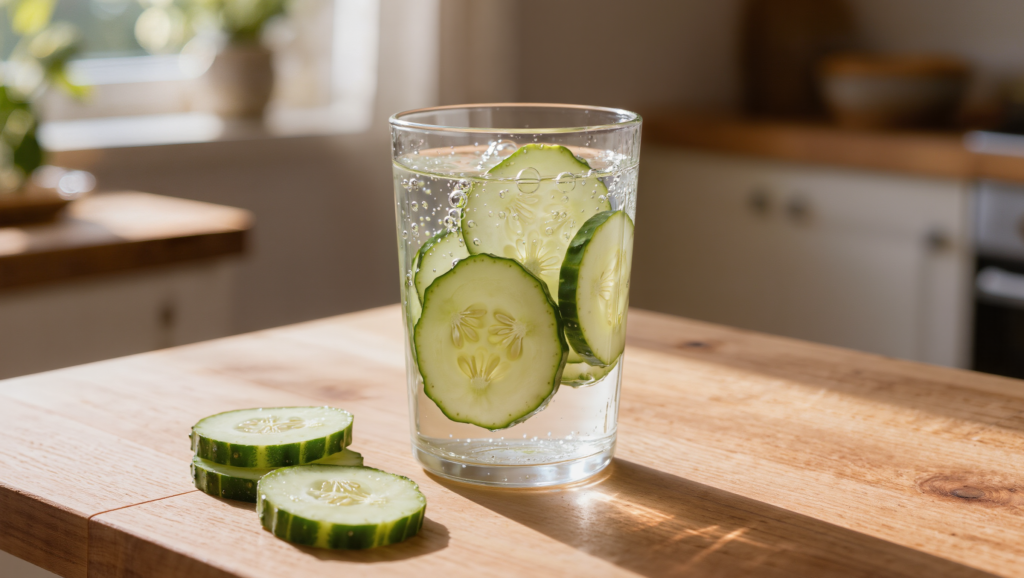












Scroll through wellness TikTok or Instagram and you will see endless glasses of crystal-clear water studded with perfect cucumber slices, often accompanied by claims about “detox,” “glowing skin,” and “supercharged hydration.” Cucumber-infused water has become a staple of spa days, influencer routines, and healthy-living blogs. But beyond the aesthetics, is there real science behind the trend—or is it mostly marketing hype?
The short answer: cucumber water is not a miracle cure, but it is also not meaningless. Its biggest, most evidence-backed benefit is helping you drink more water. The mineral and nutrient boost from the cucumber itself is real but modest, and the idea that it dramatically improves mineral absorption is more nuanced than many posts suggest.
Let’s unpack what cucumber-infused water actually does for hydration, mineral intake, and absorption—and where the hype overtakes the evidence.
What Is Cucumber-Infused Water?
Cucumber-infused water is simply water flavored with fresh cucumber slices. You can make it by:
- Adding thin cucumber slices to a pitcher of cold water.
- Letting it sit in the fridge for a few hours (or overnight).
- Drinking the water and optionally eating the slices.
Nutritionally, it remains mostly water. Cucumbers themselves are about 95–96% water, low in calories, and contain small amounts of vitamins (like vitamin K and some B vitamins), minerals (especially potassium and magnesium), and plant compounds such as flavonoids and silica.
When cucumber is only steeped in water rather than eaten, only a fraction of those nutrients leach into the drink. That distinction—infused water vs. eating the cucumber—is central to understanding its real benefits.
The Biggest Benefit Of Cucumber Water Is Better Hydration Through Taste
The most robust, evidence-based benefit of cucumber water is straightforward: it helps with hydration.
Why? Because it makes water more appealing. Many people struggle to drink enough plain water during the day. A light, refreshing flavor can:
- Increase how much water you voluntarily drink.
- Help you meet daily fluid goals, especially in warm weather, during exercise, or when recovering from minor illness.
- Provide a zero-sugar alternative to sodas, juices, and sweetened beverages.
Most of cucumber water’s benefits come from improved fluid intake rather than from the cucumber itself. In other words, if cucumber water gets you to drink more, you gain all the well-documented benefits of better hydration: improved cognitive function, mood, digestion, kidney function, and physical performance.
From a clinical standpoint, no major health authority recommends cucumber water over plain water for core hydration metrics like plasma volume or urine osmolality. Its role is supportive—helping adherence to hydration goals—not therapeutic.
Do Cucumbers Add Meaningful Minerals To Water?
Cucumbers do contain electrolytes and minerals, notably:
- Potassium: Around 147 mg per 100 g of cucumber.
- Magnesium: About 13 mg per 100 g.
- Small amounts of calcium and trace minerals.
- Very low sodium (about 2 mg per 100 g), creating a favorable potassium-to-sodium ratio.
When you infuse cucumber in water, some of these minerals can leach out, especially if the slices sit for several hours. Sources agree that:
- Cucumber water does add trace electrolytes to water, primarily potassium and magnesium.
- The amounts are relatively modest compared to dedicated electrolyte drinks or supplements.
- Most of the nutrition still comes from eating the cucumber itself, not just drinking the infused water.
One cup of cucumber water may provide less than 1% of the daily value for potassium, underscoring how small the mineral contribution is unless you also consume the slices.
So, does cucumber water significantly boost your mineral intake? Only slightly. It is not a replacement for eating vegetables or using electrolyte solutions when you truly need them (e.g., after heavy sweating, illness, or heat exposure).
The Mineral Absorption Claim Of Cucumber Water: What’s Real And What’s Exaggerated?
Here is where things get interesting—and where hype often outpaces evidence.
Claim: Cucumber water improves mineral absorption
Cucumber-infused water does more than just add minerals; it helps your body absorb them better. Specific claims include:
- Enhanced cellular osmosis and water transport due to trace electrolytes and organic acids.
- Improved absorption of calcium, potassium, and other minerals.
- Better hydration at the cellular level compared to plain water.
Some go further, stating that:
- The natural electrolytes from cucumber and mild acids (especially when combined with lemon) create a mild electrolyte gradient that encourages water to move into cells.
- Consistent consumption of cucumber water over weeks may improve skin elasticity and hydration beyond what regular water provides, partly due to better bioavailability of silica and other compounds.
What the evidence actually shows
The reality is more nuanced:
- Electrolytes do aid water absorption.
It is well-established in physiology that water absorption in the intestines is enhanced when sodium, glucose, and other solutes are present. This is the principle behind oral rehydration solutions (ORS), which use specific ratios of sodium and glucose to maximize water uptake. Potassium and magnesium also contribute to fluid balance, though they are less critical than sodium for rapid rehydration. Cucumber water contains trace amounts of potassium and magnesium, but very little sodium. That means it may offer a mild electrolyte effect, but it is not comparable to clinical ORS or sports drinks designed for rapid rehydration. - Cucumber consumption does not dramatically shift plasma electrolytes.
A study on cucumber consumption in health sciences students found no significant changes in plasma electrolyte levels after three weeks of regular cucumber intake, aside from some sex-based differences in sodium. The conclusion: cucumber is safe and does not harm electrolyte balance, but it also does not profoundly alter it in the short term. This suggests that while cucumbers contribute minerals, they do not drastically change systemic electrolyte status in healthy people over a few weeks. - Silica bioavailability may be enhanced, but data are limited.
Some dietitians and emerging reports suggest that the silica in cucumber-infused water shows better bioavailability when consumed consistently for three or more weeks, potentially improving skin elasticity and hydration beyond plain water. However, this is based more on observational and anecdotal reports than large, controlled trials. Silica is a trace mineral involved in collagen formation and connective tissue health, and cucumbers are one dietary source. Whether infused water delivers enough silica to matter clinically remains unclear. - Combination with lemon may enhance certain aspects.
When cucumber is combined with lemon, the citric acid can:- Stimulate gastric acid production, potentially optimizing protein breakdown and some mineral absorption.
- Add flavonoids and additional trace electrolytes.
- Improve palatability even further, boosting fluid compliance.
- Cucumber can interfere with iron absorption in some contexts.
Interestingly, not all mineral interactions are positive. Some experts warn that consuming raw cucumber with iron-rich plant meals (like lentils or spinach) can reduce non-heme iron absorption by up to 37%, likely due to phytase-inhibiting compounds. The recommendation: avoid cucumber for about 90 minutes before and after iron-focused meals if you are trying to maximize iron status. This is a reminder that “more minerals” does not always mean “better absorption of all minerals.”
Bottom line on absorption
Cucumber-infused water:
- Provides trace electrolytes that may mildly support fluid balance and cellular hydration.
- Is not a clinically significant enhancer of mineral absorption compared to targeted interventions (e.g., vitamin C with iron, sodium-glucose solutions for rehydration).
- May offer small, cumulative benefits for skin and connective tissue via silica and antioxidants, especially with consistent, long-term use—but robust clinical data are limited.
In short, it can be a gentle, supportive tool for daily hydration and modest mineral intake, but it is not a substitute for a nutrient-dense diet or evidence-based rehydration strategies when those are needed.
Drinking Cucumber Water Vs. Eating Cucumbers: Where Do The Nutrients Really Come From?
A key point repeated across sources is that most of cucumber’s nutrition comes from the vegetable itself, not the infused water.
- Eating cucumbers gives you:
- Full fiber content (good for digestion and satiety).
- Higher doses of vitamins, minerals, and phytonutrients.
- More substantial effects on hydration due to high water content plus solid mass.
- Drinking cucumber-infused water gives you:
- Hydration with a light flavor.
- Trace amounts of minerals and plant compounds.
- Very few calories and no fiber.
If your goal is to maximize nutrient intake, eating the cucumber slices in your water—or simply eating cucumbers as part of meals and snacks—will provide far more benefit than drinking the infused water alone.
Where Cucumber Water Fits In A Healthy Routine
Cucumber water shines as:
- A low-calorie, flavorful hydration aid that can help you drink more water throughout the day.
- A sugar-free alternative to sodas, sweet teas, and juice drinks, indirectly supporting weight management by reducing calorie intake.
- A gentle, everyday wellness ritual that may offer small cumulative benefits for skin, digestion, and overall fluid balance, especially when consumed consistently.
It is less appropriate as:
- A clinical rehydration solution for severe fluid loss (e.g., gastroenteritis, heat exhaustion), where oral rehydration salts or electrolyte drinks are superior.
- A primary strategy for correcting nutrient deficiencies or managing conditions like hypertension, where diet-wide patterns and targeted interventions matter far more.
- A replacement for vegetables in your diet. It complements, but does not substitute for, eating whole fruits and vegetables.
Practical Tips For Making And Using Cucumber Water
If you want to try cucumber-infused water:
- Use fresh, washed cucumbers. Organic is ideal if you plan to eat the slices.
- Slice thinly to maximize surface area and flavor extraction.
- Infuse for 2–8 hours in the fridge; overnight is fine.
- Drink within 24 hours for best taste and safety.
- Eat the slices if you want more nutrients and fiber.
- Combine with other flavors like lemon, mint, or lime for variety, keeping in mind that lemon may slightly enhance digestive comfort and flavor appeal.
For most healthy people, 1–2 liters of cucumber water per day as part of total fluid intake is reasonable, but plain water should still make up the bulk of your hydration.
Bottom line
Is cucumber-infused water just hype? Not entirely. Its core benefit—helping you drink more water—is real, well-supported, and practically important in a world where many people are chronically under-hydrated.
The mineral and nutrient boost from the cucumber is genuine but modest. Cucumber water adds trace electrolytes like potassium and magnesium and may offer slight advantages for cellular hydration and skin health over time, especially when consumed consistently. However, it is not a clinically significant enhancer of mineral absorption, nor a replacement for eating vegetables or using proper rehydration solutions when needed.
Think of cucumber water as a supportive, low-calorie hydration tool with a few extra perks—not a miracle detox or a substitute for a nutrient-dense diet. Used wisely, it can be a refreshing part of a healthy routine, as long as expectations stay aligned with what the evidence actually shows.