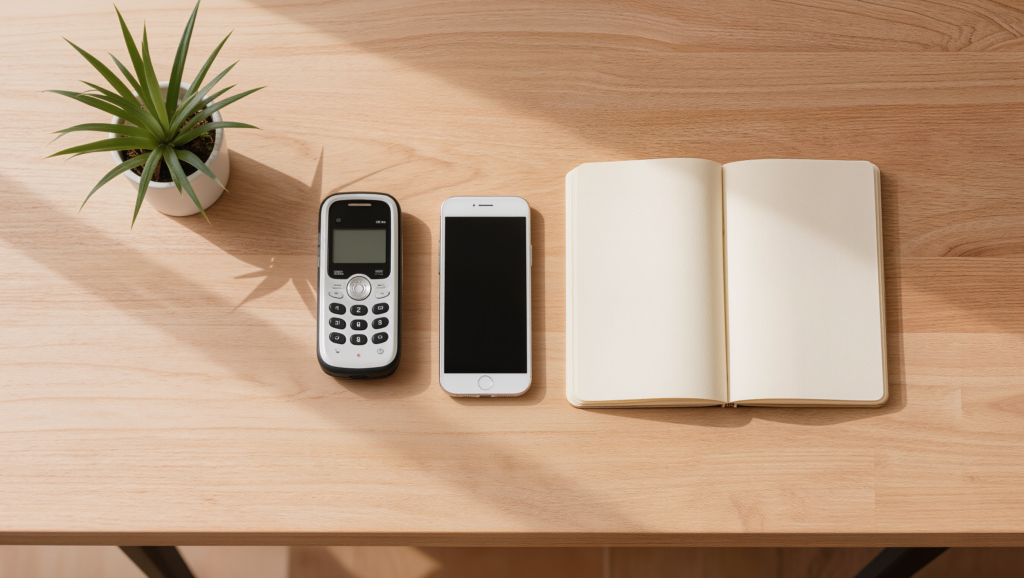












Switching to a dumbphone can do more for your mental health than most people expect. By stripping away endless apps, feeds, and notifications, it reduces digital overload, makes it easier to focus, and can lower the sense of constant “on-call” stress that smartphones create.
That said, the benefit is not really about the phone being “smart” or “dumb” in a moral sense. It is about reducing the behaviors smartphones are designed to encourage: compulsive checking, fragmented attention, and habitual scrolling.
Why Dumbphones Are Becoming Popular
Dumbphones are making a comeback because a lot of people are simply tired of feeling trapped by their phones. Basic phones remove the endless access points that keep people glued to their screens, which is a big reason digital minimalism has become such a relatable idea.
The appeal is straightforward:
- Fewer notifications.
- No doomscrolling.
- Less social comparison.
- More offline time.
For many users, that creates a kind of psychological relief. Instead of constantly checking a device that can do everything, they use a phone that does just enough.
The Stress Reduction Effect
One of the clearest mental health benefits of switching to a dumbphone is stress reduction. Smartphones create a steady stream of unfinished business: unread messages, app alerts, breaking news, social media updates, and all the tiny little cues that tell your brain there is something else to do right now.
Basic phones cut that loop down dramatically. Without the constant drip of alerts, users often report feeling mentally lighter and less pressured to react immediately. That matters because chronic micro-stress is not always dramatic; sometimes it is just the relentless feeling that your attention never fully belongs to you.
There is also a dopamine angle. Experts quoted in the coverage note that smartphones are intentionally built to exploit reward circuits through likes, texts, and fresh content, which keeps people engaged even when they are tired or distracted. A dumbphone interrupts that reward loop simply by removing most of the triggers.
Focus Gets Easier
A dumbphone can also improve focus in a very practical way. When your device cannot run social feeds, video apps, games, or constant browser checks, your attention stops getting chopped into tiny pieces.
That can help with:
- Reading.
- Working without interruptions.
- Staying present during conversations.
- Getting through boring but important tasks.
This is one of the biggest reasons people describe dumbphones as “liberating.” You do not need to rely on willpower as much because the device itself is not constantly inviting you to switch contexts. In other words, a dumbphone does not make you more disciplined by magic; it just makes distraction less convenient.
Sleep May Benefit Too
Sleep is another area where dumbphones can help, even if the effect is indirect. Smartphones are tied to late-night checking, social media spirals, and blue-light exposure, all of which can push bedtime later and make it harder to settle down.
A simpler phone often changes the evening routine by default. If you cannot scroll endlessly before bed, you are more likely to stop using the device altogether and let your brain wind down. That can be a surprisingly big mental health win because poor sleep and anxiety tend to feed each other.
More Presence, Less Performance
A lot of smartphone fatigue comes from living in performance mode. With a smartphone, you are not just communicating; you are also monitoring, posting, responding, comparing, and curating. That can make ordinary life feel like a constant audience experience.
Dumbphones reduce that pressure. Because they are mostly for calls and texts, they make it easier to show up in real life without feeling like you need to document everything. People often say they feel more present with family, friends, and even strangers because the phone is no longer the center of the interaction.
That sounds small, but over time it changes how your days feel. Less screen-centered living often means more noticing, more patience, and more actual conversation.
The Social Media Effect
A big part of the mental health conversation around dumbphones is really a social media conversation. Multiple sources note that social media use is linked with anxiety, depression, emotional comparison, and addictive patterns, especially when use becomes excessive.
A dumbphone removes the easiest path back into that cycle. You can still use social media on other devices, but the impulse loop becomes harder to trigger every five minutes. That friction is a feature, not a bug.
This is especially useful for people who know they are not going to use apps “a little.” If one push notification leads to ten minutes of scrolling, a dumbphone can create enough distance to break the habit.
The Mental Health Tradeoff
Of course, dumbphones are not a perfect solution for everyone. The same device that reduces distraction can also create inconvenience, especially if your work, family, or location depends on smartphone tools like maps, banking, messaging apps, or two-factor authentication.
That means a dumbphone works best as a boundary tool, not a purity test. For some people, it is a full switch. For others, it is a weekend device, a workday device, or a “leave the smartphone at home” experiment.
The mental health benefit comes from intentionally reducing frictionless access to overstimulating content, not from rejecting technology wholesale.
Who Benefits Most From Using Dumbphones
Dumbphones tend to make the most sense for people who already feel overwhelmed by their phone use. That includes:
- People who check their device compulsively.
- People who feel anxious when notifications pile up.
- People who lose hours to scrolling.
- People trying to improve sleep and concentration.
- People who want more presence in relationships.
They can also be helpful during specific life phases, like exams, burnout recovery, creative work, or parenting. In those moments, less digital noise can mean more headspace.
Where the Dumbphone Hype Goes Too Far
The internet sometimes talks about dumbphones like they are a cure for modern life. That is too much. They can help reduce stress and distraction, but they do not solve every mental health issue, and they are not a substitute for therapy, sleep, social support, or medical care.
It is also worth noting that the evidence base is a mix of research, expert commentary, and user reports rather than large randomized trials of dumbphone use specifically. So the strongest claim we can make is not “dumbphones fix mental health,” but “reducing smartphone-style overload often helps people feel calmer and more focused.”
That is a meaningful difference.
How To Try Using A Dumbphone Without Going All In
If the idea sounds appealing but extreme, start small:
- Turn off nonessential notifications.
- Use a dumbphone only on weekends.
- Keep a smartphone but delete the most addictive apps.
- Use a basic phone for calls and texts, and a separate device for occasional internet tasks.
The point is not to become a minimalist monk. The point is to see how your mood, focus, and energy change when your device stops acting like a slot machine in your pocket.
The real takeaway
The unexpected mental health benefit of a dumbphone is not nostalgia. It is relief. When the device stops demanding constant attention, your brain gets more room to breathe, your sleep often improves, your focus sharpens, and your social life can start to feel more real again.
So yes, digital minimalism through a dumbphone can be a genuinely smart move. Not because it makes you reject modern life, but because it helps you stop letting modern life chew up your attention all day long.