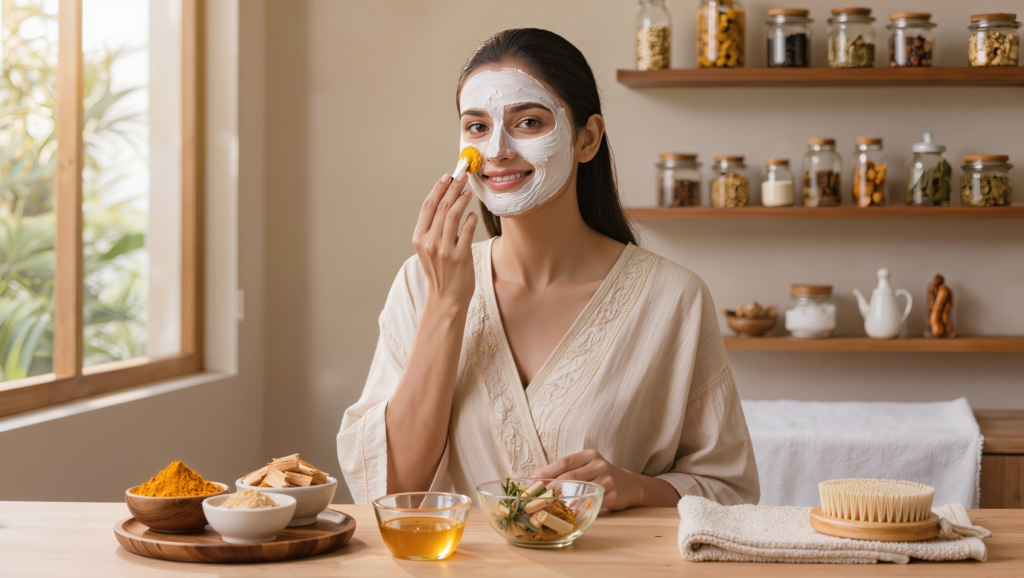












Ayurvedic skincare has always focused on the idea that healthy-looking skin reflects balance, nourishment, digestion, and daily routine—not just expensive products. Today, that wisdom is showing up in simple DIY face masks made with ingredients such as turmeric, chickpea flour, honey, yogurt, oatmeal, aloe vera, and sandalwood.
Some of these ingredients have promising anti-inflammatory, soothing, moisturizing, or antioxidant properties. But “natural” does not automatically mean safe, and a homemade mask is not a substitute for treatment when you have acne, eczema, rosacea, infection, or persistent pigmentation.
The best Ayurvedic-inspired face masks are simple, fresh, gentle, and used occasionally. They can temporarily soften, calm, hydrate, or brighten the appearance of skin—but they cannot permanently shrink pores, erase scars, or replace sunscreen and evidence-based skincare.
What Makes A Face Mask Ayurvedic?
Traditional Ayurveda approaches skincare through the lens of individual constitution, or prakriti, and imbalances involving vata, pitta, and kapha. In practical skincare language, this often translates into choosing ingredients according to whether the skin feels dry, irritated, oily, congested, or overheated.
An Ayurvedic-inspired mask may use:
- Cooling ingredients for skin that feels hot or inflamed.
- Moisturizing ingredients for dry or rough skin.
- Gentle absorbent powders for oiliness.
- Botanical ingredients for fragrance, texture, or traditional use.
- Food-based ingredients that provide temporary hydration or soothing.
The underlying philosophy is not to attack the skin aggressively. It is to support the skin barrier and avoid excessive stripping. That principle aligns with modern dermatology, which warns that irritating or over-exfoliating masks can damage the barrier, worsen dryness, and trigger breakouts.
The Skin-Barrier Principle
Before trying any DIY mask, it helps to understand the skin barrier. The outermost layer of skin helps hold water in and keep irritants, allergens, and microbes out. When it becomes damaged, the skin may sting, flake, feel tight, become red, or break out more easily.
The wrong face-mask ingredients can cause irritation, dryness, and breakouts by damaging the skin barrier. It is recommended choosing ingredients for your specific skin concern, patch testing new masks, and washing them off immediately if you feel itching, burning, or stinging.
This is where many homemade beauty recipes go wrong. A mask may be “natural” but still be:
- Too acidic.
- Too alkaline.
- Too abrasive.
- Too fragranced.
- Too concentrated.
- Too occlusive for acne-prone skin.
A good DIY mask should leave your skin comfortable. If your face feels raw, hot, tight, or itchy afterward, the mask did not “work harder.” It irritated you.
Turmeric And Honey: The Classic Glow Mask
Turmeric is one of the most recognizable Ayurvedic skincare ingredients. Its active compound, curcumin, has anti-inflammatory, antioxidant, and antimicrobial properties that have been studied in relation to several dermatological conditions.
A review indexed by PubMed found early evidence that topical and oral turmeric or curcumin products may provide benefits for certain skin conditions, including acne, atopic dermatitis, psoriasis, itching, and photoaging. However, the review also emphasized that the studies were limited and that more research is needed.
That means turmeric is promising, not magical.
Simple turmeric-and-honey mask
Mix:
- ½ teaspoon of turmeric powder.
- 1–2 tablespoons of plain honey.
Apply a thin layer to clean, dry skin and leave it on for about 5–10 minutes before rinsing gently with lukewarm water. A similar recipe is described in a homemade face-mask guide, which also advises stopping use if redness, itching, or rash develops.
Honey can act as a humectant, meaning it helps attract and hold water at the skin surface. It also has soothing and antimicrobial properties, although the quality and composition vary between types of honey.
Use caution with turmeric because it can temporarily stain the skin yellow, particularly if you use too much or leave it on for too long. Avoid applying it to broken skin, and patch test first.
Chickpea Flour And Yogurt For Gentle Cleansing
Chickpea flour, known as besan or gram flour, is commonly used in traditional South Asian beauty rituals. It can help absorb excess oil and provide a soft, powdery texture without the sharp abrasiveness of many scrubs.
Yogurt contains lactic acid, a mild alpha-hydroxy acid, as well as proteins and fats that can make skin feel softer. However, the concentration and pH of kitchen yogurt are not standardized like those of a formulated skincare product.
Besan-and-yogurt mask
Mix:
- 1 tablespoon of chickpea flour.
- 1 tablespoon of plain, unsweetened yogurt.
- A little water if needed to create a smooth paste.
Apply without scrubbing. Leave it on for approximately 5–10 minutes, then rinse thoroughly and moisturize.
This mask may be most suitable for normal or combination skin that tolerates yogurt and mild exfoliation. It may be too stimulating for sensitive, rosacea-prone, sunburned, or eczema-affected skin.
Do not use it daily. Even gentle acids and powders can cause irritation when used too frequently.
Oatmeal For Dry Or Sensitive Skin
Colloidal oatmeal is one of the more dermatology-friendly ingredients in the DIY skincare world. Colloidal oatmeal is widely listed among ingredients that may soothe irritated or dry skin, alongside hyaluronic acid, ceramides, and glycerin.
Oatmeal contains beta-glucans and other compounds that can help support the skin’s moisture and comfort. It is also much less likely to be harsh than sugar, salt, walnut shells, or coarse fruit pits.
Oatmeal soothing mask
Combine:
- 1 tablespoon of finely ground plain oats.
- 1–2 tablespoons of lukewarm water.
- Optional: a small amount of plain yogurt or honey if you already know your skin tolerates it.
Let the mixture soften before applying it. Leave it on for 10 minutes and rinse gently.
Do not use rough, dry oat flakes as a physical scrub. The goal is to create a soft paste, not sand the skin.
This mask may be useful when skin feels dry, tight, or mildly irritated. If you have a diagnosed inflammatory skin condition, test it carefully and follow your dermatologist’s treatment plan.
Aloe Vera For Cooling And Hydration
Aloe vera is often used in Ayurvedic and traditional skincare for its cooling, soothing, and hydrating feel. It can be especially appealing after sun exposure or when the skin feels warm and uncomfortable.
Aloe mask
Use a small amount of plain, fragrance-free aloe vera gel rather than a heavily perfumed cosmetic gel. Apply a thin layer for 10 minutes, then rinse or leave a minimal amount on if your skin tolerates it.
Aloe can still cause contact dermatitis in some people, particularly if the product includes fragrance, alcohol, preservatives, or other botanicals. Patch testing remains important.
Avoid applying homemade aloe preparations made from unprocessed leaves unless you know how to remove the yellow latex layer. That latex can irritate the skin and may cause unwanted reactions.
Sandalwood-Inspired Calming Masks
Sandalwood has a long history in Ayurvedic beauty traditions and is often used for its cooling fragrance and calming feel. Traditional recipes may combine sandalwood powder with rose water, milk, aloe, or honey.
The challenge is quality and irritation. Sandalwood powders and essential oils are not interchangeable. Essential oils are highly concentrated and can trigger allergic contact dermatitis, especially when applied directly to the face. It’s best to avoid essential oils in facial masks because they can be too strong and may cause irritation or allergies.
If you use sandalwood powder, choose a reputable cosmetic-grade product and mix a very small amount with a bland base such as plain yogurt or aloe. Do not add undiluted sandalwood essential oil.
Gentle sandalwood mask
Mix:
- ½ teaspoon of cosmetic-grade sandalwood powder.
- 1 tablespoon of plain aloe gel or yogurt.
- Enough water to form a thin paste.
Leave on for 5–10 minutes and rinse. Avoid the eye area and stop immediately if burning or itching occurs.
Rose Water: Soothing, But Not Always Harmless
Rose water is popular in Ayurvedic-inspired skincare because it feels refreshing and has a pleasant scent. However, fragranced botanical waters can irritate sensitive skin, especially when they contain added perfume or essential oils.
If you want to use rose water, choose a simple, alcohol-free product with a transparent ingredient list. Fragrance-free products are generally the safer choice for people with eczema, rosacea, or a history of contact allergies.
You can also skip rose water entirely and use plain distilled or cooled boiled water as the mixing liquid. Your skin does not need a dramatic fragrance to benefit from a gentle mask.
Papaya And Fruit Enzymes
Papaya is sometimes used in homemade masks because it contains papain, an enzyme associated with protein breakdown and exfoliation. Similar DIY recipes use pineapple, citrus, or other acidic fruits.
This is an area where caution is essential. Fruit enzymes and acids can sting, irritate, and increase sensitivity, particularly if your skin barrier is already compromised. Citrus juice may also increase the risk of a light-triggered skin reaction after sun exposure.[
A safer approach is to use a commercially formulated enzyme product with a known concentration rather than applying raw fruit directly to the face. If you still try a papaya mask, use a very small amount for a short time, patch test first, and avoid sunlight afterward.
Do not use lemon juice as a skin-brightening treatment. It is acidic, unpredictable, and can irritate or discolor skin after sun exposure.
What Not To Put In A DIY Face Mask
Some viral ingredients are better left in the kitchen.
Avoid:
- Lemon or lime juice.
- Baking soda.
- Cinnamon.
- Undiluted apple cider vinegar.
- Essential oils.
- Toothpaste.
- Raw egg.
- Coffee grounds.
- Sugar scrubs.
- Crushed walnut shells.
- Apricot kernels.
Fragrance, essential oils, rubbing alcohol, abrasive physical exfoliants, and strong exfoliating ingredients are generally warned against in facial masks. Also baking soda can disrupt the skin barrier, while cinnamon and some essential oils can cause allergic reactions or chemical irritation.
“Burning means it is working” is not a skincare principle. Burning means your skin is objecting.
How Often Should You Use An Ayurvedic Face Mask?
For most people, once weekly or every other week is plenty. Hydrating masks with bland ingredients may be tolerated more often, but exfoliating, clay-based, turmeric-heavy, or enzyme masks should be used sparingly.
Avoid using a face mask on the same day as:
- Retinoids.
- Strong vitamin C acids.
- Alpha-hydroxy acids.
- Beta-hydroxy acids.
- Benzoyl peroxide.
- Prescription exfoliating treatments.
Combining several active ingredients can push the skin beyond its tolerance threshold.
Why Patch Testing Ayurvedic Face Mask is Non-Negotiable
Before applying a homemade mask to your entire face, test a small amount on the jawline, behind the ear, or inner arm. Wait 24–48 hours for signs of redness, itching, swelling, bumps, or burning.
Patch testing cannot guarantee that a product will never irritate your face, but it can reduce the chance of a dramatic reaction. Test one new ingredient at a time, not a five-ingredient mixture, so you can identify what caused the problem.
If a mask causes burning, swelling, hives, blistering, or persistent redness, wash it off and seek medical advice if symptoms are severe or do not improve.
The Modern Skincare Basics Still Matter Most
A DIY mask can provide a temporary cosmetic boost, but the foundation of healthy skin remains surprisingly unglamorous:
- Gentle cleansing.
- Regular moisturizing.
- Daily broad-spectrum sunscreen.
- Adequate sleep.
- Balanced nutrition.
- Avoiding smoking.
- Evidence-based treatment for acne or dermatitis.[
A mask may make skin feel softer because it adds water or temporarily smooths the surface. That is useful, but it is not the same as repairing sun damage or treating a chronic disease.
If you have persistent acne, painful cysts, worsening pigmentation, eczema, rosacea, or unexplained rashes, see a dermatologist rather than relying on increasingly complicated kitchen recipes.
Bottom line
Ayurvedic-inspired DIY face masks can work in modest, realistic ways. Turmeric may offer anti-inflammatory and antioxidant potential, honey can help skin feel hydrated, oatmeal may soothe, yogurt can provide mild exfoliation, and aloe may cool and comfort.
But the best recipes are simple and gentle. Patch test first, avoid lemon, baking soda, essential oils, cinnamon, and abrasive scrubs, and wash the mask off immediately if your skin burns or itches.
Ancient beauty wisdom is most useful when combined with modern skin-barrier science. The goal is not to punish or peel the skin into submission. It is to support the skin calmly, consistently, and with ingredients your individual skin can actually tolerate.
Sources:
- https://pmc.ncbi.nlm.nih.gov/articles/PMC11845959/
- https://pubmed.ncbi.nlm.nih.gov/27213821/
- https://www.nccih.nih.gov/health/how-safe-is-this-product-or-practice