











Most people think of sebum as simply “skin oil.” It is blamed for shine, clogged pores, and acne, but sebum is actually a sophisticated lipid mixture that helps waterproof the skin, protect against microbes, and maintain the barrier that keeps moisture in and irritants out.
The problem is not just how much sebum you produce. It is also what that sebum is made of. Changes in sebum composition—especially in fatty acids, squalene, and wax esters—are now recognized as key factors in acne, barrier dysfunction, and inflammation.
Understanding sebum chemistry helps explain why some people get oily yet dehydrated, why certain products break them out, and why “strip the oil” routines often backfire.
What Is Sebum?
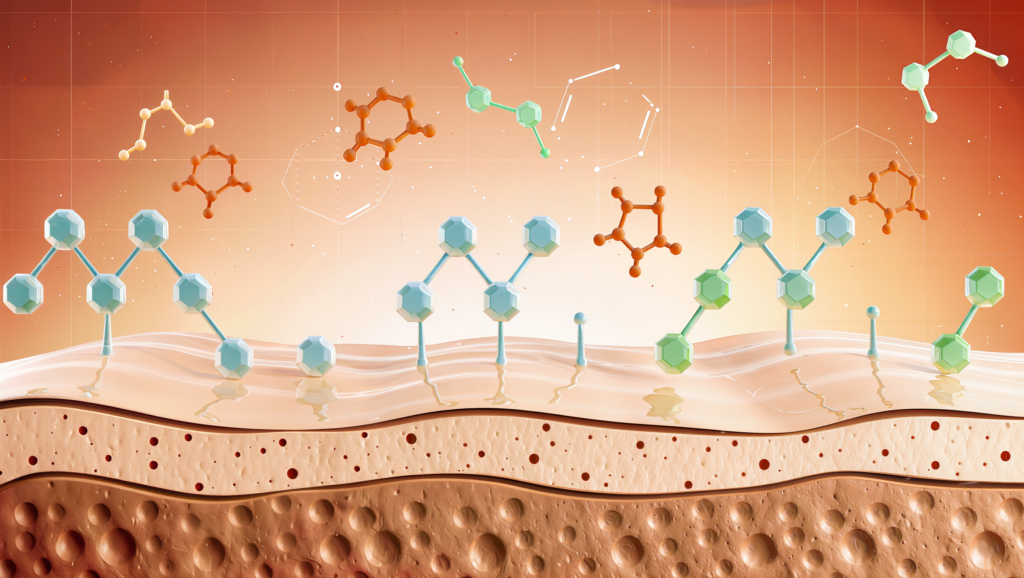
Sebum is an oily, lipid-rich substance secreted by the sebaceous glands, which are attached to hair follicles all over the body except the palms and soles.
Its main roles include:
- Forming a hydrophobic film on the skin surface.
- Reducing water loss.
- Contributing to the acid mantle.
- Providing antimicrobial and antioxidant protection.
- Supporting the skin barrier along with epidermal lipids
Human sebum is unusual among mammals. It contains high levels of triglycerides, wax esters, and squalene, with relatively little cholesterol compared to epidermal lipids.
The Basic Composition Of Human Sebum
Multiple sources give broadly similar numbers for the major lipid classes in human sebum:
- Triglycerides and fatty acids: about 57–57.5% of total sebum lipids.
- Wax esters: about 26%.
- Squalene: about 12%.
- Cholesterol and cholesterol esters: roughly 1.5–4.5%.
Triglycerides are the largest fraction. They are broken down by skin bacteria and enzymes into free fatty acids, which can be both protective and irritating depending on the context.
Wax esters and squalene are particularly characteristic of sebaceous glands. Squalene, in particular, is not found in most other tissues and is a major component of the skin-surface lipid film.
Why Sebum Composition Matters More Than Quantity
For years, acne research focused heavily on how much sebum people produced. But more recent work emphasizes that sebum quality is at least as important as quantity.
Abnormal sebum secretion promotes acne by inducing follicular occlusion and Cutibacterium acnes proliferation, while altered composition impairs the epidermal barrier. In acne patients, sebum composition is markedly altered, with changes in the ratio of saturated to unsaturated fatty acids and particularly a decrease in linoleic acid.
That means two people with similar oiliness can have very different skin behavior because their sebum chemistry is not the same.
Linoleic Acid: The Missing Piece In Acne-prone Dkin
One of the most consistent findings in acne research is reduced linoleic acid in sebum. Linoleic acid is an essential omega-6 fatty acid that the body cannot make and must obtain from the diet.
In acne-prone skin:
- Linoleic acid levels in sebum are decreased.
- This depletion contributes to follicular hyperkeratosis, a key step in comedone formation.
- It impairs epidermal barrier function, increasing transepidermal water loss.
- It increases the permeability of the comedonal wall to inflammatory mediators.
A 2025 review on seborrheic dermatitis and acne notes that decreased levels of essential fatty acids, particularly linoleic acid, are a hallmark of acne sebum. This LA depletion affects acyl-ceramide composition, contributing to skin barrier impairment and resulting in both increased water loss and increased inflammatory mediator permeability of the comedonal wall.
That is why some people with oily skin still feel tight, sensitive, or dehydrated. Their sebum may be abundant but deficient in the specific fatty acids needed for a healthy barrier.
Squalene And Squalene Peroxide
Squalene makes up about 12% of human sebum and functions as a sacrificial antioxidant at the skin surface. It helps quench reactive oxygen species generated by UV irradiation before they reach underlying lipids and cellular structures.
However, squalene is also easily oxidized. In acne, levels of squalene and squalene peroxide are often increased.
Oxidized squalene is more comedogenic and pro-inflammatory than native squalene. It contributes to:
- Comedone formation.
- Inflammatory acne lesions.
- Barrier disruption.
- Increased cytokine expression.
A study applying human sebum to hairless mouse skin found that it disrupted epidermal barrier function and enhanced production of inflammatory cytokines, including IL-1α, IL-6, and TNF-α. Historical studies in the rabbit ear model reported that triacylglycerols exhibit only weak comedogenic effects in contrast to monounsaturated fatty acids.
This helps explain why antioxidant protection and gentle handling of the skin surface matter. Oxidative stress can turn a normally protective lipid into a troublemaker.
Sapienic Acid: Uniquely Human And Uniquely Important
Human sebum has a fatty-acid profile that is distinct from other mammals. A key feature is the sapienic acid pathway, a metabolic route operating exclusively in human sebaceous glands. This pathway produces sapienic acid as the dominant fatty acid at approximately 25% of total sebum fatty acids, alongside its elongation product sebaleic acid
Sapienic acid is implicated in the development of acne. Research indicates that in humans and laboratory mammals, sebum is generally composed of cell debris and nonpolar lipids, and sapienic acid is a sebaceous fatty acid unique to humans that is implicated in acne.
Changes in the balance of saturated and monounsaturated fatty acids, including sapienic acid, may influence:
- Follicular keratinization.
- Microbial growth.
- Inflammatory signaling.
- Barrier integrity.
This is part of why acne is so specifically human. The very fatty acids that help define our skin chemistry can also drive disease when they are out of balance.
Sebum And The Skin Barrier
Sebum is only one part of the skin barrier, but it is an important one. Sebaceous lipids contribute to the integrity of the skin barrier by supplying the stratum corneum with hydration, providing photoprotection (particularly against UVB), and delivering lipophilic antioxidants to the skin surface.
The bidirectional role of sebum in skin homeostasis: it maintains barrier function and provides antimicrobial defense, but its dysregulation drives the pathophysiology of common skin diseases. Abnormal sebum secretion promotes acne by inducing follicular occlusion and C. acnes proliferation, while altered composition impairs the epidermal barrier.
A study on barrier-related genes in acne found that barrier-related pathways are significantly affected in acne vulgaris skin samples. Altered expression of key molecules such as filaggrin, keratin 1, involucrin, desmoglein 1, and kallikreins was observed at the protein level. The authors concluded that sebum-composing lipids may selectively modify the levels of epidermal barrier-related molecules in keratinocytes.
That means sebum does not just sit on top of the skin. It communicates with skin cells and can influence how the barrier is built and maintained.
Sebum, Microbes And Inflammation
Sebum is not inert. It interacts with the skin microbiome, especially Cutibacterium acnes, which lives in the follicle and uses sebum lipids as a nutrient source.
When sebum composition is altered:
- C. acnes may proliferate more readily.
- Certain fatty acids can promote inflammation.
- Oxidized lipids can trigger immune responses.
- Barrier disruption allows more inflammatory mediators to penetrate.
A review on sebaceous-immunobiology explains that sebaceous glands secrete acids that form the acid mantle, a slightly acidic film on the skin surface that provides a barrier against pathogens. Sebaceous lipids make an important contribution in maintaining the integrity of the skin barrier along with lipids of epidermal origin, thus contributing to the body’s first line of defense.
But when sebum is overproduced and compositionally altered, that same system can tip toward acne and inflammation.
Diet, hormones, and environment
Sebum production and composition are influenced by multiple factors:
- Androgens drive sebocyte production of sebum.
- High-glycemic diets and certain nutritional patterns can affect sebum quantity and fatty-acid profile.
- Environmental conditions such as UV exposure, pollution, and climate can oxidize surface lipids and stress the barrier.
A 2025 review notes that key factors such as high-glycemic diets, androgen fluctuations, and environmental conditions significantly influence sebum secretion and composition, which in turn affects barrier function and microbial defense.
This is why acne and oiliness often flare with stress, hormonal changes, or lifestyle shifts. The glands are responding to internal and external signals, not just genetics.
What Understanding Sebum Means For Skincare
Understanding sebum chemistry changes how you might approach oily or acne-prone skin.
Do not over-strip
Harsh cleansers and frequent exfoliation can remove too much lipid, disrupt the barrier, and trigger compensatory oil production. A damaged barrier can increase transepidermal water loss and inflammation, even in oily skin.
Support the barrier
Ingredients that support barrier lipids—such as ceramides, cholesterol, and fatty acids—can help restore balance. Some sebum lipids selectively modify the expression of barrier-related molecules, so supporting the barrier may indirectly influence how sebum interacts with the skin.
Consider linoleic-acid-rich oils
Because linoleic acid is often depleted in acne sebum, lightweight oils higher in linoleic acid (such as safflower, sunflower, or grapeseed) may be better tolerated than heavy, oleic-acid-rich oils for some people.
Protect squalene from oxidation
Antioxidants such as vitamin E, vitamin C derivatives, and certain plant extracts may help protect surface lipids from oxidation. Gentle sun protection reduces UV-induced reactive oxygen species that can oxidize squalene and other lipids.
Avoid heavy, highly comedogenic products
Historical studies suggest that certain monounsaturated fatty acids and heavy occlusives can be more comedogenic than others. Choosing non-comedogenic, lighter formulations can reduce the risk of follicular occlusion.
Sebum Chemistry Across Different Skin Types
Sebum chemistry helps explain why different skin types behave differently:
- Oily, acne-prone skin: Often has increased sebum output, altered fatty-acid ratios, reduced linoleic acid, and increased squalene peroxide.
- Oily but dehydrated skin: May produce abundant sebum yet have impaired barrier function and increased water loss due to altered lipid composition.
- Dry or atopic skin: Sebaceous gland hypoplasia and altered sebum composition can contribute to barrier defects and increased sensitivity.
- Normal skin: Typically has a more balanced sebum output and composition, supporting barrier function without excessive occlusion or inflammation.
This is why “oily” does not automatically mean “healthy” and “dry” does not automatically mean “no sebum.”
Bottom line
Sebum is far more than a cosmetic nuisance. It is a complex lipid mixture that helps waterproof the skin, defend against microbes, and maintain the barrier. Its composition—especially triglycerides, wax esters, squalene, cholesterol, and specific fatty acids like linoleic and sapienic acid—plays a central role in acne, barrier function, and inflammation.
The overlooked chemistry of sebum changes how we should think about oily and acne-prone skin. It is not just about reducing oil. It is about supporting a healthy lipid profile, protecting surface lipids from oxidation, and maintaining a resilient barrier.
When you understand sebum composition, you stop fighting your skin’s oil and start working with its chemistry. That shift—from “remove everything” to “balance and protect”—is what can truly change how your skin behaves over time.
Sources
- https://pmc.ncbi.nlm.nih.gov/articles/PMC12729757/
- https://pmc.ncbi.nlm.nih.gov/articles/PMC2835893/
- https://pmc.ncbi.nlm.nih.gov/articles/PMC5821166/
- https://pmc.ncbi.nlm.nih.gov/articles/PMC2943135/