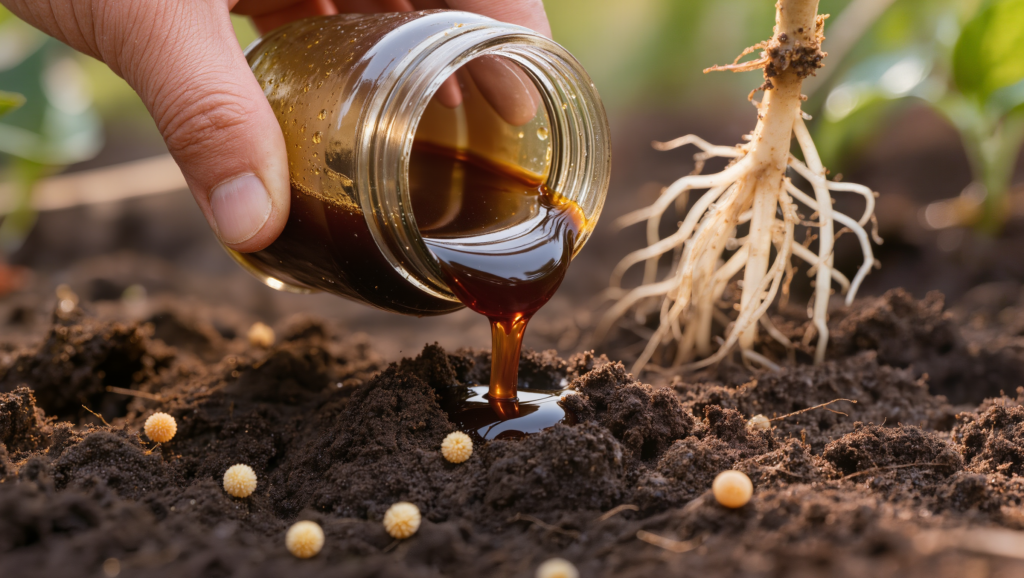












If you have ever poured a sugary soda on the ground and watched ants swarm within minutes, you have seen a tiny version of what happens when you add molasses to your garden soil. That thick, dark syrup from sugar production is not a complete fertilizer, but it is something arguably more important in the short term: fast food for the trillions of bacteria, fungi, and other microbes living in your dirt.
In regenerative and organic gardening circles, unsulphured blackstrap molasses has become a go-to tool for giving soil biology a quick energy boost. The idea is simple: soil microbes run on carbon, and the sugars in molasses are about as fast and available as carbon gets. Dissolved sugar does not need to be broken down by enzymes the way cellulose in compost or wood chips does, so bacteria can start metabolizing it within hours.
But like any fast food, molasses works best in moderation and as part of a balanced “diet” for your soil. Used wisely, it can supercharge microbial activity, improve nutrient cycling, and support healthier plants. Overused or misapplied, it can create imbalances, attract pests, or even harm soil structure. Here is what the science says—and how to use molasses in your garden without turning your soil into a microbial junk-food binge.
What Is Molasses And Why Should Gardeners Care?
Molasses is a viscous byproduct of sugar refining, made from sugarcane, sugar beets, or even citrus processing. The most common type used in gardens is blackstrap molasses, the dark, mineral-rich syrup left after most of the sugar has been crystallized out.
Chemically, blackstrap molasses is roughly:
- About 46% total sugars, primarily as invert sugars (glucose and fructose).
- Small amounts of minerals like potassium, calcium, magnesium, and iron.
- Trace vitamins and organic compounds from the original plant material.
From a soil science perspective, the key number is that 46% sugar content. In ecological terms, molasses is an exceptionally rich source of labile (readily available) carbon—the kind of fuel that drives soil microbial activity.
Gardeners care because:
- Healthy soil is alive with microbes that cycle nutrients, suppress pathogens, and build soil structure.
- Many modern soils are depleted of organic matter and microbial diversity due to tillage, synthetic fertilizers, and pesticide use.
- Adding a quick carbon source like molasses can give beneficial microbes a rapid energy boost, jump-starting biological processes that support plant health.
How Molasses Feeds Soil Microbes: The Fast-Food Analogy
Think of your soil like a city full of workers (microbes) who need energy to do their jobs. Those jobs include:
- Decomposing organic matter into plant-available nutrients.
- Solubilizing locked-up minerals like phosphorus and iron.
- Producing substances that improve soil aggregation and water retention.
- Outcompeting or directly suppressing plant pathogens.
In a healthy, organic-matter-rich soil, microbes get a steady “diet” of complex carbon from compost, mulch, root exudates, and decaying plant material. This is like a balanced, slow-release meal: nutritious but slower to digest.
Molasses, by contrast, is pure, simple sugar. It is the soil equivalent of handing those workers a shot of espresso and a donut:
- The sugars dissolve instantly in water.
- Bacteria can take them up and metabolize them within hours.
- Microbial populations can spike quickly in response to the sudden energy influx.
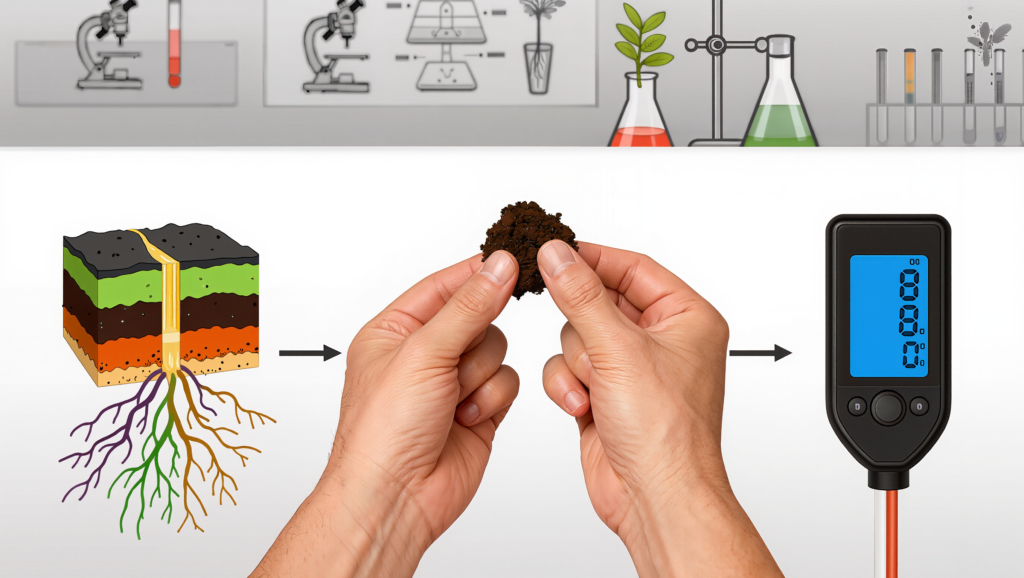
Research confirms this. Studies show that adding molasses or other sugars to soil before planting crops is beneficial, triggering a short-term bacterial population spike and enhancing microbial activity.
One 2026 analysis put it bluntly: blackstrap molasses will not fertilize your plants in any meaningful way, but it can feed soil bacteria—if you get the dilution right. Its only meaningful effect is as a short-term carbon feedstock for soil bacteria, not as a source of plant nutrients.
What Molasses Does (And Does Not) Do For Your Garden
What molasses does well
1. Boosts microbial activity quickly
The most scientifically documented benefit of blackstrap molasses in garden soil is its ability to dramatically stimulate beneficial soil microbial activity. Fertilizer combined with molasses has shown significant increases in soil microbiology for over five weeks in trials with tomatoes and turfgrass.
Molasses increases:
- Bacterial biomass and activity.
- Fungal activity (including beneficial mycorrhizal and Trichoderma species when present).
- Enzyme activities like dehydrogenase and glucosidase, which are indicators of overall soil biological health.
2. Improves nutrient cycling and availability
By feeding microbes, molasses indirectly helps plants access nutrients. Those microbes:
- Mineralize organic nitrogen into plant-available forms.
- Solubilize otherwise locked-up phosphorus and micronutrients.
- Produce chelating compounds that make iron and other minerals more accessible.
In this sense, molasses is not feeding your plants directly; it is feeding the workers who prepare the plants’ food.
3. Supports disease-suppressive soils
A more diverse, active microbial community can help suppress soil-borne pathogens. Molasses has been used in anaerobic soil disinfestation (ASD) systems, where large applications of carbon sources like molasses help shift microbial communities in ways that reduce plant-parasitic nematodes and certain diseases.
Studies indicate that molasses alters the carbon-to-nitrogen (C:N) ratio, exerting a positive impact on the soil microbial ecosystem and contributing to reducing plant-parasitic nematodes, among other advantages for plant growth.
4. Enhances soil structure over time
By stimulating microbial activity and organic matter turnover, molasses can contribute to:
- Better soil aggregation (clumping of particles into stable crumbs).
- Improved water infiltration and retention.
- Increased total organic carbon in degraded soils when used as part of broader organic amendments.
Research on sugarcane byproducts like molasses and vinasse shows they can positively impact total organic carbon content and show promise in restoring organic matter levels in highly degraded soils.
What molasses does not do
1. It is not a complete fertilizer
Despite marketing claims, molasses is not a meaningful source of nitrogen (N), phosphorus (P), or potassium (K) for plants. Its N-P-K values are negligible. It supplies trace minerals in amounts too small to matter in most garden soil.
If your soil is nutrient-deficient, molasses alone will not fix that. It must be paired with compost, organic fertilizers, or mineral amendments to address actual nutrient needs.
2. It does not replace compost or organic matter
Molasses is a quick carbon hit, not a long-term soil builder. Compost, mulch, cover crops, and crop residues provide:
- Stable organic matter that improves soil structure for years.
- A diverse array of carbon compounds that support a wider range of microbes.
- Slow-release nutrients and habitat for soil organisms.
Molasses is best seen as a microbial “pick-me-up,” not a substitute for building soil organic matter.
3. It can cause problems if overused
Like any fast food, too much molasses can create imbalances:
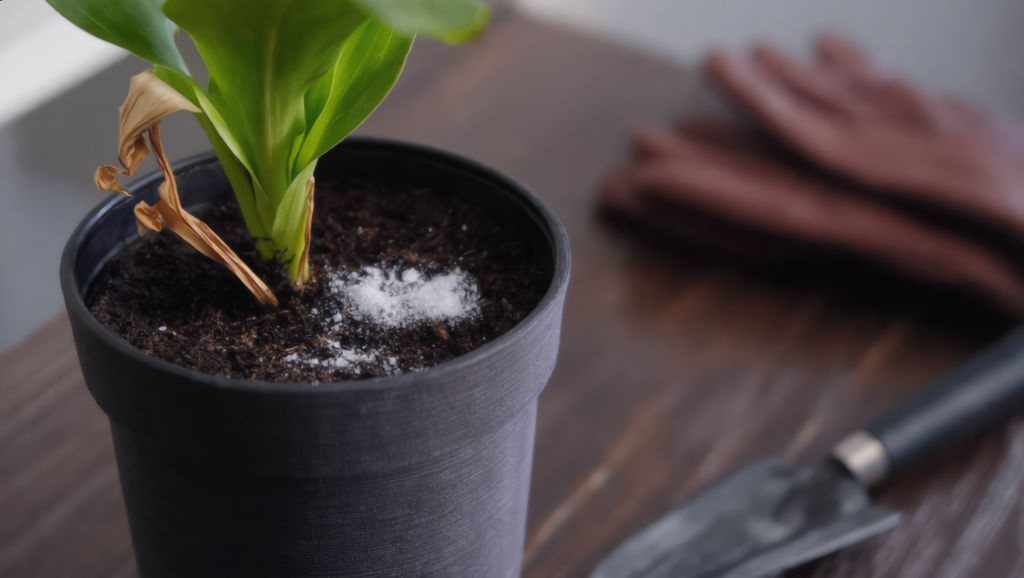
- Excessive microbial respiration can temporarily tie up nitrogen, potentially starving plants in the short term.
- Very high application rates can select for bacterial communities that lower soil pH and create phytotoxic (plant-harming) environments. USDA research notes that molasses applied above certain thresholds can cause such issues.
- Overly sweet soil can attract ants, flies, or other pests, especially if applied as a thick, undiluted syrup.
This is why dilution, timing, and moderation matter.
How To Correctly Use Molasses In Your Garden The Right Way
If you want to use molasses as a microbial stimulant—not a fertilizer substitute—treat it that way: light, occasional, and diluted. Here are evidence-based guidelines.
Choose the right type
- Use unsulphured blackstrap molasses. Sulphur dioxide, used as a preservative in some molasses, can be harmful to beneficial microbes.
- Avoid “light” or “fancy” molasses if possible; blackstrap has more minerals and a richer microbial food profile, though the key factor is the sugar content itself.
Basic dilution guidelines
Exact recommendations vary by source, but common, safe ranges include:
- Soil drench:
- 1–2 tablespoons of unsulphured blackstrap molasses per gallon of water (roughly 15–30 mL per 3.8 L).
- Some sources suggest 1–2 teaspoons per liter for a slightly stronger mix.
- Apply every 2–4 weeks during active growing seasons.
- Foliar spray:
- 0.5–1 teaspoon per liter (or 1–2 tablespoons per gallon).
- Add a drop of mild soap as a surfactant if needed.
- Spray early morning or late afternoon to avoid leaf burn.
- Use monthly or during pest pressure periods.
- Compost tea / microbial brews:
- 1 tablespoon per 10 liters (or 1 teaspoon to 1 tablespoon per gallon).
- Add at the start of brewing to feed microbes during aeration.
- Use within 24–48 hours for aerated compost tea.
- Pre-plant soil activation:
- Mix about 1/2 cup of molasses per gallon of water and use as a soil drench about one month before planting seeds or seedlings.
- Do a second application 15 days before planting for heavily depleted soils.
Application tips
- Dissolve first. Stir molasses into warm water to ensure it fully dissolves before diluting further.
- Use dechlorinated water. Chlorine and chloramine can suppress microbes. Let tap water stand for 24 hours, use rainwater, or filter it.
- Apply to moist soil. Water your garden lightly before or after applying molasses drench to help it move into the root zone without running off.
- Avoid waterlogged beds. Do not drench already saturated soil; excess moisture plus high sugar can encourage anaerobic conditions and unpleasant odors.
- Frequency. For most home gardens, once every 2–4 weeks during the growing season is sufficient. Monthly applications are common for general “tonic” use.
Special uses
- Compost activation: Add molasses to new compost piles or turning events to jump-start microbial activity, especially if your pile is high in carbon (browns) and low in nitrogen.
- Worm bins: A light molasses drench can boost microbial food for worms, but use sparingly to avoid souring the bin.
- Transplant support: A mild molasses drench at transplant time can help stimulate microbial activity around young roots, supporting establishment.
When To Be Cautious With Using Molasses In The Garden
Molasses is powerful, which means it is not ideal for every situation.
Use caution or avoid if:
- Your soil is already very rich in organic matter and highly active biologically; extra sugar may be unnecessary.
- You are dealing with severe nitrogen deficiency; the microbial bloom from molasses could temporarily worsen nitrogen tie-up.
- You have persistent pest issues (ants, fungus gnats) that might be attracted to sugary residues.
- You are using very high rates. USDA research warns that molasses applied above certain thresholds can select for bacterial communities that lower pH and create phytotoxic environments.
In these cases, focus first on balancing nutrients, improving drainage, and building stable organic matter before relying on quick-carbon boosts.
The Bigger Picture: Using Molasses As Part Of A Soil-Health Strategy
Molasses shines when used as one tool in a broader soil-health toolkit, not as a standalone solution. Think of it as:
- A microbial starter or booster.
- A way to enhance the effectiveness of compost, cover crops, and organic fertilizers.
- A short-term intervention for depleted or biologically quiet soils.
Long-term soil health still depends on:
- Regular additions of compost and mulch.
- Diverse plantings and cover crops to feed microbes via root exudates.
- Minimal tillage to preserve soil structure and fungal networks.
- Avoiding broad-spectrum pesticides and excessive synthetic fertilizers that harm soil life.
Used in this context, molasses can be a valuable “fast food” treat that wakes up your soil food web, helping it do what it already does best: feed your plants, protect your roots, and build resilient soil.
Bottom line
Molasses is not a miracle fertilizer, and it will not fix poor soil on its own. But as a source of readily available carbon, it is one of the quickest, cheapest, and most effective ways to give your garden’s soil microbes a fast energy boost.
When you pour a properly diluted solution of unsulphured blackstrap molasses onto your soil, you are essentially serving up fast food for billions of tiny workers. They respond quickly, multiplying and ramping up activities that cycle nutrients, suppress diseases, and improve soil structure.
The key is moderation and context. Use molasses as an occasional microbial stimulant alongside compost, diverse plantings, and good management practices, and you can harness its sweet power without turning your soil into a junk-food-dependent ecosystem.