











If you have ever felt bloated, heavy, or uncomfortable after a big protein-rich meal, you may have wondered if there is a natural way to give your digestion a helping hand. Enter mountain papaya (Vasconcellea pubescens), a lesser-known relative of the common papaya that grows in the highlands of South America. This small, orange-fleshed fruit is packed with a powerful enzyme called papain, which can and may help ease occasional digestive discomfort.
Unlike the regular papaya you find in supermarkets, mountain papaya contains 5–8 times more papain, making it a particularly potent source of this digestive enzyme. Traditional cultures in the Andes have used it for centuries to support digestion and soothe the gut, and modern research is now starting to explore why.
But before you rush out to buy mountain papaya supplements, it is important to understand what the science actually says—and what it does not. Let’s dig in.
What Is Mountain Papaya?
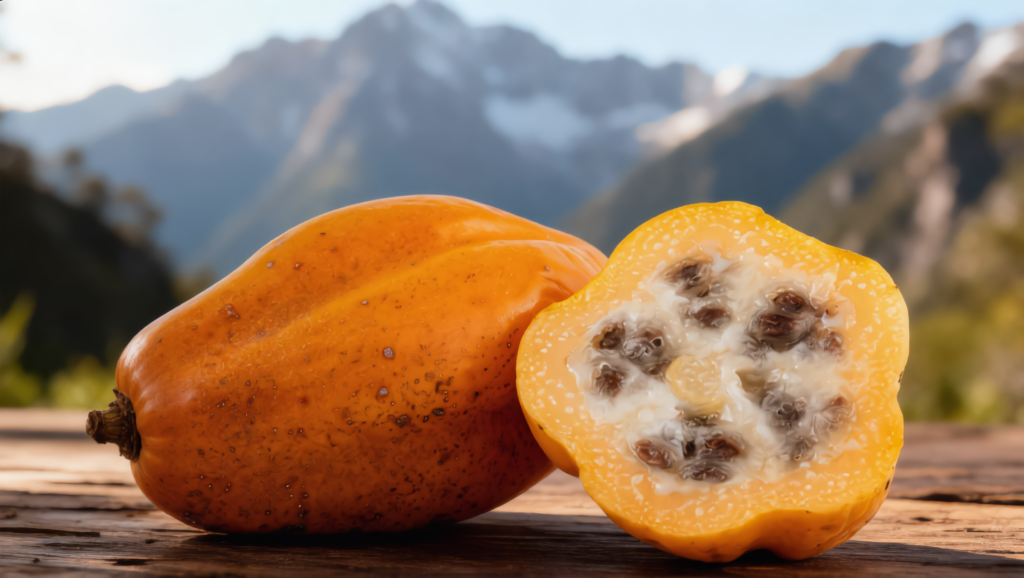
Mountain papaya (Vasconcellea pubescens), also known as Chilean papaya or papaya de monte, is a fruit native to the Andean regions of South America, including Peru, Ecuador, Colombia, and Chile. It grows at higher altitudes than the common papaya (Carica papaya), hence the name “mountain papaya.”
Key features:
- Smaller than regular papaya, usually 5–10 cm long.
- Orange or yellow flesh when ripe.
- Contains a milky latex, especially in unripe fruit and leaves, that is rich in papain.
The latex is where the magic happens. It contains a complex mix of enzymes, including:
- Papain: The main proteolytic (protein-digesting) enzyme.
- Chymopapain: Another cysteine protease.
- Glycyl endopeptidase and caricain: Additional proteolytic enzymes.
- Chitinolytic enzymes, glycosidases, and peroxidases: Other enzymes with various functions.
Together, these enzymes make up about 80% of the protein content in the latex.
How Papain Breaks Down Your Food
Papain is a cysteine protease, which means it breaks down proteins by cleaving the peptide bonds that hold amino acids together.
Here is how it works:
- You eat a protein-rich meal (meat, eggs, dairy, beans, etc.).
- Papain in the fruit (or in a supplement) begins breaking down the protein into smaller peptides and amino acids.
- This pre-digestion can reduce the workload on your stomach and pancreas.
- Smaller protein fragments are easier for your body to absorb and use.
This is why papain is also used commercially as a meat tenderizer—it breaks down tough protein fibers in meat, making it easier to chew and digest.
Why Mountain Papaya Is Special
Mountain papaya stands out because of its exceptionally high papain content. Studies have found that:
- Vasconcellea pubescens (mountain papaya) has an average enzymatic activity of 195.8 Upe at pH 6.0.
- This is higher than V. heilbornii (112.45 Upe) and comparable to commercial papain (208.14 Upe).
Some sources claim mountain papaya contains 5–8 times more papain than regular papaya.
This makes it a particularly potent natural source of digestive enzymes, especially for people who struggle with protein digestion.
How Mountain Papaya May Soothe Your Gut
Beyond just breaking down proteins, mountain papaya and its enzymes may have other gut-soothing properties.
1. Reducing post-meal heaviness
By pre-digesting proteins, papain may help reduce the feeling of fullness or heaviness after a large meal.
Some people report less bloating and discomfort when taking papaya enzyme after meals, especially after protein-rich foods.
2. Supporting gut microbiota
A 2022 study in mice found that papain supplementation:
- Increased beneficial gut bacteria like Akkermansia muciniphila.
- Decreased potentially harmful Proteobacteria.
- Enhanced pancreatic trypsin activity, improving protein digestion.
This suggests that papain may not only help digest food but also support a healthier gut microbiome.
3. Potential anti-ulcer effects
Traditional use and some animal studies suggest that papaya latex may help protect against gastric ulcers.
- The latex has been shown to have healing and protective effects against gastric ulcer development in animal models.
- Proteolytic fractions from unripe mountain papaya have shown promise in treating wounds and ulcers in animal studies.
However, human evidence is still limited.
4. Anti-inflammatory properties
Mountain papaya is also rich in:
- Phenols, flavonoids, and carotenoids: Antioxidants that reduce inflammation.
- Vitamin C and other nutrients: Supporting overall gut health.
These compounds may help reduce gut inflammation, though more research is needed.
What Science Research Says About Mountain Papaya
While the traditional use and enzyme content of mountain papaya are impressive, the human evidence is still limited.
Human studies: limited but promising
- Most research on papain and digestion is based on animal studies or in vitro (test tube) experiments.
- A few small human studies suggest that papaya or papain may help with mild digestive symptoms like bloating or indigestion, but results are not consistent.
- There is not enough high-quality human research to say definitively that eating mountain papaya will noticeably improve digestion or relieve digestive symptoms.
Animal studies: more promising
- A 2022 mouse study found that papain supplementation improved protein digestion and beneficially altered gut microbiota.
- Animal studies have also shown potential benefits for gastric ulcers and inflammation.
The bottom line on evidence
- Papain clearly breaks down proteins. This is well-established biochemistry.
- It may help with mild digestive discomfort in some people, especially after protein-rich meals.
- It is not a cure-all. It does not replace medical treatment for chronic digestive conditions like IBS, GERD, or ulcers.
How To Use Mountain Papaya
If you want to try mountain papaya for digestive support, here are some options:
Fresh fruit
- Eat ripe mountain papaya as a snack or dessert.
- The ripe fruit has less latex and is gentler on the mouth and throat.
Papaya enzyme supplements
- Available as capsules, chewable tablets, or powders.
- Usually taken after meals to aid protein digestion.
Traditional preparations
- In South America, mountain papaya is sometimes used in infusions with herbs like lemongrass, peppermint, or lemon balm.
Important note on latex
- The latex in unripe fruit and leaves can irritate the mouth, throat, and skin.
- Always consume ripe fruit or properly processed supplements.
Safety And Side Effects
While mountain papaya is generally safe when eaten as food, there are some cautions:
Mouth and throat irritation
- The latex in unripe fruit can cause a burning or tingling sensation.
- Avoid eating unripe fruit or handling the latex directly.
Allergic reactions
- Some people may be allergic to papaya or papain.
- If you have a latex allergy, you may also be sensitive to papaya.
Drug interactions
- Papain may interact with blood thinners and other medications.
- Consult your doctor if you are on medication.
Pregnancy and breastfeeding
- There is limited research on safety during pregnancy and breastfeeding.
- Consult a healthcare provider before using supplements.
Esophageal injury risk
- There has been at least one reported case of esophageal perforation from using papain to digest food stuck in the esophagus.
- Do not use papain supplements for this purpose.
The Bigger Picture: Enzymes And Gut Health
Digestive enzymes like papain are just one piece of the gut health puzzle. Other important factors include:
- Stomach acid: Breaks down food and kills pathogens.
- Pancreatic enzymes: Continue digestion in the small intestine.
- Bile: Helps digest fats.
- Gut motility: Moves food through the digestive tract.
- Gut microbiota: Trillions of bacteria that aid digestion and support immunity.
Mountain papaya’s enzymes can support this system, especially for protein digestion, but they work best as part of a healthy diet and lifestyle.
Bottom line
Mountain papaya (Vasconcellea pubescens) is a hidden gem from the Andes with a powerful digestive enzyme called papain. Its high papain content—5–8 times that of regular papaya—makes it a potent natural aid for protein digestion.
Key takeaways:
- Papain breaks down proteins into smaller peptides and amino acids.
- It may reduce post-meal heaviness and bloating in some people.
- It may support gut microbiota and have anti-ulcer properties, based on animal studies.
- Human evidence is still limited, so expectations should be realistic.
If you struggle with occasional digestive discomfort after protein-rich meals, mountain papaya or papain supplements may be worth trying. But for chronic digestive issues, it is important to see a healthcare provider to rule out underlying conditions.
Whether you eat it fresh, take it as a supplement, or enjoy it in a traditional Andean infusion, mountain papaya offers a natural, time-tested way to support your gut health—one enzyme at a time.