











Gardening absolutely can count as a full-body workout, and for a lot of people it is one of the most underrated ways to build strength, endurance, balance, and flexibility at the same time. The real secret is treating gardening like exercise on purpose, not just “yard time” that happens to make you tired.
If you want the biggest fitness payoff, the trick is simple: use more muscle, move more deliberately, alternate tasks, and avoid the body mechanics that turn gardening into a back-ache instead of a workout. Done right, gardening can be a pretty serious functional fitness session disguised as a hobby.
Why Gardening Counts As Exercise
Gardening is not just casual movement. Sources describing the fitness benefits of gardening repeatedly note that it can improve muscle strength, flexibility, heart health, endurance, mobility, balance, and overall well-being. That is a strong list, and it is exactly why gardening deserves more respect in the exercise conversation.
Gardening can provide the same health benefits as more traditional exercise programs if you do it regularly and intentionally. Gardening counts as a workout and recommends treating it like one by warming up, alternating activity types, and building in strength work.
So yes, watering, digging, weeding, raking, mowing, pruning, and hauling soil are not just chores. They are movement patterns that can tax the body in a meaningful way.
What Makes Gardening A Full-Body Workout
The reason gardening feels so satisfying is that it uses a lot of different muscle groups. Major muscle groups are engaged, including arms, legs, back, abdomen, and shoulders. Gardening can improve the “big four” fitness qualities: endurance, strength, balance, and flexibility.
That means gardening can hit multiple systems at once:
- Lower body, through squatting, kneeling, lunging, walking, and lifting.
- Upper body, through digging, lifting, carrying, raking, and pruning.
- Core, through bending, stabilizing, twisting, and holding posture.
- Cardio, through repeated movement, walking, and continuous labor.
That combination is why gardening often leaves people pleasantly wiped out in a way that resembles a legit workout.
Digging, Raking, Weeding: The Hidden Training Load
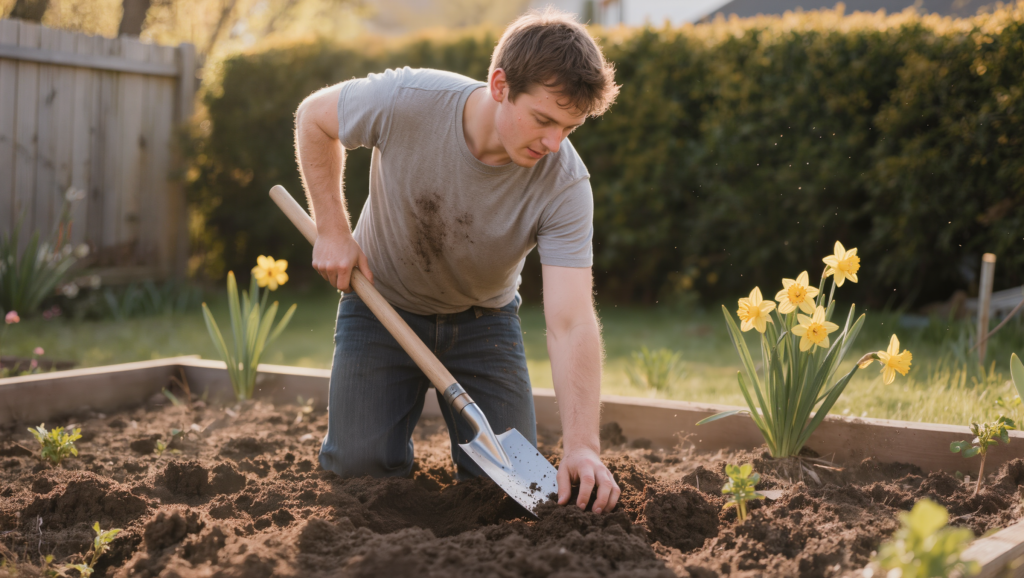
Some gardening tasks are basically strength and cardio hybrids. For example calorie estimates showing that digging and spading garden soil can burn about 190 calories per half hour, mowing the lawn around 205 calories, and weeding about 170 calories per 30 minutes.
Those numbers will vary by body size and intensity, but the big point is clear: these are not tiny movements. Digging, shoveling, and hauling materials load the body in ways that challenge the legs, back, shoulders, and grip.
The magic is that this work feels productive, not punishing. You are not just burning calories to burn calories. You are also improving your yard.
Why Gardening Is Such Good Functional Fitness
Functional fitness means training that helps with real-life movement. Gardening is functional fitness almost by definition. You can turn ordinary gardening into strength-training by changing how you do it, and gardening can improve endurance, strength, balance, and flexibility.
That means gardening trains you for:
- Getting up and down from the ground.
- Lifting objects safely.
- Carrying uneven loads.
- Reaching and rotating.
- Stabilizing your trunk while your arms and legs work.
If you have ever spent an hour in the garden and then realized your glutes are sore, your shoulders are tired, and your forearms are cooked, that is functional training working exactly as intended.
How To Maximise Your Gardening Workout
This is where most people leave gains on the table. If you just drift around the yard doing the easiest motions possible, you will still get activity benefits, but you may not get the full-body training effect. The best sources here all suggest a simple idea: treat gardening like exercise and be deliberate about posture, load, and variety.
1) Warm up first
Stretching and warming up before gardening just like you would before any workout and make sure you are ready for physical activity and to keep your movements deliberate and controlled.
A quick warm-up can include:
- Shoulder rolls.
- Gentle hip circles.
- Toe touches.
- Easy walking.
- A few bodyweight squats.
This helps reduce injury risk and makes the work feel smoother.
2) Use bigger movements
If you want more fitness benefit, choose tasks that require larger ranges of motion. Digging, lifting, kneeling, squatting, raking, and carrying are more physically demanding than passive tasks.
You can turn yard tasks into training by moving things in small groups, doing a one-legged deadlift when picking up branches, and using a deep squat rather than a back-bending reach. That kind of movement selection is exactly how you get more leg and core involvement instead of just hunching over.
3) Alternate tasks
Alternate between activities like raking, mowing, weeding, pruning, and digging rather than doing only one repetitive action for too long. That matters because different tasks recruit different muscles and reduce overuse.
A good rhythm is:
- Dig for a while.
- Switch to pruning.
- Move to watering.
- Then rake or carry materials.
- Repeat with variety.
Variety keeps the workout balanced and makes the session feel less brutal.
4) Use both sides of the body
If you always shovel, rake, or carry with the same side, you create imbalances. Switching hands and sides regularly, especially for shoveling and spreading mulch.
This is one of the easiest upgrades you can make. Swap sides every few reps, just like you would in a gym set. Your back and shoulders will thank you later.
5) Squat instead of fold at the waist
Several sources warn about protecting your back while gardening. Bending at the knees and squatting down instead of bending from the hips in a way that stresses the lower back and use long-handled tools and lift with the legs to avoid pain.
This is huge. If you spend all day rounding your spine to weed or plant, your workout turns into a back strain waiting to happen. A squat, lunge, or hip hinge keeps the core and legs doing more of the work.
6) Carry things on purpose
Carrying bags of soil, watering cans, flats of flowers, and rocks can be used as a legitimate strength challenge. Carrying a two-gallon watering can weighs over 16 pounds, which creates a useful shoulder and biceps stimulus plus lifting and carrying can be treated like gym work if you do it carefully.
Instead of moving everything in one awkward trip, split the load into several controlled carries. That gives you more steps and better loading mechanics.
Calorie Burn Is Nice, But Not The Main Point
People often ask how many calories gardening burns, and while that is fair, it is not the whole story. Estimates show that tasks like mowing, digging, planting, and weeding can burn meaningful calories, but the bigger value is that gardening also trains coordination, balance, and mobility.
Focusing on the “big four” rather than just calorie burn. In other words, gardening is not just a fat-loss hack. It is a real movement practice that can support long-term physical function.
Safety Matters A Lot
Gardening only stays a workout if you can keep doing it. That means using good mechanics, pacing yourself, and watching for heat stress or pain. Using sunscreen, taking breaks, staying hydrated, and stopping if something hurts. Deliberate movement, hydration, sunscreen, sunglasses, and breaks if you get winded, sore, or tired.
A few smart rules:
- Wear sunscreen and a hat.
- Hydrate regularly.
- Take breaks before you get wrecked.
- Stop if your back or joints complain.
- Don’t try to finish the entire yard in one marathon session.
That is especially important if you are older, deconditioned, or new to physical labor.
The Best Gardening Workout Formula
If you want your garden time to feel more like a full-body training session, use this formula:
- Warm up for 5–10 minutes.
- Do a mix of digging, raking, pruning, weeding, and carrying.
- Squat, lunge, and hinge rather than folding at the waist.
- Switch sides often.
- Take short hydration breaks.
- Cool down with gentle stretching.
That approach gives you the most fitness benefit while reducing the chance of pain that would stop you from gardening tomorrow.
Bottom Line
Gardening can absolutely be the ultimate full-body workout if you approach it with intention. It can challenge your arms, legs, core, grip, balance, endurance, and flexibility all in one session, and multiple sources describe it as a legitimate form of exercise.
The key to maximizing the benefit is simple: move like you mean it. Warm up, use proper mechanics, alternate tasks, switch sides, and treat the garden like a functional fitness zone instead of a passive hobby. Done that way, gardening becomes one of the rare workouts that improves your body and your backyard at the same time.