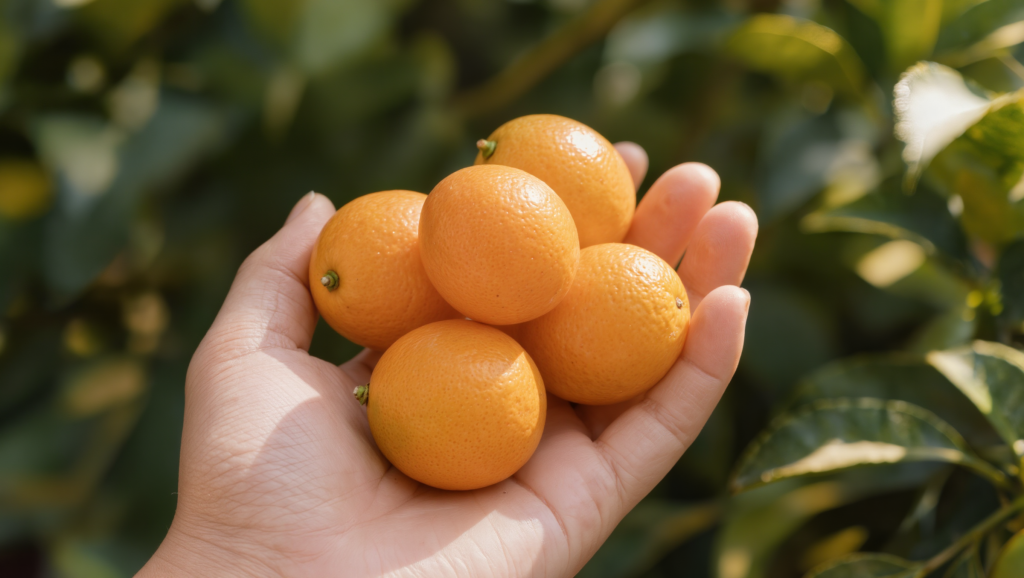












Kumquats are one of those fruits that look too tiny to matter until you bite into one and realize the whole fruit is the point. Unlike most citrus, the peel is sweet and edible, the flesh is tart, and eating the fruit whole gives you the best of both worlds: flavor, fiber, vitamin C, and a surprisingly dense dose of antioxidants.
The big secret is simple: the peel is where a lot of the magic lives. Kumquat skin is full of fiber and antioxidants, and the fruit is low in calories while still delivering vitamin C and some vitamin A. Research on small-size citrus fruits also highlights kumquat’s phenolic compounds and biological activities, which is a science-y way of saying this little fruit packs a lot more chemistry than its size suggests.
Why Kumquats Are Different From Other Citrus
Most citrus fruits make you peel them before eating. Kumquats flip the script. Their skin is sweet, their flesh is tart, and the contrast is what makes the fruit so satisfying.
That edible peel matters nutritionally because citrus peels often contain concentrated flavonoids and phenolic compounds. In kumquats, those compounds are part of what drives antioxidant activity and the fruit’s traditional reputation as a health food in parts of Asia. So when you eat a kumquat whole, you are not just being efficient—you are eating the part of the fruit that carries a lot of its protective compounds.
The peel is the superpower
If you only remember one thing, remember this: kumquat peel is not just edible, it is the star of the show. The skin is full of fiber and antioxidants, which helps explain why kumquats are often praised as a “healthy snack” rather than just a novelty fruit.
A scientific review of small-size citrus notes that kumquats are rich in phenolic compounds and have biological activities that include antioxidant effects. Another recent study comparing kumquat peel and seed extracts found that aqueous extracts of kumquat peel exhibited antioxidant activity. That is a pretty strong hint that the peel is doing a lot of the heavy lifting.
Why does that matter? Because antioxidants help neutralize free radicals, which can damage cells over time. In food terms, that often means fruits with more peel-based compounds may offer more protective chemistry than fruits where the peel gets tossed.
Nutritional Profile Kumquat?
Kumquats are tiny, but they are not nutritionally tiny. One kumquat has about 13 calories, about 8 mg of vitamin C, and some vitamin A, along with fiber and very little fat, sodium, or cholesterol.
That means a handful of kumquats can be a pretty smart snack if you want something sweet but not calorie-heavy. The fruit gives you:
- Vitamin C for collagen support and immune function.
- Fiber for digestion and blood sugar support.
- Antioxidants concentrated in the peel.
- A satisfying sweet-tart flavor without needing added sugar.
The nutritional profile is one reason kumquats get called a functional fruit. They are small enough to eat casually but dense enough to actually contribute something useful to your day.
Why Antioxidants Matter So Much Here
Kumquats get an “antioxidant goldmine” reputation because the fruit contains flavonoids, phenolic acids, and other bioactive compounds. Those compounds are associated with antioxidant, anti-inflammatory, and antimicrobial activity in citrus research.
The point is not that antioxidants are magic or that one fruit will solve all health problems. The point is that kumquats give you a naturally concentrated package of compounds that help your body manage oxidative stress. That is part of why kumquats are often described as a traditional wellness fruit, not just a snack.
Whole-fruit eating makes sense
Eating kumquats whole is not a weird hack. It is how they are meant to be eaten. Most people eat them raw and do not even need to peel them, though the seeds should be removed.
That whole-fruit approach gives you:
- More fiber than you would get from juice alone.
- More peel-derived antioxidants than if you only ate the flesh.
- Better satiety because whole fruit takes longer to eat and chew.
This is exactly why kumquats punch above their weight. If you compared “one peeled orange segment” versus “one whole kumquat,” the kumquat often wins on convenience and peel-based bioactives.
Skin, immunity, and gut health
Kumquats are often marketed as good for skin and immunity, and that is not just random marketing fluff. Vitamin C supports collagen production, which is important for skin structure and wound healing. The fruit also contains antioxidants that can help protect cells from damage.
On the gut side, the fiber in the peel and flesh supports digestion and can help with bowel regularity. Fiber also helps feed beneficial gut bacteria, which can influence everything from digestion to immune signaling. So while kumquats are not a probiotic, they absolutely fit into a gut-friendly diet pattern.
The immunity angle is equally straightforward. Vitamin C contributes to immune function, and antioxidant-rich foods may support overall resilience. Again, kumquats are not a miracle cure, but they do contribute pieces of the puzzle.
What Research Says About Kumquat, And What It Doesn’t
The research around kumquats is promising, especially when you look at the chemistry of the peel and the biological activity of citrus compounds. The 2016 review on small-size citrus fruits points to flavonoids and other phenolics as important contributors to kumquat’s health-promoting properties.
A 2025 study on kumquat peel and seed extracts found antioxidant activity in aqueous extracts of the peel and seed, though the peel stood out as the more practical food part. That is encouraging because it supports the idea that the peel is nutritionally meaningful, not just decorative.
But there is an important limit here: a lot of the stronger claims you see online still outpace the human clinical evidence. We have good reason to think kumquats are healthful, but we should not pretend they are a treatment for disease. The fruit is best understood as a nutrient-dense, antioxidant-rich addition to a balanced diet.
Are Kumquats Safe To Wat whole?
For most people, yes. The whole point of kumquats is that the peel is edible and enjoyable. The only part you usually remove is the seeds, which are not the reason you bought the fruit.
That said, as with any fruit:
- Wash them well before eating.
- Avoid if you have a citrus allergy.
- Start with a small amount if you are not used to eating the peel.
The fruit’s sweetness and acidity can also be intense for some palates, especially if you eat several in a row. That is not a safety problem, just a “don’t bite off more than your taste buds want” problem.
How To Eat Kumquats The Smart Way
The easiest method is the best one: wash, bite, chew, enjoy. The peel gives you sweetness, the flesh gives you tartness, and the whole thing works as a built-in flavor contrast.
You can also use kumquats in:
- Salads, especially with bitter greens.
- Yogurt or oatmeal.
- Marmalade or preserves.
- Savory dishes with poultry or fish.
- Cocktails or sparkling water for a bright citrus note.
If you want to keep the antioxidant benefits intact, using the whole fruit is the most natural choice. Juicing them is fine, but it throws away some of the peel’s fiber and changes the texture that makes kumquats special.
Why they deserve more attention
Kumquats are underrated because they are tiny and a little unfamiliar. But nutritionally, they sit in a sweet spot: low calorie, high fiber, vitamin C-rich, and packed with antioxidant compounds in the peel.
They are also one of those fruits that make healthy eating feel less like a chore. You do not need to prep them much, they are easy to snack on, and the whole-fruit format encourages real fruit eating rather than processed substitutes.
That combination—convenience, flavor, and nutrient density—is why kumquats deserve a lot more credit than they get.
The bottom line
Kumquats are meant to be eaten whole because the peel is edible, sweet, and nutritionally valuable. That peel is where a lot of the fruit’s fiber and antioxidant power lives, which is why kumquats have such a strong reputation as a tiny antioxidant goldmine.
So the secret is not really a secret at all: if you want the full kumquat experience, do not peel it. Eat the whole fruit, enjoy the sweet-tart contrast, and let that little citrus do the work.