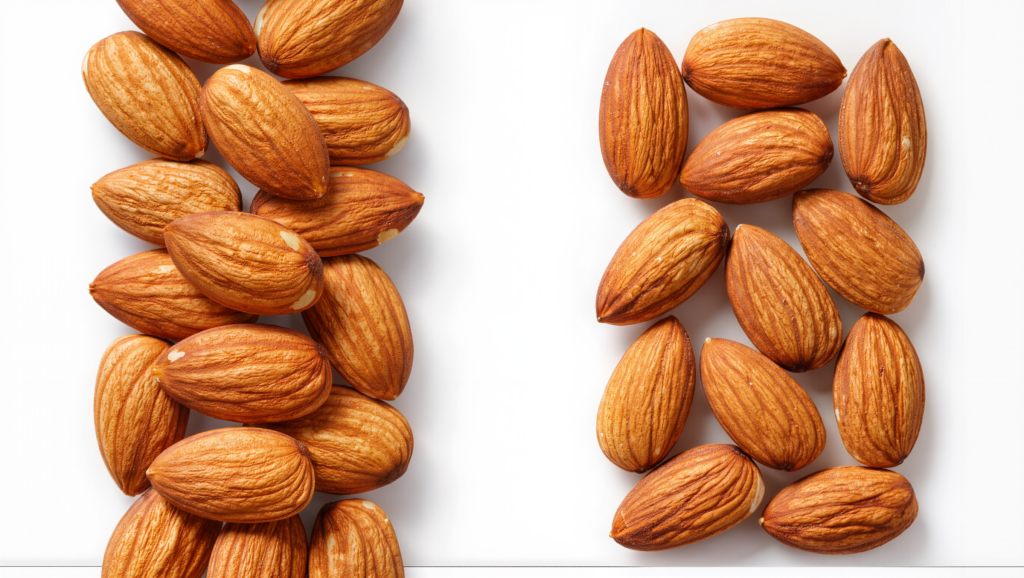












The short answer is no, most “raw” almonds you buy in the U.S. are not truly raw. Commercial California almonds are required to undergo a pasteurization step before retail sale, and they can still be labeled “raw” in the consumer market even after treatment.
That is the label lie and needed call for Consumer Alert: the word “raw” on an almond bag often means “not roasted” or “not blanched,” not literally untreated. If you want truly raw, unpasteurized almonds, you usually have to buy directly from a grower under the narrow farm-direct exceptions.
What “Raw” On Almond Bags Actually Mean
In everyday food language, “raw” usually means untouched by heat. In the almond world, the term is messier. Raw almonds in trade usage are often really “natural” almonds, meaning almonds in their natural state but not necessarily unheated in the literal sense.
Raw almonds in the U.S. aren’t actually raw because they must be pasteurized, either by steam or by propylene oxide fumigation. So if you are buying a supermarket bag labeled raw, what you are often getting is a nut that has been sanitized, not a nut that came straight from the orchard with zero treatment.
That is why the term feels misleading. It is not always technically false under industry usage, but it is definitely not what most shoppers think “raw” means.
Why Almonds Had To Be Pasteurized
The rule exists because of food safety concerns, especially Salmonella outbreaks tied to almonds in the early 2000s. The USDA implemented mandatory pasteurization requirements after incidents involving salmonella-contaminated almonds, requiring a minimum 4-log reduction in bacteria.
That 4-log reduction is a big deal: it means reducing bacteria by a factor of 10,000. The public-health logic is straightforward: if almonds are going to be widely traded, processed, and sold in bulk, the industry wants a sanitation step that lowers contamination risk.
So the law was not created in a vacuum. It was a response to real outbreak history.
The California Almond Rule
This is where things get especially interesting. The pasteurization requirement applies to California almonds, which dominate the U.S. almond supply. California-grown raw almonds are no longer raw in the literal sense because a federal rule adopted in 2007 mandated treatment before sale.
Almonds have to be pasteurized before they are sold, and nearly all producers use heat pasteurization rather than chemical treatment. Some sources also describe a validated pasteurization program meant to ensure almonds meet safety criteria without diminishing quality or sensory characteristics.
So the rule is not a rumor, and it is not just a marketing quirk. It is part of the way the almond industry has been regulated since 2007.
How Almonds Are Pasteurized
There are a few main methods. Almonds can be pasteurized with steam or with propylene oxide, and nearly all producers favor heat pasteurization over chemical treatment. There are also validated processes designed to eliminate potential contamination while preserving quality.
That means the almond you call “raw” may have:
- Been steam pasteurized.
- Been fumigated with propylene oxide in some cases.
- Been treated through another validated process.
This is one of those food-label situations where the same word covers very different realities.
Is Pasteurization The Same As Cooking?
Not exactly, but it can still involve heat. If you apply enough heat for long enough to transform flavor or texture, the product is arguably cooked. However, in almond marketing, “raw” often really means not roasted, not blanched, and not further cooked after pasteurization.
That distinction matters because consumers often assume raw means chemically untouched and thermally unprocessed. In almond commerce, it often means something more like “as close to natural as the market rules allow.”
So yes, “raw” almonds can absolutely be pasteurized. That is the label trick.
Why The Almond Industry Still Uses The Word “Raw”
The reason the label survives is partly regulatory and partly commercial. The USDA rule governs the handling and sanitation of almonds, not necessarily the exact consumer-facing label in the way shoppers would expect. The USDA did not change the consumer-level labeling approach even though commenters argued that consumers should be able to choose raw or processed almonds.
Some sources argue that treated almonds can still be deceptively labeled as raw and that this creates a food-truth problem rather than just a food-safety problem. That critique gets to the heart of the issue: the industry may be complying with safety rules while still using a word that most consumers interpret differently.
In other words, the product is safe enough for retail, but the wording is not necessarily transparent.
What About Organic Almonds?
Organic does not automatically mean truly raw. Organic-certified almonds are typically steam pasteurized, while non-organic almonds may be treated with propylene oxide fumigation or infrared heating.
That means “organic raw almonds” sold in stores may still have been pasteurized, just by a different method. Organic changes the chemistry story, but it does not exempt the almond from the pasteurization requirement if it is part of the California commercial supply.
So a shopper who buys organic in hopes of getting truly raw almonds may still end up with a treated product.
Are There Exceptions?
Yes, but they are narrow. Untreated raw almonds can still be sold directly by growers at farmstands or farmers markets in small lot sizes, and there are also certain export exceptions and import quirks, direct farm sales are an exception under the federal rule.
That means truly raw almonds are not extinct. They are just not what most people are buying in a supermarket. If you want actual untreated almonds, you usually need a direct relationship with a grower, not a retail aisle.
Does Pasteurization Harm Nutrition?
This is where the debate gets a little more nuanced. Validated processes eliminate potential contamination without diminishing quality, nutritional value, or sensory qualities like taste and crunch. But smaller growers and critics have argued that heat treatment can affect moisture, shelf life, and some aspects of the nut’s “live” character.
There is also peer-reviewed research indicating that pasteurization and roasting can influence oxidation and antioxidant-related properties in almonds and almond skins. That does not automatically mean pasteurized almonds are nutritionally useless. It does mean the idea that treatment changes nothing at all is probably too tidy.
The practical takeaway is this:
- Pasteurization improves food safety.
- It may alter some chemical or sensory properties.
- The extent of change depends on the method used.
Why This Matters To Consumers
This issue is not just semantic. It affects trust. A person buying raw almonds may be choosing them for:
- Perceived minimal processing.
- Avoidance of heat.
- Desire for a “closer to nature” food.
- Raw food diet preferences.
- Concerns about chemical fumigation.
If the bag says raw but the almond has been steam-treated or fumigated, the shopper may feel misled. That is especially true for people who care deeply about food processing, enzyme content, or the distinction between natural and actually untreated foods.
The Practical Shopper’s Guide To Buying Raw Almonds
If you want to navigate almond labels without getting fooled, here is the basic rule:
- “Raw” often means not roasted, but still pasteurized.
- “Organic” does not mean unpasteurized.
- “Natural” usually means minimally processed, not necessarily untreated.
- Truly raw usually requires direct farm purchase or a seller who specifically states untreated almonds.
If you want maximum transparency, ask the seller exactly how the almonds were treated before sale.
Bottom Line
So, are “raw” almonds actually raw? Usually not. Most commercially sold California almonds are legally required to be pasteurized before they reach you, and the label “raw” often means only that they were not roasted or blanched.
That does not make them unsafe or bad, but it does make the label misleading if you interpret raw in the ordinary sense. If you want truly raw almonds, you generally need to buy directly from a grower operating under the narrow retail exemption. In the almond aisle, the word “raw” is less a guarantee than a marketing convenience.