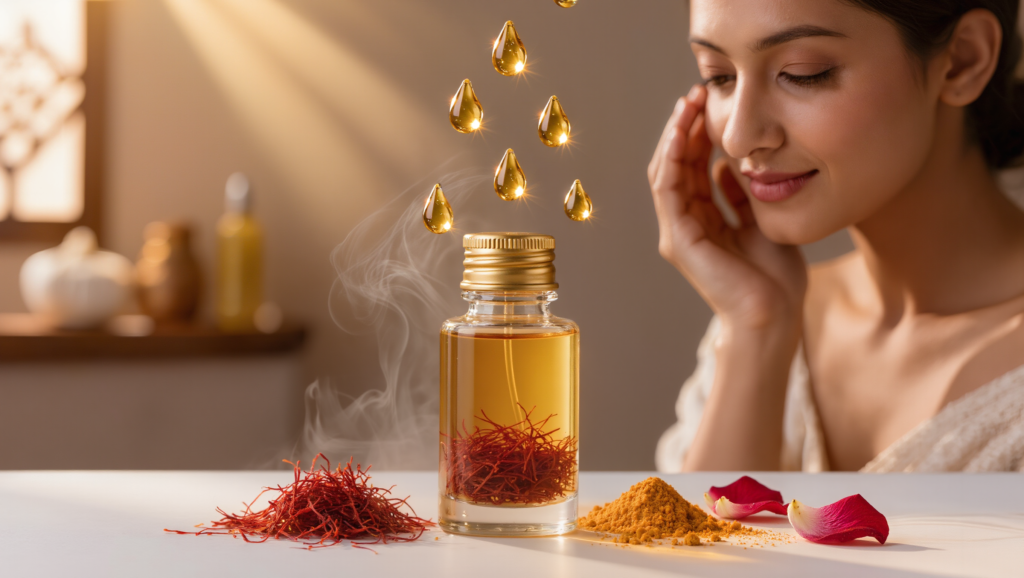












If you have spent any time down the Ayurvedic skincare rabbit hole, you have probably stumbled across a golden-orange bottle with a name that sounds like a mantra: Kumkumadi Tailam (or Kumkumadi Taila). Marketed as a “saffron-infused elixir” for radiant, even-toned skin, this classical oil has been used for centuries in India to brighten complexion, fade dark spots, and give the face a luminous glow.
In recent years, Kumkumadi oil has moved from traditional apothecaries to global beauty shelves, often with bold claims about hyperpigmentation, acne scars, fine lines, and overall skin transformation. But beyond the marketing and ancient texts, what does modern science actually say? Can a saffron-infused Ayurvedic oil really change your skin in measurable ways—or is it mostly tradition and hype?
Let’s unpack the ingredients, mechanisms, clinical evidence, and realistic expectations around Kumkumadi Tailam so you can decide if it deserves a spot in your routine.
What is Kumkumadi Tailam?
Kumkumadi Tailam is a classical Ayurvedic formulation, traditionally described in texts like the Bhaishajya Ratnavali and Ashtanga Hridaya. The name comes from “Kumkuma” (saffron) and “Adi” (beginning/primary), reflecting saffron’s status as the lead ingredient in this “tailam” (oil).
Historically, it was used by Ayurvedic physicians as:
- A facial oil for enhancing complexion and skin radiance.
- A treatment for “Vyanga” (facial hyperpigmentation/melasma-like patches).
- A rejuvenating (rasayana) preparation for skin health and youthfulness.
Traditionally, it is prepared by slow-cooking a decoction and paste of multiple herbs in a base oil (often sesame oil), sometimes with milk or goat milk, in a process designed to extract and infuse the bioactive compounds into the lipid phase.
What Are The Contents Of Kumkumadi oil?
Formulations can vary by manufacturer and lineage, but classical Kumkumadi Tailam typically includes 10–20+ botanical ingredients. Common key components include:
- Kumkuma (Crocus sativus – saffron): The star ingredient, valued for complexion enhancement, antioxidant, and anti-inflammatory properties.
- Chandana (Santalum album – sandalwood): Cooling, soothing, traditionally used for redness and “heat” in the skin.
- Rakta Chandana (Pterocarpus santalinus – red sandalwood): Used for pigmentation, inflammation, and skin tone.
- Yashtimadhu / Madhuyashti (Glycyrrhiza glabra – licorice): A well-studied brightening herb, rich in glabridin and liquiritin, known to inhibit tyrosinase (the key enzyme in melanin production).
- Manjistha (Rubia cordifolia – Indian madder): Traditionally used for blood purification, pigmentation, and scar reduction.
- Padmaka / Padmakesara / Utpala (Nelumbo nucifera / Nymphaea caerulea – lotus/blue lotus): Cooling, soothing, antioxidant.
- Nyagrodha / Plaksha (Ficus benghalensis / Ficus virens – banyan trees): Astringent, skin-toning properties.
- Usheera (Vetiveria zizanioides – vetiver): Cooling, calming, often used for sensitive or inflamed skin.
- Base oil: Usually sesame oil, sometimes with milk or goat milk added during preparation.
A recent clinical study analyzed a 12-ingredient formulation comprising saffron, sandalwood, red sandalwood, lotus parts, banyan species, licorice, and others, processed in sesame oil.
From a modern perspective, this is a polyherbal, multi-target formulation: instead of one “active,” it combines several botanicals with overlapping and complementary actions on pigmentation, inflammation, oxidation, and barrier function.
How Kumkumadi oil Works on The Skin?
Ayurvedically, Kumkumadi Tailam is described as:
- Varnya: complexion-enhancing.
- Kanti-prada: radiance-promoting.
- Vyanga-hara: pigmentation-reducing.
- Twak-prasadana: skin-clarifying and nourishing.
In biomedical terms, research points to several key mechanisms:
1. Tyrosinase inhibition and melanin modulation
Hyperpigmentation (dark spots, melasma, post-inflammatory marks) is driven by overproduction of melanin, largely controlled by the enzyme tyrosinase. Several Kumkumadi ingredients target this pathway:
- Saffron (crocetin, crocin): Shown in vitro to inhibit cellular melanogenesis by downregulating tyrosinase expression and activity.
- Licorice (glabridin, liquiritin): Glabridin is a potent tyrosinase inhibitor that prevents UVB-induced hyperpigmentation without cytotoxicity to melanocytes. Liquiritin has been used clinically to treat melasma and post-inflammatory hyperpigmentation.
- Sandalwood and red sandalwood: Santalol-rich fractions and santalin have demonstrated antioxidant and tyrosinase-inhibitory effects in experimental models.
Together, these compounds can reduce melanin synthesis and help fade existing dark spots over time.
2. Antioxidant protection
Oxidative stress from UV exposure, pollution, and inflammation accelerates pigmentation, collagen breakdown, and premature aging. Kumkumadi ingredients show strong antioxidant activity:
- Saffron carotenoids (crocin, crocetin) scavenge free radicals and reduce oxidative stress in skin cells.
- Licorice flavonoids and sandalwood constituents exhibit significant radical-scavenging and lipid peroxidation inhibition in vitro.
- Polyphenols from lotus, manjistha, and other herbs add further antioxidant capacity.
This helps protect skin from environmental damage and supports a more even tone and texture.
3. Anti-inflammatory and soothing effects
Chronic low-grade inflammation worsens pigmentation, sensitivity, and aging. Kumkumadi Tailam includes several cooling, anti-inflammatory herbs:
- Licorice (glycyrrhizin, glabridin) reduces redness and inflammation, especially in sensitive and rosacea-prone skin.
- Sandalwood and red sandalwood calm irritated skin and reduce erythema.
- Vetiver, lotus, and banyan species contribute soothing, astringent, and barrier-supportive effects.
By dampening inflammation, the oil can indirectly reduce post-inflammatory hyperpigmentation and improve overall skin comfort.
4. Collagen support and anti-aging
Some data suggest Kumkumadi ingredients may support extracellular matrix health:
- Saffron extracts have been associated with improved skin elasticity and reduced fine lines in small studies.
- Antioxidants protect collagen from oxidative degradation.
- Anti-inflammatory actions reduce collagen-damaging enzymes (MMPs).
Clinical observations report improvements in skin firmness and elasticity after regular use, though large-scale trials are still limited.
What Scientific Evidence Of Kumkumadi Oil show?
This is where things get interesting—and where we must separate early promise from proven results.
15-day instrumental study: measurable changes in pigmentation and redness
A 2026 exploratory study evaluated a classical 12-ingredient Kumkumadi Taila in 30 healthy adults over 15 days. Using instrument-based measurements, researchers found:
- ~10% improvement in skin tone (measured via melanin index).
- ~13% reduction in redness (erythema index).
- Improved firmness/elasticity over time.
- No significant changes in transepidermal water loss (TEWL) or skin thickness, suggesting the barrier was not compromised.
- No adverse events reported.
This study is important because it used objective instruments (not just self-reports) and showed statistically significant changes in pigmentation and erythema within just two weeks of daily use.
8-week pilot study: brightness, hydration, and melanin reduction
An open-label, single-arm pilot study in 30 volunteers (aged 20–60) assessed a Kumkumadi Thailam formulation over 8 weeks. Results included:
- At week 8, 56.67% of participants showed “very significant” improvement in skin brightness, and 26.67% showed “significant” improvement.
- Measured increases in hydration (~25%) and reductions in melanin spots (~20%) in some assessments.
- 93.33% reported no irritation; only mild irritation in 6.67%, with no severe adverse reactions.
While limited by its small size and lack of a control group, this study supports the traditional claim that Kumkumadi Tailam can improve brightness and evenness with regular use.
Ethnopharmacology study: 12-week use in hyperpigmentation
A standardized Kumkumadi Oil formulation was evaluated in 65 patients with hyperpigmentation over 12 weeks. The study reported:
- Statistically significant reduction in melanin index and erythema index.
- Clinical improvement in skin lightness and overall appearance.
Again, this is encouraging but not definitive; larger, randomized controlled trials (RCTs) are still needed.
Saffron-specific human data
Separate from full Kumkumadi formulations, saffron itself has shown skin-brightening effects:
- A small human study using a 3% saffron extract cream for 8 weeks reported improvements in measured melanin and erythema values.
- In vitro and animal data consistently show crocin and crocetin inhibiting melanin synthesis and protecting against UV-induced damage.
This supports the plausibility of saffron as a key active in Kumkumadi Tailam.
Postpartum and melasma context
For postpartum pigmentation (often melasma-like), evidence is still early:
- One 15-day exploratory study showed significant reductions in measured pigmentation and redness in healthy adults, but did not specifically target postpartum women or clinical melasma.
- Saffron has lowered melanin index in small human studies, but Kumkumadi has not been rigorously tested for melasma treatment.
Experts describe it as a “reasonable, low-risk option” to discuss with a doctor, but not a proven cure for melasma, especially in pregnancy or breastfeeding where many standard treatments are contraindicated.
Can Kumkumadi Oil Really Transform Your Skin?
Based on current evidence, here is a balanced take:
What it can likely do
- Improve overall brightness and radiance: Multiple studies and clinical observations report measurable improvements in skin tone and luminosity within 4–8 weeks of regular use.
- Reduce mild to moderate hyperpigmentation: Through tyrosinase inhibition and anti-inflammatory actions, Kumkumadi can help fade sun spots, post-acne marks, and uneven tone over time. Expect gradual change, not overnight erasure.
- Calm redness and support sensitive skin: Ingredients like licorice, sandalwood, and vetiver can reduce erythema and soothe irritated skin, making it suitable for many sensitive types when formulated well
- Enhance hydration and elasticity: The sesame oil base and herbal actives can improve skin softness, firmness, and barrier comfort, especially in dry or mature skin.
What it probably cannot do (alone)
- Erase deep melasma or long-standing pigmentation quickly: These conditions often require multi-modal treatment (sun protection, prescription topicals, procedures). Kumkumadi may help as an adjunct but is unlikely to be a standalone cure.
- Replace sunscreen: While some ingredients offer mild photoprotective effects, Kumkumadi oil is not a substitute for daily broad-spectrum SPF, which remains the cornerstone of pigmentation and anti-aging care.
- Work equally for everyone: Skin type, pigmentation type, formulation quality, and consistency of use all influence results. Some people see dramatic changes; others see subtle improvement.
How To Use Kumkumadi Tailam Oil For Best Results
If you want to try Kumkumadi oil, here are evidence-informed tips:
1. Choose a reputable, authentic product
- Look for brands that list classical ingredients (most importantly saffron, licorice, sandalwood, manjistha, lotus) and use proper Ayurvedic preparation methods.
- Check for third-party testing, GMP certification, and transparent sourcing, especially for saffron and sandalwood, which are often adulterated.
2. Patch test first
- Apply a small amount on the inner forearm or behind the ear for 24–48 hours to check for sensitivity or allergic reaction, especially if you have very reactive skin.
3. Start slowly
- Begin with 2–3 nights per week, then increase to nightly use if tolerated.
- Use 2–4 drops for the entire face, warmed between palms and gently pressed into slightly damp skin.
4. Pair with sun protection
- For pigmentation concerns, daily broad-spectrum sunscreen (SPF 30+) is non-negotiable. Without it, any brightening efforts will be undermined by ongoing UV exposure.
5. Be patient and consistent
- Most studies show noticeable changes after 4–8 weeks, with continued improvement up to 12 weeks.
- Take baseline photos and track changes in brightness, spots, and texture over time.
6. Combine with a simple routine
- Kumkumadi works well as the last step in a nighttime routine after cleansing and any water-based serums.
- Avoid layering with too many strong actives (high-strength retinoids, acids) initially; introduce gradually to avoid irritation.
Safety And Precautions To Know When Using Kumkumadi Tailam Oil
Kumkumadi Tailam is generally well tolerated in studies:
- In an 8-week pilot, 93.33% reported no irritation; only mild irritation in 6.67%, with no severe adverse reactions.
- A 15-day instrumental study reported no adverse events.
Potential issues:
- Sensitivity to essential oils or botanicals: Some formulations may include fragrant components that can irritate very sensitive or allergic individuals.
- Comedogenicity: Sesame oil is moderately comedogenic for some acne-prone people; if you are highly acne-prone, patch test and monitor.
- Quality concerns: Adulteration with synthetic dyes, fragrances, or low-quality oils can increase irritation risk.
If you are pregnant, breastfeeding, or have a complex skin condition (e.g., severe melasma, eczema, rosacea), discuss with a dermatologist or qualified Ayurvedic practitioner before starting.
Bottom line
Can saffron-infused Kumkumadi Tailam really transform your skin? The emerging evidence suggests it can meaningfully improve brightness, evenness, and radiance for many people, with measurable reductions in pigmentation and redness within weeks of regular use.
Its multi-herb formula targets key pathways in hyperpigmentation (tyrosinase inhibition), oxidative stress (antioxidants), and inflammation (soothing botanicals), aligning traditional claims with modern mechanistic understanding.
That said, it is not a miracle cure. Results are gradual, vary by individual, and are best when combined with sun protection and a consistent routine. Large-scale, randomized trials are still needed to fully define its efficacy, optimal formulations, and place alongside conventional dermatologic treatments.
If you are looking for a natural, time-tested oil to enhance glow, soften texture, and gently fade dark spots, Kumkumadi Tailam is one of the most compelling Ayurvedic options available today. Used wisely, it can be a quiet workhorse in your skincare regimen—less about instant transformation, more about steady, visible refinement over time.
Sources: