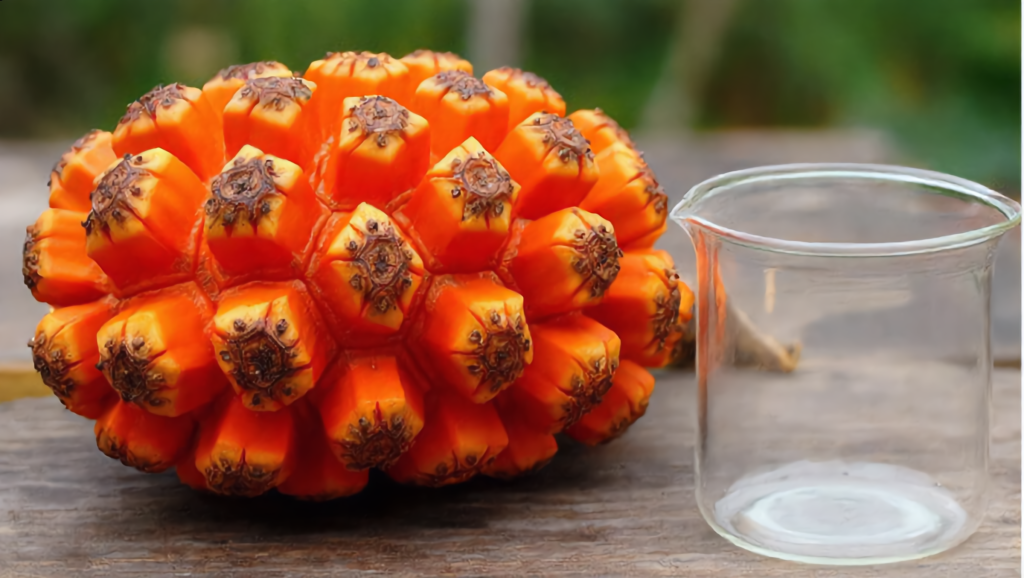












If you have ever scrolled through tropical fruit accounts on social media, you have probably seen it: a bizarre, cone-shaped, spiky fruit that looks like a giant pine cone or an alien artifact. Depending on where you are in the world, it might be called pandanus, breadfruit’s wild cousin, “red fruit” (buah merah) in Papua, or simply the “spiral fruit.”
Beyond its strange appearance, pandanus fruit is gaining attention for a much bigger claim: that it may help slow aging. Traditional use in Pacific and Southeast Asian cultures has long praised pandanus for vitality and longevity. Now, modern research is starting to unpack why—revealing a fruit packed with carotenoids, tocopherols, polyphenols, and other compounds that target key aging pathways like oxidative stress, glycation, and skin photoaging.
So, can this odd spiral fruit really slow aging? The science is still emerging, but the evidence so far is compelling enough to put pandanus on the radar of anyone interested in nutrition, skin health, and healthy longevity.
What Is Pandanus Fruit?
“Pandanus” refers to a genus of tropical trees and shrubs (family Pandanaceae) found across the Pacific, Southeast Asia, parts of Africa, and the Indian Ocean. Many species produce edible fruits, leaves, and seeds used for food, medicine, and crafts.
Common species with notable fruits include:
- Pandanus conoideus (Papuan “red fruit” or buah merah): Known for its bright red-orange oil-rich fruit, traditionally consumed in Papua for strength, stamina, and skin health.
- Pandanus tectorius: Widely distributed across the Pacific; its fruit keys and cores are eaten and valued for their nutrient and antioxidant content.
- Pandanus odorifer / Pandanus odoratissimus: Aromatic species whose flowers and fruits are used in traditional medicine and perfumery; recent studies highlight their antiglycation and antioxidant properties.
- Pandanus amaryllifolius: More famous for its fragrant leaves (used like vanilla in cooking), but also studied for antioxidant and anti-inflammatory effects.
The fruits themselves vary:
- Some are large, cone-like structures made of many fibrous “keys” or segments.
- Colors range from green to yellow to deep red-orange, depending on species and cultivar.
- The edible parts are often the fleshy base of each key, the oily pulp, or processed extracts and oils.
What makes pandanus particularly interesting for aging is not just its traditional reputation, but its unusually rich profile of fat-soluble antioxidants and polyphenols.
The Nutrient And Phytochemical Profile Of Pandanus: Why Pandanus Stands Out
When researchers analyze pandanus fruit, especially the red-orange cultivars, they find a nutrient profile that looks tailor-made for fighting aging.
Carotenoids: powerful pro-vitamin A antioxidants
Papuan red fruit (Pandanus conoideus) is exceptionally rich in carotenoids:
- Reported β-carotene levels around 287,416 µg per 100 g in some analyses—extremely high compared to most fruits.
- Also contains α-carotene, β-cryptoxanthin, and other carotenoids that act as provitamin A and potent antioxidants.
Carotenoids are crucial for:
- Neutralizing reactive oxygen species (ROS) generated by UV exposure and metabolism.
- Protecting cell membranes and DNA from oxidative damage.
- Supporting skin health and reducing photoaging (sun-induced aging).
β-carotene, in particular, is a potent antioxidant due to its ability to neutralize singlet oxygen, which decreases skin aging due to sun exposure.
Tocopherols (vitamin E): lipid-protective antioxidants
Pandanus fruits and their oils are also rich in tocopherols:
- Total tocopherol content reported between 234–1,728 ppm in red fruit oils.
- α-tocopherol and γ-tocopherol are the main forms, both strong lipid-soluble antioxidants.
Vitamin E compounds:
- Protect cell membranes from lipid peroxidation.
- Work synergistically with carotenoids and vitamin C.
- Are especially important for skin, brain, and cardiovascular health—all key targets in aging.
In silico (computer modeling) studies suggest that α-tocopherol from red fruit has strong binding affinity to Keap1 (a regulator of antioxidant defenses) and MMP-1 (an enzyme involved in collagen breakdown), supporting its potential as an anti-photoaging agent.
Polyphenols and flavonoids: multi-target anti-aging compounds
Pandanus fruits also contain significant levels of polyphenols and flavonoids:
- Total flavonoid content in Pandanus odorifer extracts around 121.7 mg QE/g.
- Total phenolic content moderate but biologically active, correlating with antioxidant capacity.
- Identified compounds include phenolic acids, flavonoids, tannins, lignans, and other metabolites.
Polyphenols are widely studied for their role in delaying cellular aging by:
- Reducing oxidative stress and inflammation.
- Preserving telomere stability.
- Modulating signaling pathways involved in stress resistance, autophagy, and metabolism.
In animal studies, Pandanus amaryllifolius polyphenol extract alleviated non-alcoholic fatty liver disease (NAFLD) in mice, reduced oxidative damage, and showed genetic signatures consistent with anti-aging effects (e.g., DAF-16-dependent stress response and autophagy).
Vitamins and other bioactives
Depending on the species and preparation, pandanus fruits can also provide:
- High vitamin C levels (reported up to 958 mg per 100 g in some red fruit analyses).
- Unsaturated fatty acids (oleic, linoleic, α-linolenic acids) that support membrane integrity and anti-inflammatory signaling.
- Unique compounds like isopentenyl and dimethylallyl acetates, cinnamates, and norisoprenoid derivatives that may contribute to bioactivity.
Together, this cocktail of fat-soluble and water-soluble antioxidants makes pandanus fruit unusually well-equipped to combat multiple drivers of aging.
How Pandanus Fruit Could Help Slow Aging
Aging is not a single process but a collection of interconnected changes: accumulated oxidative damage, chronic inflammation, protein glycation, collagen breakdown, mitochondrial dysfunction, and more. Pandanus fruit appears to target several of these hallmarks.
1. Antioxidant defense: neutralizing free radicals
Oxidative stress—excess production of reactive oxygen species (ROS)—is a central driver of aging and age-related diseases. It damages DNA, proteins, and lipids, accelerates cellular senescence, and impairs tissue function.
Pandanus fruit combats oxidative stress through:
- Carotenoids: Scavenge ROS, especially singlet oxygen generated by UV radiation, protecting skin and other tissues.
- Tocopherols: Protect lipid membranes from peroxidation, preserving cell integrity.
- Polyphenols and flavonoids: Donate electrons to neutralize free radicals and upregulate endogenous antioxidant enzymes.
In vitro assays show that pandanus fruit extracts have strong DPPH and ABTS radical-scavenging activity, often comparable to or exceeding standard antioxidants in specific tests.
2. Anti-glycation: protecting proteins from “sugar aging”
Advanced glycation end products (AGEs) form when sugars react with proteins, lipids, or nucleic acids. AGEs accumulate with age and in conditions like diabetes, contributing to:
- Stiffening of collagen and elastin (wrinkles, loss of skin elasticity).
- Vascular damage and atherosclerosis.
- Neurodegeneration and chronic inflammation.
A 2026 study on Pandanus odorifer found that its methanolic extract exhibited strong antiglycation activity, with an IC₅₀ of 57.3 µg/mL—more potent than quercetin in this assay.
This suggests that pandanus may help slow “sugar aging” by inhibiting AGE formation, protecting structural proteins like collagen from becoming stiff and dysfunctional.
3. Anti-photoaging: defending skin against sun damage
UV radiation is one of the biggest external accelerators of skin aging. It generates ROS, triggers inflammation, activates matrix metalloproteinases (MMPs) that break down collagen, and stimulates melanogenesis (pigment production), leading to wrinkles, laxity, and hyperpigmentation.
Pandanus fruit targets photoaging through multiple pathways:
- Carotenoids and tocopherols: Neutralize UV-induced ROS and protect skin cells from oxidative damage.
- Inhibition of melanogenesis: Red fruit extracts have been shown to block melanogenesis via PKA, ERK, and AKT signaling pathways, suggesting potential for reducing UV-induced hyperpigmentation.
- MMP-1 inhibition: In silico docking indicates that compounds like γ-tocopherol from red fruit bind strongly to MMP-1, potentially reducing collagen degradation.
- Topical formulations: Pandanus amaryllifolius extracts have demonstrated antioxidant activity and stability in oil-in-water emulsions, supporting their use in cosmeceuticals for anti-aging skincare.
While most data are preclinical, the mechanistic evidence supports pandanus as a promising anti-photoaging agent, particularly for skin health.
4. Anti-inflammatory and metabolic support
Chronic, low-grade inflammation (“inflammaging”) is a hallmark of aging, contributing to cardiovascular disease, neurodegeneration, and metabolic dysfunction.
Pandanus species show:
- Anti-inflammatory activity in cell and animal models, partly via polyphenols and flavonoids.
- Benefits in metabolic conditions: Pandanus amaryllifolius polyphenol extract reduced oxidative damage and improved liver health in NAFLD mice, with genetic indicators of anti-aging effects.
By dampening inflammation and supporting metabolic health, pandanus may indirectly slow systemic aging processes.
5. Potential effects on longevity pathways
Though still early-stage, some studies hint that pandanus compounds may influence conserved longevity pathways:
- Activation of stress-response transcription factors (e.g., DAF-16 in nematode models).
- Enhancement of autophagy, the cellular “cleanup” process that declines with age.
- Protection of telomeres and DNA from oxidative damage.
These mechanisms align with broader research on polyphenols and carotenoids as potential lifespan-extending agents, though human data are lacking.
What Science Says About Pandanus Fruit?
Here is the crucial caveat: most of the anti-aging evidence for pandanus fruit comes from:
- In vitro (test tube) antioxidant and antiglycation assays.
- In silico molecular docking studies predicting interactions with aging-related proteins.
- Animal models (e.g., NAFLD mice, potential anti-aging genetic signatures).
- Traditional use and ethnographic reports in Pacific and Papuan cultures.
Direct human clinical trials on pandanus fruit and aging outcomes (skin aging, biomarkers of biological age, longevity) are virtually nonexistent at this stage.
What we do have:
- Strong mechanistic plausibility based on its nutrient profile and preclinical data.
- Observational and ethnographic evidence that populations consuming traditional pandanus-rich diets often exhibit good vitality and skin health, though many factors are involved.
- Growing interest in pandanus extracts for cosmeceuticals and functional foods, driven by their antioxidant and anti-photoaging potential.
In short: pandanus fruit looks extremely promising on paper and in the lab, but we need well-designed human studies to confirm its anti-aging effects in people.
How Pandanus Fruit Is Traditionally Used
In many Pacific and Southeast Asian cultures, pandanus is not just a novelty; it is a staple and a medicine.
- Papua (Indonesia): Red fruit (buah merah) is traditionally consumed as an oil or paste to boost stamina, treat skin conditions, and support overall health. It is often taken by men for vitality and by women for skin and reproductive health.
- Pacific Islands: Pandanus fruits are eaten fresh, cooked, or processed into pastes and flours. They are valued during times of food scarcity and for their nutrient density.
- Southeast Asia: Leaves are widely used as a culinary herb (like vanilla), while fruits and roots appear in traditional remedies for inflammation, pain, and infections.
These traditional uses align remarkably well with modern findings on antioxidants, anti-inflammatory, and skin-protective effects.
How To Use Pandanus Fruit?
Access depends on where you live:
- In Papua, Indonesia, and parts of Southeast Asia: Fresh red fruit, processed oil, or capsules may be available in local markets or specialty shops.
- In the Pacific: Pandanus fruit keys may be sold fresh or processed in local markets.
- Elsewhere: You are more likely to find:
- Pandanus leaf extract or flavoring in Asian grocery stores.
- Red fruit oil or capsules via online specialty retailers.
- Skincare products containing Pandanus amaryllifolius or related extracts.
Typical uses include:
- Consuming red fruit oil (often 1–2 teaspoons daily, though dosing is not standardized).
- Adding pandanus-flavored extracts to desserts and drinks.
- Using topical products with pandanus extracts for antioxidant and anti-photoaging benefits.
As with any potent botanical, start with small amounts, especially if you have allergies, medical conditions, or take medications.
Limitations And Cautions When Using Pandanus
Despite the excitement, important caveats remain:
- Limited human data. Most anti-aging claims are based on preclinical work; we do not yet have robust clinical trials showing that pandanus fruit slows aging in humans.
- Variability in composition. Carotenoid and polyphenol levels vary widely by species, cultivar, growing conditions, and processing methods.
- Potential for overhype. As with many “superfruits,” there is a risk of exaggerated marketing claims that outpace the science.
- Safety and interactions. While generally considered safe in traditional use, high-dose supplements or oils have not been thoroughly evaluated for long-term safety, drug interactions, or effects in pregnancy and chronic disease.
Pandanus fruit should be viewed as a promising component of a broader anti-aging strategy—not a standalone miracle.
Bottom line
Can this strange spiral fruit really slow aging? Based on current evidence, pandanus fruit—especially the red-orange cultivars like Papuan buah merah—has a highly compelling anti-aging profile. It is exceptionally rich in carotenoids, tocopherols, polyphenols, and other bioactives that target key aging mechanisms: oxidative stress, protein glycation, UV-induced skin damage, inflammation, and metabolic dysfunction.
Preclinical studies show strong antioxidant, antiglycation, and anti-photoaging activities, and traditional use supports its role in vitality and skin health. In silico and animal data suggest potential effects on longevity pathways, though human trials are still needed.
For now, pandanus fruit is best seen as a fascinating, nutrient-dense addition to an anti-aging toolkit that includes:
- A diverse, plant-rich diet.
- Regular physical activity and sleep.
- Sun protection and skincare.
- Stress management and avoidance of smoking and excessive alcohol.
If you can access it—whether as red fruit oil, fresh fruit, or skincare extract—pandanus offers a rare combination of traditional wisdom and modern scientific promise. It may not be a fountain of youth in a single fruit, but it is certainly one of the more intriguing allies in the ongoing fight against aging.
Sources:
- https://pmc.ncbi.nlm.nih.gov/articles/PMC10865171/
- https://pmc.ncbi.nlm.nih.gov/articles/PMC12652335/
- https://pmc.ncbi.nlm.nih.gov/articles/PMC11324095/
- https://pmc.ncbi.nlm.nih.gov/articles/PMC11324095/