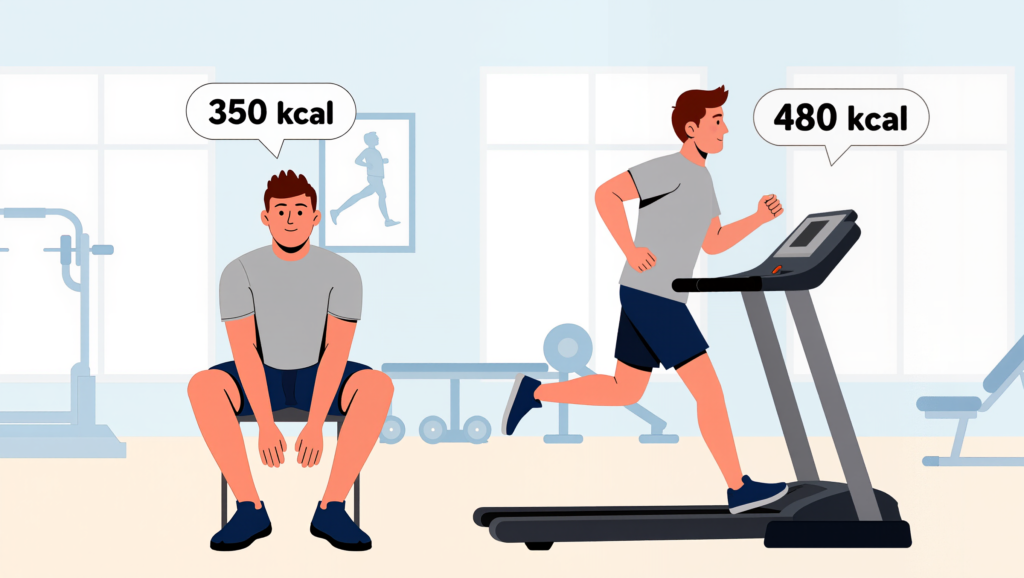












If you have ever been told to “stop fidgeting” in class or at work, you might find this surprising: that restless leg, pen-twirling, or chair-squirming could be quietly burning a meaningful number of calories every day. In fact, some research suggests that highly active “fidgeters” can burn hundreds of extra calories daily—enough to rival or even exceed what many people burn in a typical gym session.
But does that mean fidgeting can truly replace a workout? Not exactly. The reality is more nuanced. Fidgeting is a powerful component of your daily energy expenditure, but it works differently from structured exercise. Understanding the science of fidgeting—and where it fits in the bigger picture of calorie burn—can help you use it strategically for weight management and metabolic health without falling for hype.
What Is Fidgeting?
Fidgeting refers to small, often unconscious movements you make while sitting, standing, or waiting:
- Jiggling your leg or foot.
- Tapping your fingers or pen.
- Shifting in your chair, leaning side to side.
- Rocking while standing, bouncing on your toes.
- Chewing gum, stretching, or playing with a stress ball.
These movements are typically low intensity and short in duration, but they add up over hours and days. In scientific terms, fidgeting is a key part of non-exercise activity thermogenesis (NEAT)—the energy you expend for everything that is not sleeping, eating, or structured exercise.
NEAT includes:
- Walking to work or around the office.
- Standing instead of sitting.
- Typing, cleaning, gardening, and yard work.
- Spontaneous muscle contractions and fidgeting.
For many people, NEAT accounts for a larger share of daily calorie burn than formal workouts, especially if exercise is infrequent or brief.
How Many Calories Does Fidgeting Actually Burn?
The short answer: it depends on the type of fidgeting, your body size, and how much you do. But the numbers are more impressive than you might expect.
Fidgeting while seated vs. standing
A classic study measured energy expenditure in 24 adults during various activities:
- Compared with lying down at rest, fidgeting while seated increased energy expenditure by about 54%.
- Fidgeting while standing increased energy expenditure by about 94%—nearly double the resting rate.
- By comparison, walking at 3 mph increased expenditure by about 202%, and at 4.8 km/h (3 mph) by 292%.
Another study using fidget-promoting chairs and under-desk leg bars found:
- Standard office chair: ~76 kcal/hour.
- Fidget-promoting chair: ~89 kcal/hour.
- Leg-fidget bar: ~98 kcal/hour.
This represents roughly a 20–30% increase in calorie burn while sitting, without raising heart rate.
Daily totals: from tens to hundreds of calories
When extrapolated over a full day, fidgeting-like activities can account for a wide range:
- Estimates suggest fidgeting and other low-grade activities can burn an extra 100–800 kcal per day, depending on the individual.
- One frequently cited study found that non-exercise movements (including fidgeting) could burn up to 350 calories a day, and these behaviors were more common in lean than obese individuals.
- In overfeeding experiments, some participants subconsciously increased their NEAT (including more energetic walking and fidgeting) by up to 700 calories per day, which dramatically reduced fat gain compared to those who did not. This “fidget factor” accounted for a 10-fold difference in fat storage between individuals.
So, can fidgeting burn more calories than a workout? In some cases, yes—if you compare a highly active fidgeter’s daily NEAT to a single moderate gym session. But this is not a universal rule, and it depends heavily on the person and the context.
Fidgeting Vs. A Workout: Comparing Calorie Burn
To put this in perspective, consider typical calorie expenditures:
- Moderate-intensity exercise (e.g., brisk walking, cycling, light weights) for 30–60 minutes might burn 200–500 kcal, depending on intensity and body weight.
- High-intensity exercise (e.g., running, HIIT) for 30–60 minutes can burn 400–800+ kcal.
- Fidgeting and NEAT across an entire day can add 100–800+ kcal, with large individual variability.
Key differences:
- Time frame
- Workouts are concentrated: a big calorie burn in a short window.
- Fidgeting is dispersed: smaller burns accumulated over many hours.
- Intensity and cardiovascular benefit
- Exercise typically raises heart rate, improves cardiorespiratory fitness, and builds strength.
- Fidgeting generally does not elevate heart rate much and offers minimal fitness gains on its own.
- Variability between people
- Some people naturally fidget a lot; others are very still. Studies show up to a 2,000 kcal/day difference in NEAT between two individuals of similar size, largely due to spontaneous activity like fidgeting.
- This variability helps explain why two people eating the same diet and doing similar workouts can have very different weight outcomes.
So, while a single workout may burn more calories in one session than an hour of fidgeting, a highly active fidgeter can accumulate as much or more total daily energy expenditure through NEAT as someone who exercises occasionally but is otherwise very sedentary.
The “Fidget Factor” And Weight Regulation
The concept of a “fidget factor” comes from research showing that some people are neurologically predisposed to move more spontaneously. This is not just random restlessness; it appears to be a regulated component of energy balance.
Key findings:
- When overfed, some individuals automatically increase their NEAT (including fidgeting, more energetic walking, and posture changes) by hundreds of calories per day, blunting fat gain. Others do not, and store more of the excess energy as fat.
- Lean individuals tend to have higher spontaneous movement and NEAT than obese individuals, even when matched for other factors.
- Animal and human data suggest that NEAT is not random but part of a carefully regulated system that responds to changes in energy intake and body weight.
In other words, fidgeting may be one of the body’s built-in mechanisms to resist weight gain when calories are abundant—and a missing piece in people prone to obesity.
How Fidgeting Influences Metabolism Beyond Calories
Fidgeting and NEAT do more than just burn calories. They also affect:
1. Blood sugar control
Frequent low-intensity movement helps muscles take up glucose, even without a rise in heart rate. Breaking up long sitting periods with standing, shifting, or light walking can:
- Reduce post-meal blood glucose spikes.
- Improve insulin sensitivity over time.
2. Lipid metabolism
NEAT activities increase fat oxidation and improve lipid profiles, contributing to better cardiovascular health independent of formal exercise.
3. Muscle activity and joint health
Even small movements keep muscles and joints active, reducing stiffness and supporting circulation, especially in sedentary jobs.
4. Appetite and energy balance regulation
Some evidence suggests that higher NEAT may help align energy intake with expenditure, reducing the tendency to overeat, though this area needs more research.
Can You Intentionally Fidget More To Lose Weight?
This is the practical question: if fidgeting burns extra calories, can you “train” yourself to fidget more and use it as a weight-loss tool?
The answer is: partially, yes—but with caveats.
What the evidence supports
- Increasing NEAT can meaningfully impact energy balance. An additional 280–350 kcal/day (or 2,000–2,500 kcal/week) through NEAT is estimated to be sufficient to support weight loss in many people.
- Simple changes add up. Standing instead of sitting burns about 3 times more kcal/hour; gum chewing increases expenditure about 4 times; stair climbing more than 40 times above resting levels. Combined, these can create a substantial daily surplus in expenditure.
- Fidget-promoting devices work. Under-desk leg bars and fidget chairs have been shown to increase seated energy expenditure by 20–30% without increasing heart rate, making them practical tools for office workers.
Limitations and realities
- Individual variability is huge. Some people naturally fidget a lot; others find it uncomfortable or difficult to sustain. The same intervention may yield very different results across individuals.
- Fidgeting is not a full substitute for exercise. While NEAT can burn many calories, structured exercise provides unique benefits: improved cardiovascular fitness, strength, bone density, mood, and metabolic health that fidgeting alone cannot match.
- Compensation can occur. Some people may unconsciously reduce other activity or increase food intake when they try to move more, blunting the net effect.
Practical Ways To Harness The Fidget Factor
You do not need to become a constant mover to benefit. Small, sustainable changes can shift your NEAT upward:
At your desk
- Use a fidget-promoting chair or add an under-desk leg bar.
- Keep a stress ball, fidget cube, or pen to manipulate while thinking.
- Do subtle movements: ankle rolls, toe wiggles, shoulder shrugs, side-to-side leans.
- Stand up and shift weight, rock gently, or march in place during calls.
Throughout the day
- Stand more: while on the phone, watching TV, or working at a standing desk.
- Take short “movement snacks”: 1–2 minutes of walking, stretching, or stair climbing every 30–60 minutes.
- Choose active options: walk to the mailbox, park farther away, take stairs instead of elevators.
- Chew gum: it modestly increases energy expenditure and may curb snacking.
Mindset shifts
- View fidgeting not as a bad habit but as a metabolic asset.
- Aim for an “active lifestyle” with intentional NEAT, not just isolated workouts.
- Combine NEAT strategies with regular exercise, good sleep, and balanced nutrition for best results.
The bigger picture: NEAT, exercise, and weight management
Fidgeting is best understood as one piece of a larger puzzle:
- Basal metabolic rate (BMR): Calories burned at rest to maintain basic functions (~60–70% of total expenditure).
- Thermic effect of food (TEF): Calories burned digesting and processing food (~10%).
- Exercise activity thermogenesis (EAT): Calories burned during structured workouts (~5–10% for most people).
- Non-exercise activity thermogenesis (NEAT): Calories burned through daily movement, including fidgeting (~15–50%, highly variable).
For many, NEAT is the most modifiable and impactful component. Two people with similar BMR and exercise habits can differ by 1,000–2,000 kcal/day in total expenditure due to NEAT differences alone.
That said, exercise remains crucial for:
- Improving cardiorespiratory fitness and reducing mortality risk.
- Building and preserving muscle mass, which supports metabolic health.
- Enhancing mood, cognition, and long-term disease prevention.
The optimal approach is not “fidgeting vs. workouts,” but “fidgeting plus workouts plus overall active living.”
Bottom line
Can fidgeting really burn more calories than a workout? In some cases, yes—if you compare a highly active fidgeter’s total daily NEAT to a single moderate gym session. Research shows that fidgeting-like activities can increase energy expenditure by 20–40% above resting levels while seated or standing, and accumulate 100–800+ extra calories per day in some individuals. In overfeeding studies, increased NEAT (including fidgeting) offset up to 700 calories/day, dramatically reducing fat gain.
However, fidgeting is not a magic replacement for exercise. It does not provide the same cardiovascular, strength, or fitness benefits as structured workouts, and its effects vary widely between people.
The most effective strategy for weight management and metabolic health is to:
- Embrace fidgeting and other NEAT activities as a daily calorie-burning tool.
- Maintain regular exercise for fitness and long-term health.
- Reduce prolonged sitting and build movement into your routine in small, sustainable ways.
In that sense, fidgeting is not the enemy of fitness—it is a quiet ally. Those “nervous” movements you have been trying to suppress might actually be your body’s built-in way of keeping your metabolism humming, one tiny motion at a time.
Sources:
- https://pmc.ncbi.nlm.nih.gov/articles/PMC5117084/
- https://pubmed.ncbi.nlm.nih.gov/11101470/
- https://pmc.ncbi.nlm.nih.gov/articles/PMC6058072/
- https://pmc.ncbi.nlm.nih.gov/articles/PMC10106700/