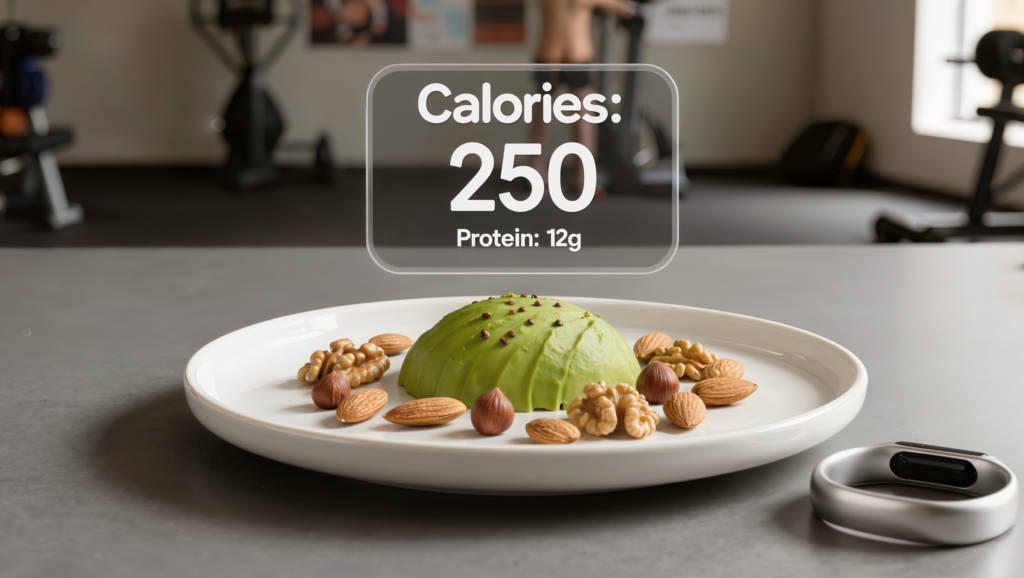












Healthy fats are not the enemy, but they absolutely can become a weight-loss problem when portion sizes get sloppy. Avocados, nuts, nut butters, seeds, and olive oil are all nutritious, but they are also calorie-dense enough that “a little extra” can quietly erase your deficit fast.
That is the trap: foods that are genuinely good for your heart, brain, and satiety can still stall fat loss if you treat them like free foods. The issue is not that avocados and nuts are bad — it is that healthy does not mean unlimited.
Why “Healthy” Can Still Mean “High Calorie”
Fat contains more calories per gram than protein or carbohydrate, and that simple fact is the root of the problem. The NHS notes that fat is high in calories regardless of whether it is saturated or unsaturated, and eating too much of it can contribute to weight gain.
That does not mean you should fear unsaturated fats. The NHS also says unsaturated fats found in avocados, nuts, and seeds can help lower blood cholesterol and support heart health. The catch is that the same nutrients that make these foods beneficial also make them easy to overeat in a fat-loss phase.
In other words: a food can be healthy and still be a calorie landmine.
Avocados Are Great — And That Is The Problem
Avocados are one of the biggest “healthy fat” traps because they are so easy to rationalize. They are creamy, filling, nutrient-rich, and everywhere in wellness culture. Healthline notes that avocados are about 80 percent fat by calories, which makes them much more energy-dense than people tend to realize.
Half an avocado on toast does not sound like much, but once you add a whole avocado, olive oil drizzle, cheese, and maybe a few nuts on the side, the calories stack up fast.
The issue is not avocado itself. It is the mindset that says, “This is healthy, so I can be generous.” Fat loss punishes that mindset quickly.
Nuts: Tiny Food, Massive Calorie Density
Nuts are another classic culprit. They are packed with healthy fats, protein, minerals, and fiber, which makes them excellent in moderation. But they are also very easy to eat by the handful instead of the measured portion.
A small serving can be satisfying. A casual snack bowl can quietly turn into several hundred calories. That is why people on a weight-loss plan often feel confused: they swear they are eating “clean,” but the scale is not budging. Nuts are often part of that puzzle.
The same logic applies to peanut butter and other nut butters. They are nutritious, but they are concentrated energy. A spoonful becomes two spoonfuls, and suddenly your “protein snack” is more like a stealth dessert.
Why Healthy Fats Help Satiety — Until They Don’t
The reason these foods are so seductive is that they actually do help with fullness. Avocados contain fiber along with fat, which can slow digestion and reduce cravings. Nuts can also be satisfying because their crunch, fat content, and protein make them feel substantial.
That satiety benefit is real. It is also why healthy fats are often helpful for people trying to eat less junk food. But satiety does not automatically equal fat loss. If you are eating enough calories to stay full, you may still not be eating enough of a deficit to lose weight.
This is where people get fooled:
- They feel satisfied.
- They assume the meal was “light.”
- They stop tracking portions.
- The calorie total quietly climbs.
Satiety is useful, but it is not a substitute for energy balance.
The Deficit Still Rules
Fat loss still comes down to a calorie deficit. A popular wellness post summarized the point bluntly: weight loss is not about eating “healthy” in the abstract, it is about creating a calorie deficit.
That is the part people hate because it is boring and unsexy. But it is also why healthy fats get so much blame. They are useful foods that can sabotage a deficit if they dominate the plate.
You can absolutely lose weight while eating avocados and nuts. The real question is whether those foods are helping your hunger and nutrition without silently overfeeding your day.
The “Nutrition Halo” Effect
The nutrition halo is the psychological effect where a food sounds so healthy that people underestimate how much of it they are eating. Avocados are one of the strongest examples. Nuts are another. Olive oil is probably the third.
Web sources discussing healthy fats repeatedly point out that avocados and nuts are beneficial, but also calorie-dense. That combination makes them dangerous in the hands of anyone who thinks “natural” means “unlimited.”
A nutrition halo can do this:
- Turn a snack into a meal.
- Turn a meal into a calorie bomb.
- Make portion sizes feel morally optional.
- Let you mentally ignore the oils, nuts, and dressings because they “count as healthy.”
That is how weight loss plans drift off course.
Why People Overeat Healthy Fats
There are a few reasons healthy fats get overused:
- They taste good and feel satisfying.
- They are marketed as good for you, so people relax around them.
- They are easy to add without changing the visible volume of food.
- They are often used in “healthier” recipes that still pack a lot of calories.
A handful of nuts is easy to eat. A tablespoon of nut butter turns into two. A little avocado becomes half the day’s fat intake. And olive oil disappears into cooking so fast that it barely looks like food at all.
That invisibility is exactly why it is so easy to overshoot.
The Best Way To Use Healthy Fats
Healthy fats are still valuable. The NHS recommends unsaturated fats as part of a healthy diet because they support cholesterol and heart health. That means the goal is not to eliminate them, but to use them intentionally.
A smarter fat-loss strategy looks like this:
- Use avocado as a measured add-on, not a default extra.
- Portion nuts into small servings instead of eating from the bag.
- Treat nut butter like a condiment, not a protein source.
- Use olive oil sparingly when cooking.
- Pair fats with lean protein and high-fiber foods that keep meals balanced.
That approach keeps the health benefits while protecting your calorie budget.
Why Some Diets Stall
People often think they have a metabolism issue when the real issue is fat creep. A salad becomes a calorie bomb because of avocado, nuts, cheese, seeds, and oil. A smoothie becomes a dessert because of nut butter. A “healthy snack” becomes dinner because a handful turned into a bowl.
The foods are not the problem. The portion drift is. And because healthy fats are so calorie-dense, even small amounts matter a lot.
If fat loss has stalled, it is worth asking:
- Am I eating more nuts than I think?
- Is avocado showing up in multiple meals?
- Am I free-pouring olive oil?
- Are “healthy snacks” really small meals?
Those questions are usually more useful than blaming carbs or skipping breakfast.
The Smart Middle Ground
The answer is not to cut out avocados and nuts. That would be a bad trade if it makes your diet less satisfying, less nutritious, and more likely to fail. Instead, the goal is to respect how calorie-dense they are while using them in a controlled way.
That means:
- Use avocado for flavor and satiety, not bulk.
- Use nuts as toppings or measured snacks, not free grazing food.
- Use healthy fats to support adherence, not to pad calories.
When used well, these foods can help you stay on track. When used carelessly, they can absolutely sabotage weight loss while making you feel virtuous about it.
Bottom Line
The “healthy fat” trap is real because avocados, nuts, and other unsaturated fat sources are nutritious but highly calorie-dense. They can help with satiety and heart health, but they can also quietly erase your calorie deficit if you are not measuring portions or paying attention to how often they appear in your day.
So no, your avocados and nuts are not evil. They are just not magic. If your weight loss has stalled, the fix may not be to eat “cleaner.” It may be to eat the same healthy foods, just in amounts that actually match your goal.