











Rooibos is one of those drinks that quietly does a lot without getting much credit. It is caffeine-free, rich in unique polyphenols like aspalathin, and often promoted as having antioxidant power that can rival or even exceed green tea in some tests. If you have been overlooking it, rooibos may be the most underrated tea on the shelf.
That said, “healthiest drink” is a big claim, and it deserves a careful look. Rooibos is genuinely interesting nutritionally, but the real answer depends on what you want from your drink: energy, antioxidants, gut comfort, heart support, blood sugar help, or just a calming evening ritual.
What Is Rooibos
Rooibos is not a true tea in the botanical sense. It comes from Aspalathus linearis, a South African shrub, and is usually brewed as an herbal infusion rather than from the Camellia sinensis plant used for green, black, and oolong teas. It is also naturally caffeine-free, which is a big part of its appeal.
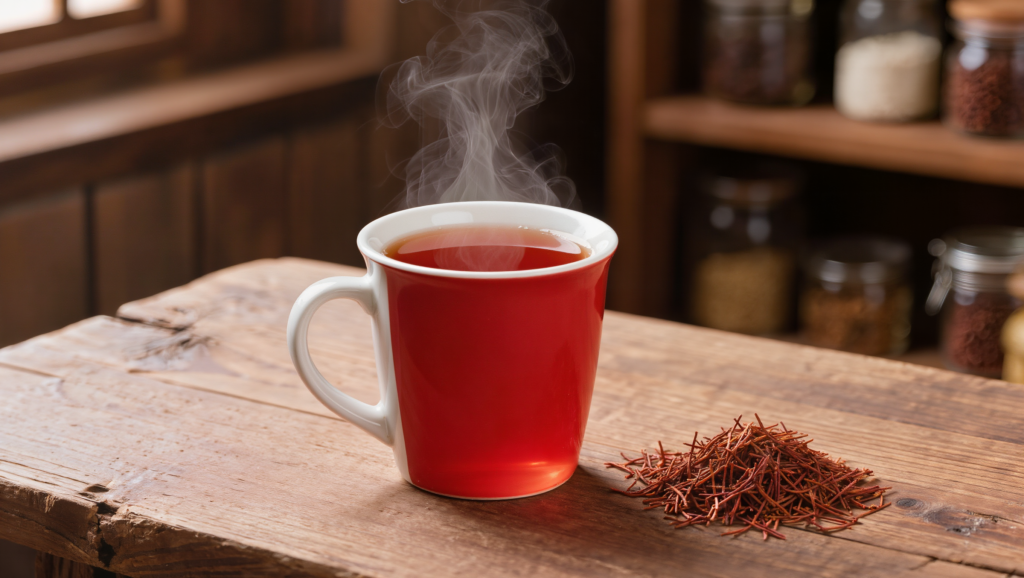
Most people know the “red” version, which is oxidized and has a warm, earthy flavor. There is also green rooibos, which is less oxidized and tends to retain more antioxidants than red rooibos. That difference matters because the processing step changes the chemical profile.
The Antioxidant Hype Of Rooibos: Is It Real?
Short answer: yes, but with context. Rooibos contains polyphenols, including the signature compound aspalathin, plus other antioxidant compounds. These compounds help protect cells from oxidative damage, and that is why rooibos gets such a strong reputation as a functional beverage.
A head-to-head comparison found that rooibos ranked very high in in vitro antioxidant power among herbal teas, and that green rooibos had about twice the antioxidant capacity of red rooibos. Some sources also note that rooibos can increase blood antioxidant capacity after consumption.
But here is the honest caveat: antioxidant capacity in a test tube is not the same thing as a miracle effect in the human body. It is still impressive, just not magical.
Why Aspalathin Gets So Much Attention
Aspalathin is one of rooibos’s standout compounds. It is a unique polyphenol found in rooibos and is often mentioned in relation to metabolic health, oxidative stress, and inflammation.
That matters because rooibos is not just “another red herbal tea.” Its antioxidant profile is different from green tea’s catechins. Green tea is famous for EGCG, while rooibos brings a distinct set of compounds to the table. So the comparison is not really about which drink has more of a generic antioxidant category; it is more about which set of protective compounds fits your needs better.
Rooibos vs Green Tea
This is where the internet loves to oversimplify. People ask, “Is rooibos better than green tea?” The better question is: “Better for what?”
Green tea has the edge when you want:
- Caffeine for focus.
- The very well-studied catechin EGCG.
- A long research history around cardiometabolic benefits.
Rooibos has the edge when you want:
- No caffeine.
- Lower tannins than Camellia teas.
- A gentler tea that is often easier on the stomach.
- Unique antioxidants like aspalathin.
So if you need a morning lift, green tea may be the more obvious choice. If you want an evening drink, a caffeine-free option, or something milder, rooibos starts looking very attractive.
The Heart Health Angle
Rooibos has become popular partly because of its potential cardiovascular benefits. Some note that drinking rooibos daily has been linked to lower blood pressure, improved cholesterol levels, and a reduced risk of cardiovascular disease. BBC Good Food also highlights rooibos as an anti-inflammatory and antioxidant tea that may help protect against diseases associated with oxidative stress.
That does not mean rooibos is a treatment for heart disease. It means it may fit nicely into a heart-conscious lifestyle, especially if it replaces sugary drinks or more caffeinated beverages that do not agree with you. Small changes in what you drink every day can matter a lot over time.
Blood Sugar and Metabolic Support
One of the most interesting claims about rooibos is its potential role in blood sugar regulation. Some studies show rooibos tea may help lower blood sugar levels, and that aspalathin can reduce inflammation related to high blood sugar. Teabloom also points to research suggesting rooibos may improve insulin resistance and help with glucose control.
That said, this is still an emerging area. Rooibos should be seen as supportive, not as a substitute for medical treatment, exercise, or a balanced diet. Still, if you are looking for a daily beverage that is more than just flavored water, rooibos is surprisingly interesting.
Weight Management Claims
Rooibos is often sold as a metabolism-friendly tea, and there is some evidence behind the marketing. One study found rooibos may support weight management by increasing leptin levels, encouraging metabolism, and limiting the formation of new fat cells. Some scientist summarizes similar findings, including some animal and human-linked research suggesting metabolic benefits.
This is promising, but it should not be overstated. No tea makes weight loss happen by itself. Rooibos may help a little if it supports better habits, reduces sugary beverage intake, or fits into a calorie-aware routine. That is useful, just not dramatic.
Gut Comfort and Tannin Sensitivity
One reason many people end up liking rooibos is that it is gentler than some traditional teas. BBC Good Food notes that rooibos limits digestive issues commonly seen with tannin-rich drinks. It is also naturally caffeine-free, which can be a big plus if caffeine makes you jittery, anxious, or reflux-prone.
That makes rooibos especially appealing for:
- Evening drinking.
- Sensitive stomachs.
- Caffeine avoidance.
- People who want a warm beverage without stimulation.
This is one of the biggest real-world advantages rooibos has over green tea. Green tea may be more famous, but rooibos is often easier to tolerate.
Red Rooibos vs Green Rooibos
This distinction matters more than most people realize. Red rooibos is the common fermented or oxidized version, while green rooibos is less processed and often preserves more antioxidant activity.
Green rooibos has about twice the antioxidant capacity of red rooibos, although both increase blood antioxidant capacity after consumption. That makes green rooibos the stronger pick if you are chasing maximal antioxidant content.
Red rooibos is still excellent for flavor, availability, and gentleness. So the choice is less about “good” versus “bad” and more about whether you want richer flavor or more preserved phytonutrients.
Is Rooibos The Healthiest Drink You’re Not Drinking?
Probably not the single healthiest drink in the universe, but it may be one of the most underrated. It checks a lot of boxes:
- No caffeine.
- High antioxidant potential.
- Unique polyphenols.
- Gentle flavor.
- Low tannins.
- Possible heart and metabolic benefits.
If your current beverage lineup is mostly soda, energy drinks, or sugary coffee drinks, rooibos is absolutely a better daily habit. If you already drink green tea, rooibos is not necessarily a replacement; it is more like a different tool for a different situation.
The Best Way To Drink Rooibos
Rooibos is flexible. You can drink it plain, with lemon, with milk, iced, or as a caffeine-free evening tea. Since it is naturally sweet and low in tannins, it works well as a base for people who want flavor without a bitter aftertaste.
To get the most out of it:
- Choose unsweetened versions.
- Try green rooibos if you want more antioxidant retention.
- Use it as a replacement for sugary drinks.
- Drink it regularly enough for it to matter, not as a once-a-month novelty.
Bottom Line
Rooibos is a genuinely impressive Southern African herbal tea with unique antioxidants, especially aspalathin, and a strong case as a caffeine-free daily drink. Green rooibos appears to have the highest antioxidant punch, while red rooibos remains a gentle, enjoyable option that may support heart health, blood sugar balance, and weight management.
So is it the healthiest drink you’re not drinking? It could be, especially if you want an evening beverage that is soothing, antioxidant-rich, and easy on the stomach. The smartest verdict is this: rooibos is not hype, but it is also not magic — it is just one of the most quietly useful drinks out there.