











Fermentation is booming again because it solves several modern problems at once: food waste, bland meals, expensive specialty products, and the desire for more gut-friendly foods made at home. It is ancient, practical, and weirdly satisfying, which is probably why it has jumped from old-world preservation method to modern kitchen hobby.
At its core, fermentation is just controlled microbial transformation — bacteria, yeast, and fungi converting sugars into acids, gases, or alcohol while improving shelf life, flavor, digestibility, and sometimes nutritional value. That makes it one of the rare food trends that is actually old enough to have earned its comeback.
Why Fermentation Never Really Went Away
Fermentation is not some new wellness trick invented for TikTok. It has been used for at least 13,000 years, with archaeological evidence pointing to early beer brewing and ancient food processing in places like Mesopotamia and China. Historically, fermentation helped people preserve food during harsh seasons, improve taste, and create ritual or cultural foods.
That long history matters because it shows fermentation is not a fad that appeared out of nowhere. It is a survival technology that modern people are rediscovering because it still works. In a world of overprocessed shelf-stable snacks, the appeal of making something alive at home is pretty obvious.
Why Fermentation Is Suddenly Back In Vogue
The current fermentation wave is driven by a mix of health interest, self-sufficiency, and cultural curiosity. Fermentation is trending partly because people are becoming more comfortable with microbes, more aware of the downsides of processed foods, and more interested in empowering themselves in the kitchen. It also points out that people like the fact that fermentation can be inexpensive, community-building, and creatively satisfying.
There is also a broader lifestyle shift at work:
- People want more control over ingredients.
- They want foods that taste more interesting.
- They want to reduce waste.
- They want gut-friendly foods without relying entirely on packaged products.
- They like the idea of making a living food with their own hands.
That combination makes fermentation feel both practical and a little romantic, which is a powerful marketing and cultural mix.
What Fermentation Actually Does To Food
Fermentation is a form of controlled microbial metabolism. Microorganisms consume carbohydrates and convert them into acids, alcohols, and gases. That process changes food in ways that matter.
- It can preserve food longer.
- It can improve flavor and texture.
- It can make some nutrients more available.
- It can reduce certain anti-nutrients.
- It can create or support beneficial microbial compounds.
This is why fermented foods taste so distinct. They are not just seasoned differently; they have been transformed at a structural level. A cabbage becomes sauerkraut. Milk becomes yogurt or kefir. Soybeans become miso or tempeh. Grain becomes sourdough.
The Gut Health Angle
A huge part of the fermentation revival is the gut-health conversation. Fermented foods are often described as probiotic-rich or microbiome-supportive, and many sources say they can help healthy gut bacteria and make digestion easier. Every Foods says fermented foods support gut bacteria, metabolism, and nutrient absorption, while also boosting vitamins, enzymes, minerals, and trace elements.
The broader nutrition logic is simple:
- Fermentation pre-digests some food components.
- That can make food easier to digest.
- It may increase bioavailability of certain nutrients.
- It may support beneficial gut flora.
That said, it is best to keep the claims grounded. Fermented foods are not magic medicine. But they do fit well into a diet that aims to support the microbiome.
Why Home Fermentation Feels So Empowering
Home fermentation is appealing because it gives people control in a way store-bought foods often do not. Cutting Edge Cultures says making fermented food at home lets you control ingredients, control the process, reduce waste, save money, and enjoy unbeatable freshness. Fermented foods can feel empowering because it is relatively cheap and uses only simple ingredients like salt, vegetables, or fruit.
That empowerment matters for a few reasons:
- You know exactly what goes in.
- You can adjust salt, sugar, and spice.
- You can preserve seasonal produce.
- You can make batch after batch with the same starter.
- You get to learn a kitchen skill that feels a little magical.
It is hard to overstate how satisfying it is to watch a jar on the counter turn into something tangy, fizzy, and alive.
The Sustainability Story Of Fermentation
Fermentation is also popular because it fits the sustainability conversation. If you can preserve produce, reuse jars, and avoid waste, you are making food systems a little less disposable. Home fermentation can reduce reliance on single-use packaging and help extend the life of seasonal or surplus food.
That matters in a period when people are more conscious of:
- Food waste.
- Packaging waste.
- Transport emissions.
- The fragility of long supply chains.
In that sense, fermentation is not just a trend. It is a small form of household resilience.
Why It Tastes So Good
Fermentation changes flavor in a way few other methods can. It brings acidity, depth, complexity, and sometimes effervescence. The tang of kimchi, the sourness of sauerkraut, the funk of kefir, and the crusty depth of sourdough all come from microbial transformation rather than added seasoning.
That complexity is a big reason people fall in love with it. Once you start eating fermented foods regularly, plain versions of those same foods can taste flat. You start wanting the brighter, sharper, more layered versions.
The Science-In-Real-Time Appeal
One of the reasons fermentation has become a kitchen hobby is that it is almost impossible to do without noticing the process. Fermentation can be described as “science in real time” because jars gurgle, hiss, bubble, expand, and change texture and aroma as microbes do their work.
That is part of the fun. You are not just cooking; you are supervising a living process. The kitchen becomes a tiny microbiology lab, except with better snacks.
For a lot of people, that makes fermentation feel educational as well as useful. It is a way of learning biology without opening a textbook.
Foods People Are Making Through Fermentation Most Often
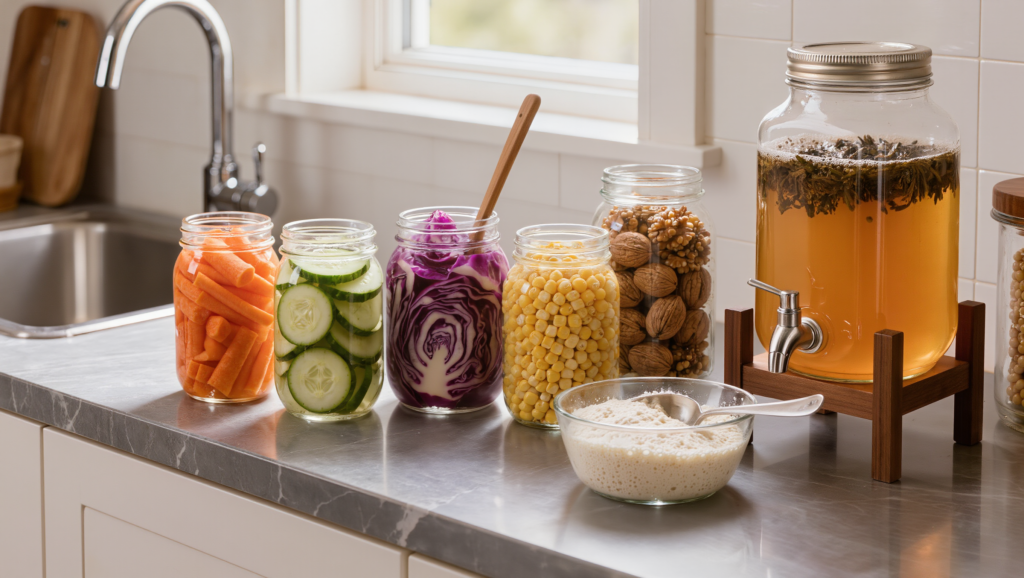
The fermented foods showing up in home kitchens tend to be the classics:
- Sauerkraut.
- Kimchi.
- Yogurt.
- Kefir.
- Kombucha.
- Tempeh.
- Miso.
- Sourdough.
These foods are popular because they are culturally familiar, relatively accessible, and offer a range of flavors and difficulty levels. A beginner might start with sauerkraut or yogurt, while a more adventurous home fermenter might move into kombucha or sourdough.
Are The Health Claims Of Fermentation Overstated?
Sometimes, yes. The health marketing around fermented foods can get a little breathless. The more cautious scientific picture is that fermentation can improve digestibility, nutrient availability, and shelf life, and fermented foods may support gut health and immune function.
That is still useful. It just does not mean every ferment is a cure-all. The best way to think about fermented foods is:
- Supportive, not miraculous.
- Helpful, not universal.
- A strong part of a good diet, not a replacement for one.
That keeps the trend grounded in reality instead of turning it into another wellness fantasy.
Why The Revival Feels So Modern
The irony of fermentation is that it is both ancient and perfectly suited to the modern moment. It fits health-conscious eating, sustainability, low-cost cooking, DIY culture, and the desire for more “alive” foods. It also offers something many people miss in modern life: patience.
Fermentation teaches patience in a world of instant gratification. That may be one of its biggest hidden benefits. You have to wait, watch, smell, taste, and trust the process. That is rare in modern food culture.
Bottom Line
Fermentation is back because it is ancient, effective, and strangely satisfying. It preserves food, deepens flavor, can support digestibility, and gives people a sense of control, creativity, and self-reliance in the kitchen.
People are fermenting their own food because they want better flavor, less waste, more kitchen independence, and foods that feel both wholesome and alive. The trend may be modern, but the logic behind it is very old — and that is exactly why it is sticking around.
Sources: