











Prevotella is one of those gut bacteria people are suddenly hearing about more often, and for good reason. It is strongly associated with fiber-rich, plant-forward diets, and it plays a major role in breaking down complex carbohydrates that your body cannot digest on its own.
The short version: if your gut has enough of the right Prevotella strains, you may be better equipped to ferment fiber into beneficial compounds like short-chain fatty acids. But there is a catch, because Prevotella is not a simple “good bacteria” or “bad bacteria” story. Its effects depend on the strain, the rest of your microbiome, and what you eat every day.
What Is Prevotella?
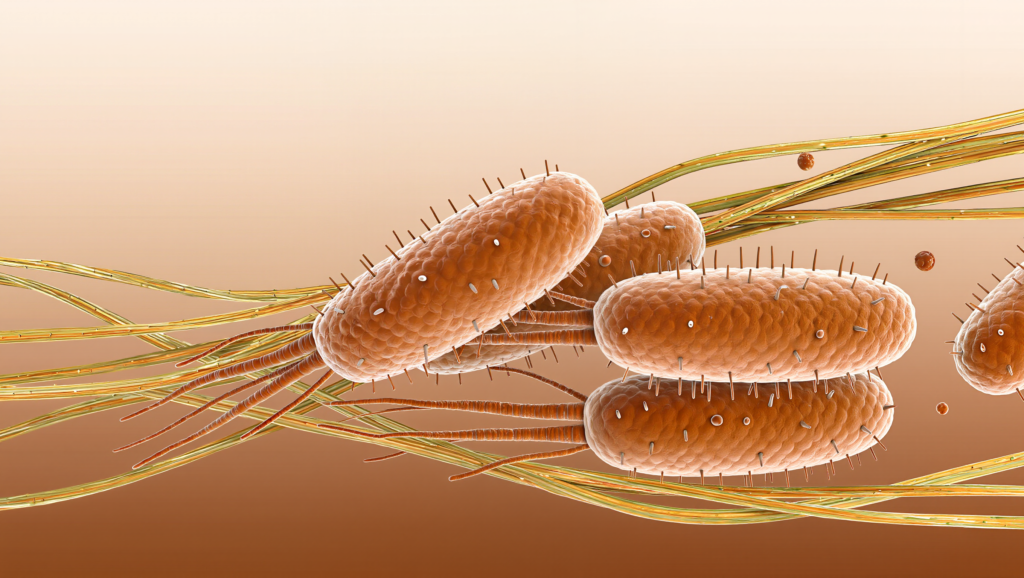
Prevotella is a large genus of bacteria with more than 50 characterized species, and many of them are found in the human microbiome. In the gut, the most discussed species is Prevotella copri, though other related lineages are also important.
This genus tends to show up more often in people eating plant-rich, fiber-heavy diets, while Bacteroides tends to dominate in diets higher in fat and protein. That is why Prevotella is often described as a kind of marker for a more traditional, high-fiber eating pattern.
So when people ask, “Do I have enough Prevotella?” the real underlying question is usually: is my microbiome adapted to use fiber efficiently?
Why Eating Fiber Is Very Important
Prevotella matters because it helps metabolize complex carbohydrates, especially certain fibers and plant polysaccharides. Fiber as sets up the battleground for intestinal Prevotella, highlighting that these microbes have specific genetic tools for degrading fibers like arabinoxylans.
That matters because the point of fiber is not just to “bulk up” stool. Fiber feeds your microbiome, and your microbiome turns it into biologically active products that affect:
- Gut barrier function.
- Inflammation.
- Satiety.
- Glucose metabolism.
- Short-chain fatty acid production.
In other words, Prevotella is part of the machinery that turns plant food into gut health benefits.
The Positives Of Prevotella
Prevotella has a lot of upside when it is part of the right ecological context because Prevotella is associated with carbohydrate metabolism and with plant-rich dietary patterns. A 2015 study reported that improved glucose metabolism after a barley kernel intervention was associated with increased abundance of Prevotella.
That is one of the most interesting findings in this area:
- More fiber in the diet.
- More Prevotella in the gut.
- Better glucose and insulin responses in some contexts.
The effect is not universal, but it suggests that some people may become more metabolically responsive to fiber when their Prevotella levels are higher or better supported. A 2025 proof-of-concept study found that fiber responses differ between Prevotella-dominated and Bacteroides-dominated microbiotas, which reinforces the idea that your microbiome composition affects how you respond to the same food.
Prevotella And Gut Barrier Connection
Prevotella and Segatella can be described as keystone genera with strong fiber-degrading capacity and notes that they can influence the gut barrier and host metabolic pathways. That is a big deal because the gut barrier is one of the main ways the body decides what gets in and what stays out.
When the gut barrier is functioning well, it can help limit unwanted inflammatory signaling. If it becomes leaky or stressed, the whole system can feel the effects. Prevotella’s influence on the gut barrier is one of the reasons researchers are paying close attention to it.
That does not mean more is always better. It means the bacteria’s effect on the lining of the gut is part of why its role is so biologically important.
Why Not All Prevotella Is The Same
This is the part people often miss. Prevotella is not a single monolithic organism with one fixed personality. Multiple researches emphasize that Prevotella’s role can look eubiotic in one context and dysbiotic in another.
That means the same genus can sometimes be:
- Helpful in a fiber-rich, plant-forward gut.
- Linked with inflammation in certain diseases or host contexts.
- Neutral or context-dependent depending on strain diversity.
The human gut Prevotella is mainly comprised of P. copri, P. stercorea, and related lineages, which is important because different species and strains may behave differently. So if you are thinking about “boosting Prevotella,” you are really talking about encouraging a favorable microbial ecosystem, not forcing one bacteria to dominate at all costs.
Why Diet Shapes Prevotella
Diet is the biggest lever here. Prevotella is associated with people who eat more fruits, vegetables, legumes, whole grains, and other complex carbohydrates. A 2017 study found that different fiber structures produced different short-chain fatty acid profiles depending on whether the microbiota was Prevotella-dominated or Bacteroides-dominated.
That means fiber is not just fiber. Different kinds of fiber can feed different bacteria differently.
Examples of fiber-rich foods that may support a Prevotella-friendly environment include:
- Oats.
- Barley.
- Beans and lentils.
- Whole grains.
- Vegetables.
- Fruits.
- Seeds.
A more diverse, plant-rich diet usually creates a more diverse microbial environment, and Prevotella tends to thrive in that setting.
How Prevotella Helps With Short-Chain Fatty Acids
One of the biggest reasons Prevotella gets so much attention is that it helps produce short-chain fatty acids, especially propionate in certain contexts. These microbial metabolites are important for gut and metabolic health, because they help communicate with the host and influence energy balance, inflammation, and gut function.
The 2017 PubMed study found that microbiota dominated by different fiber-utilizing bacteria produced different profiles of SCFAs from the same fiber substrates. The 2025 proof-of-concept study found that fiber-specific changes in SCFA and BCFA metabolism varied between Prevotella-type and Bacteroides-type people.
That suggests a deeper truth:
- Two people can eat the same fiber.
- Their microbiomes can process it differently.
- Their metabolic response may not be the same.
This is one reason microbiome research is moving toward personalized nutrition.
Could Too Much Prevotella Be A Problem?
Yes, potentially. This is where nuance matters. The 2019 review explains that Prevotella has been associated in some studies with inflammatory conditions and certain disease states, including rheumatoid arthritis and immune activation in some contexts. That does not make Prevotella “bad” across the board, but it does mean it is not a bacteria you want to oversimplify.
Possible issues include:
- Strain-specific pathogenicity.
- Context-dependent inflammatory behavior.
- Association with disease in certain populations.
- Imbalance with other microbes.
So the goal is not to maximize Prevotella blindly. The goal is to support a balanced, fiber-fermenting microbiome that behaves in a healthy way.
Signs Your Gut May Need More Fiber Support
You cannot directly feel your Prevotella level, but you can look at patterns that often point to a fiber-poor microbiome. If your diet is low in plants and high in ultra-processed foods, your Prevotella-friendly microbes probably are not getting much to work with.
Common clues that your gut may benefit from more fiber support include:
- Irregular bowel movements.
- Low plant intake.
- Poor tolerance of sudden fiber increases.
- Frequent cravings for highly refined food.
- A microbiome that seems “flat” and not very resilient.
None of these symptoms prove a Prevotella deficiency, because there is no simple home diagnosis for that. But they do suggest your fiber ecology may need work.
How To Support Prevotella Naturally
The best strategy is not a supplement hack. It is to feed the ecosystem. The sources consistently point toward plant-rich, fiber-rich eating as the main way to encourage Prevotella.
Practical ways to support it:
- Eat more legumes and whole grains.
- Include a variety of vegetables and fruits.
- Use barley, oats, and other fermentable grains.
- Increase fiber gradually.
- Avoid sudden massive fiber jumps if your gut is sensitive.
- Eat a more diverse range of plant foods.
That gradual approach matters because a microbiome that is not used to fiber may react with gas or discomfort if you rush the process.
The Real Takeaway
Prevotella is not just some obscure gut microbe. It is one of the key fiber-eating bacteria that helps translate a plant-rich diet into usable gut and metabolic benefits.
But the real story is more interesting than a simple “good bacteria” label. Prevotella’s effects depend on diet, strain diversity, and the larger microbial context, which is why the same genus can look beneficial in one setting and problematic in another.
Bottom Line
If your diet is rich in fiber, there is a good chance you are supporting Prevotella and the whole microbial network that helps break down plant food into gut-friendly compounds. If your diet is low in plants and high in refined foods, your Prevotella population may not be getting enough fuel to do its job well.
So the question is not just “Do I have enough Prevotella?” It is really, “Am I feeding the kind of gut ecosystem that lets fiber-eating bacteria thrive?” That is the question that matters for long-term gut health.
- https://pmc.ncbi.nlm.nih.gov/articles/PMC11290707/
- https://pmc.ncbi.nlm.nih.gov/articles/PMC12959208/
- https://pubmed.ncbi.nlm.nih.gov/33301716/
- https://pubmed.ncbi.nlm.nih.gov/28572676/
- https://pubmed.ncbi.nlm.nih.gov/40914513/