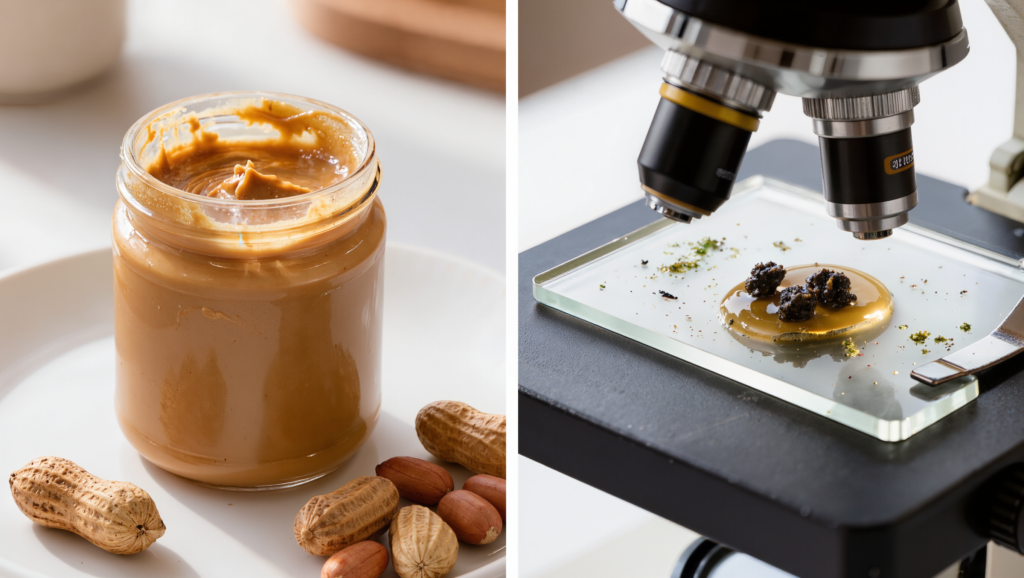












To get to the point, Yes, peanuts and peanut butter can contain aflatoxins, which are toxic compounds made by certain molds, and aflatoxin B1 is a well-known liver carcinogen. But that does not mean every jar of peanut butter is contaminated or that you should panic and throw out your pantry; it means peanut products are one of the more carefully monitored foods because the risk is real and the industry knows it.
The more useful truth is this: aflatoxin is a food-safety issue, not a “peanut butter is poison” issue. Regulatory agencies set limits, test products, and remove defective lots because peanuts are vulnerable to mold under the right conditions, especially heat and humidity.
What Is Aflatoxin
Aflatoxins are mycotoxins, which means they are toxic chemicals produced by molds, especially Aspergillus flavus and Aspergillus parasiticus. These fungi can grow on crops before harvest, during storage, or after processing if conditions allow it.
Among the group, aflatoxin B1 is the most infamous because it is strongly linked to liver damage and liver cancer. That is why aflatoxin gets so much attention in peanuts, corn, tree nuts, and some spices and grains.
So when people say “cancer-causing mold in peanut butter,” they are usually talking about aflatoxin-producing mold, not a visible fuzzy layer sitting on top of the jar. The toxin can exist even when the food does not look dramatically moldy.
Why Peanuts Are So Vulnerable
Peanuts are especially at risk because they are grown underground and can be exposed to stress, pests, moisture problems, and storage conditions that favor mold growth. Aflatoxin-producing fungi thrive in warm, humid, moist conditions, which is why peanuts, corn, and certain nuts are commonly mentioned in contamination discussions.
Once the fungus is in the chain, the toxin can show up:
- In the field.
- During drying.
- In storage.
- In processing.
- In finished food products if quality control is poor.
That is the key reason peanuts get tested so rigorously. The crop is vulnerable, and the toxin is dangerous enough to justify strict monitoring.
Is Peanut Butter Dangerous?
For most people, no — not in the sense implied by viral social media posts. Peanut butter sold in regulated markets is usually screened, blended, sorted, and tested to keep aflatoxin levels within legal or safety limits. The FDA says it has guidance for aflatoxins in peanuts and peanut products, and that processors may remove moldy or defective nuts from lots before those peanuts are incorporated into finished products.
The FDA allows low levels of aflatoxin because it is considered an unavoidable contaminant, and it is not practical to remove every trace from food. The agency’s position is to basically: reduce it as much as possible, monitor it heavily, and keep exposure low enough that occasional intake poses little lifetime risk.
So the honest answer is not “there is no aflatoxin.” The honest answer is “there can be tiny amounts, but regulated peanut butter is managed to keep risk low.”
Why The Panic Story Of Aflatoxin In Peanut Is Overblown
Internet posts often make it sound like almost all peanut butter is secretly full of mold toxins. That is not what the evidence says. The fact that the FDA has a detailed guidance document and test framework is actually evidence that the problem is recognized and controlled, not ignored.
Peanuts and peanut butter are among the most rigorously tested products because they often contain aflatoxins and are widely consumed. That means the industry has a strong incentive to keep contamination down, because even small problems would affect a huge market.
In other words, if aflatoxin were some hidden universal peanut-butter epidemic, we would not be talking about a niche concern. We would be talking about a major public-health crisis. The available sources do not support that.
Why Aflatoxin Is Still A Serious Issue
Even though routine consumer risk is usually low in regulated food systems, aflatoxin is not harmless. The European Food Safety Authority (EFSA) notes that aflatoxins are among the most toxic mycotoxins and are produced by fungi that especially flourish in hot, humid climates. The NIH review on maize and peanuts calls aflatoxin B1 a potent liver carcinogen and points to both acute and chronic human health effects.
The risks are most concerning in two scenarios:
- Acute exposure to a high amount at once, which can cause liver damage and severe poisoning.
- Chronic low-level exposure over time, which can increase cancer risk and other health problems.
The Conversation notes that significant contamination can lead to aflatoxicosis, with symptoms such as nausea, vomiting, abdominal pain, and seizures, while prolonged exposure to smaller amounts can increase liver cancer risk and affect other systems.
So yes, this is a real toxin. It is just not a reason to treat every jar of peanut butter like radioactive waste.
The FDA Standard And What It Means
The FDA guidance on peanuts and peanut products explains that shipments over 25 ppb can still be allowed to processors if defective nuts can be removed before the lot becomes finished product. That tells you something important about food regulation: risk management is based on sorting and testing, not on pretending the crop is perfectly clean.
This is how food safety often works in the real world:
- Inspect lots.
- Reject or divert contaminated batches.
- Remove visibly defective material.
- Blend or process within legal limits.
- Keep finished-product exposure as low as possible.
The system is designed to reduce risk, not erase it completely.
What Makes Aflatoxin Contamination In Peanut Butter More Likely
Aflatoxin gets more likely when peanuts are exposed to warm, damp conditions before or after harvest. Warm, humid tropical climates are particularly susceptible, and EFSA says the fungi grow especially well in hot and humid areas.
That means the biggest risk points are:
- Poor drying after harvest.
- Humid storage.
- Damaged or stressed crops.
- Inadequate sorting.
- Delayed processing.
Once again, this is why commercial peanut supply chains care so much about handling. The mold problem is largely a systems problem.
Can You Smell Or See Aflatoxin?
Not reliably. That is part of what makes aflatoxin tricky. The fungus may be invisible, and the toxin itself is not something you can casually detect by smell or taste. Some sources advises avoiding visibly moldy, shriveled, or discolored nuts, but that is only a basic consumer precaution — not a full safety test.
So the rule is simple:
- If nuts or nut butter look off, toss them.
- If they are from a trusted, regulated brand, the product has already gone through safety controls.
- Do not assume “I can’t see mold” means “there is no toxin.”
How To Reduce Your Aflatoxin Contamination Risks At Home
You cannot control the whole agricultural chain, but you can lower your exposure at home. Buy major brands, store nuts and nut butters in dry, cool places, and discard moldy, discolored, or shriveled nuts. Also freezing and cooking can kill the fungus, but not necessarily the toxin, which is important because aflatoxins can survive heat.
Practical tips:
- Buy from reputable brands with strong quality control.
- Store peanut butter and nuts sealed, cool, and dry.
- Throw out any product with visible mold or a stale, damaged appearance.
- Do not assume roasting eliminates all toxin risk.
That is the sane middle ground between paranoia and carelessness.
Does Organic Peanut Butter Contain Aflatoxin?
Organic does not automatically mean aflatoxin-free. The fungus problem comes from crop biology and storage conditions, not simply from whether pesticides were used. An Internet search results finds most saying “almost all brands including organic” can contain mold are overgeneralized and not a substitute for regulatory data.
The better framing is that organic peanut butter can still be subject to the same mycotoxin risks as conventional peanut butter if peanuts are exposed to poor drying or humid storage. Organic is about how the peanuts were grown; aflatoxin is about what mold and moisture did to them.
Bottom Line
Yes, there is a cancer-causing mold risk associated with peanuts and peanut butter, and the toxin involved is aflatoxin — especially aflatoxin B1, which is strongly linked to liver cancer. But regulated peanut butter is not some hidden toxin bomb; it is one of the most tested and managed foods in the pantry because the risk is known and taken seriously.
So the real truth is not “peanut butter is dangerous.” The real truth is “peanuts are vulnerable, aflatoxin is real, and the safety system is built to keep your jar well within acceptable limits.” If you buy reputable brands, store them properly, and toss anything visibly spoiled, your risk stays very low.
Sources:
- https://www.fda.gov/regulatory-information/search-fda-guidance-documents/cpg-sec-570375-aflatoxins-peanuts-and-peanut-products
- https://pmc.ncbi.nlm.nih.gov/articles/PMC3748761/
- https://pmc.ncbi.nlm.nih.gov/articles/PMC11190918/
- https://www.efsa.europa.eu/en/topics/topic/aflatoxins-food